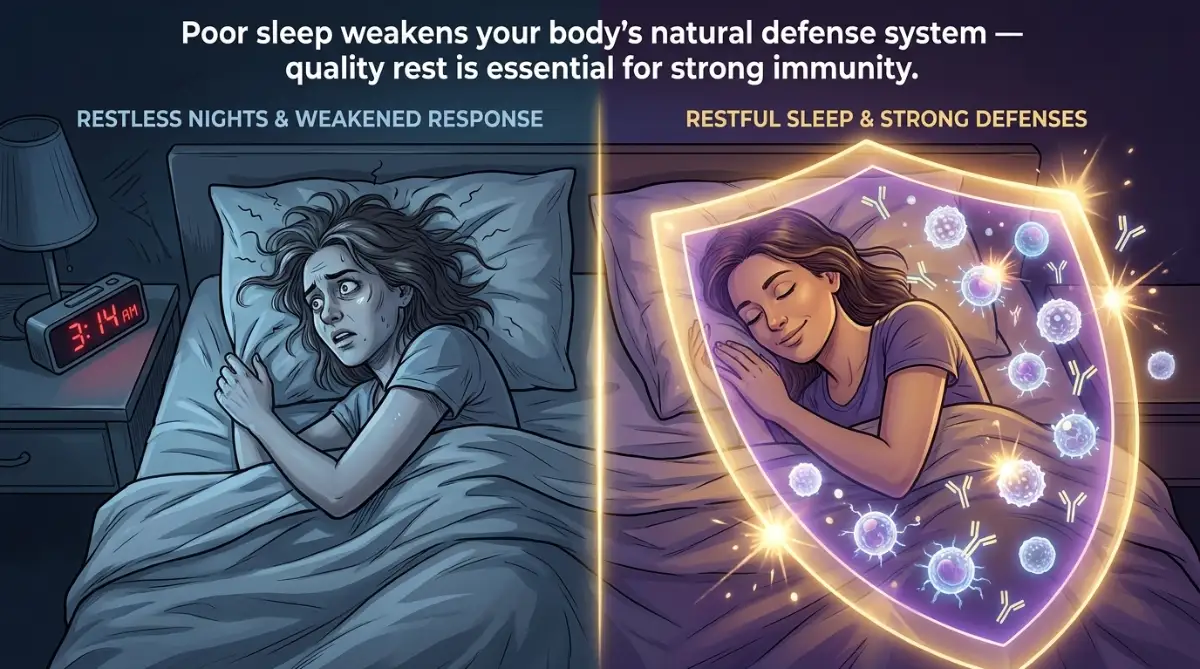
How Poor Sleep Can Affect Your Body's Natural Protection System
Sleep is way more than just downtime for your body. While you’re asleep, your body is actually busy doing a lot of important work that keeps you healthy, sharp, and emotionally balanced. One of the biggest behind-the-scenes jobs is taking care of your body’s natural protection system—your immune system.
A lot of people don’t really think about how important good sleep is. Busy days, late-night scrolling, work stress, and unhealthy routines often lead to less sleep than the body actually needs. Skipping sleep once in a while might not feel like a big deal, but when it becomes a habit, it can slowly weaken your body’s ability to fight off illness and recover properly.
The good news? Sleep is one of the easiest things you can improve to support your overall health. In this guide, we’ll break down how poor sleep affects your body’s defenses, why it matters, and the signs you shouldn’t ignore.
Why Sleep Is Essential for Your Immune System
Your immune system is basically your body’s defense team. It’s made up of cells, tissues, and organs that all work together to protect you from harmful stuff.
Every day, your immune system deals with things like:
- Viruses
- Bacteria
- Fungi
- Harmful toxins
- Damaged cells
Sleep gives your immune system the time it needs to do its job properly.
During deep sleep, your body:
- Produces protective proteins called cytokines
- Builds infection-fighting white blood cells
- Repairs damaged tissues
- Reduces unnecessary inflammation
- Strengthens immune memory for future protection
Without enough good sleep, all of this gets thrown off, and your body becomes less prepared to handle infections and stress.
What Happens Inside the Body During Healthy Sleep?
A lot of people think the body just “turns off” when you sleep. But actually, it gets pretty active in a different way.
Several systems kick into repair mode while you rest.
Tissue Repair
Your muscles, skin, blood vessels, and organs all get a chance to repair and recover.
Hormone Regulation
Sleep helps keep hormones in check, including those that control:
- Stress
- Appetite
- Blood sugar
- Growth and repair
- Energy levels
When hormones are balanced, your immune system works better too.
Immune Cell Production
Your immune cells become more active at night, scanning for threats and getting ready to respond if needed.
Reduced Inflammation
Good sleep helps keep inflammation under control.
Some inflammation is normal and helpful, but too much of it over time can lead to health problems.
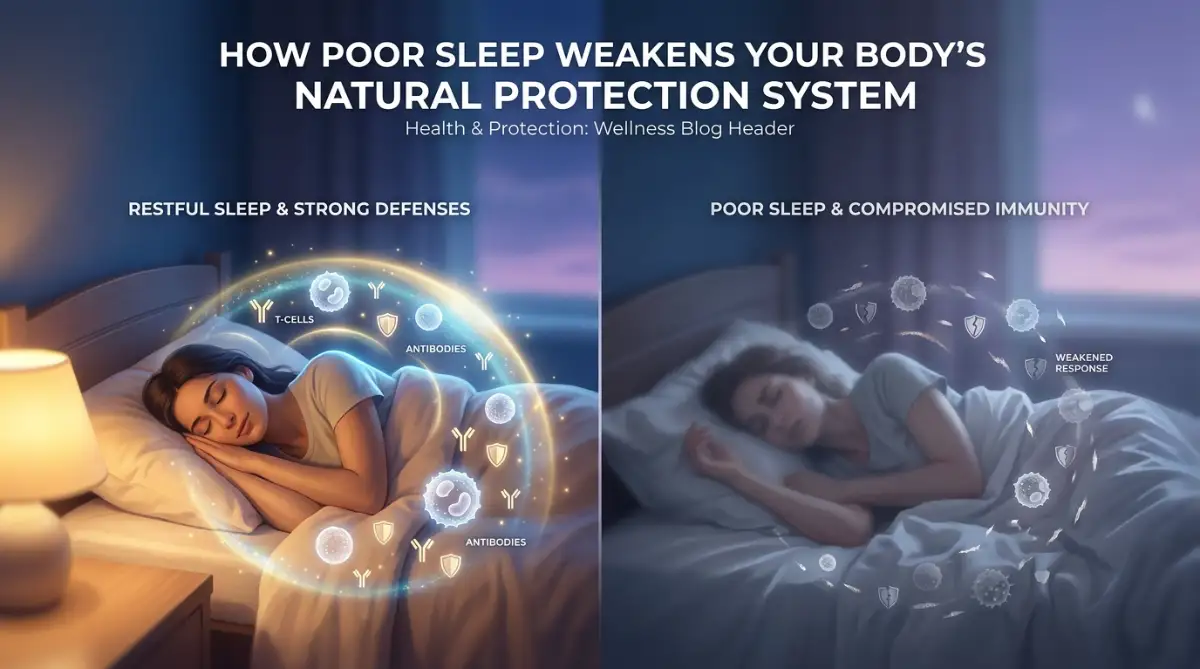
How Poor Sleep Weakens Your Body's Natural Protection
When you don’t get enough sleep regularly, your body starts to change in ways you might not notice right away.
But over time, it can really affect your health.
Lower Production of Protective Cytokines
Cytokines help your immune system communicate and respond to infections.
When you’re sleep-deprived, your body produces fewer of the helpful ones, making it harder to fight off illness.
Reduced Activity of Infection-Fighting Cells
Natural killer cells help destroy virus-infected cells.
Even a short period of poor sleep can reduce how active these cells are.
Increased Stress Hormones
Lack of sleep often raises cortisol (your stress hormone).
Too much cortisol over time can mess with your immune system and increase inflammation.
Slower Healing
Small cuts, bruises, and injuries may take longer to heal when your body isn’t getting enough rest.
That’s because repair and recovery processes depend heavily on good sleep.
Common Signs That Poor Sleep May Be Affecting Your Health
Poor sleep doesn’t always show up as obvious tiredness.
Sometimes the signs are more subtle.
Here are a few to watch for:
Frequent Minor Illnesses
If you keep catching colds or take longer to recover, sleep might be part of the issue.
Constant Fatigue
Feeling tired all the time—even after sleeping—can point to poor sleep quality.
Difficulty Concentrating
Sleep affects focus, memory, and decision-making, so poor sleep often leads to brain fog.
Mood Changes
Irritability, anxiety, low mood, and emotional ups and downs are common with bad sleep.
Slow Physical Recovery
If your body stays sore longer after workouts or activity, it could be a sign you’re not getting enough restorative sleep.
Sleep and Inflammation: Understanding the Connection
Inflammation is actually a normal part of how your body protects itself.
It helps you heal when you’re injured or sick.
But when you don’t sleep well, inflammation can stick around longer than it should.
Over time, this low-level chronic inflammation has been linked to things like:
- Heart disease
- Type 2 diabetes
- Obesity
- Certain autoimmune conditions
- Weaker immune function
Good sleep helps keep everything balanced.
Why Sleep Quality Matters More Than Just Sleep Duration
A lot of people focus only on how many hours they sleep.
But quality matters just as much—if not more.
You can sleep 8 hours and still feel tired if your sleep keeps getting interrupted.
Good sleep quality means:
- Falling asleep without too much trouble
- Staying asleep most of the night
- Getting enough deep sleep
- Waking up feeling refreshed
If your sleep is broken or light, your body doesn’t get the full benefit of rest and recovery.
Lifestyle Habits That Can Quietly Damage Sleep
A lot of everyday habits can mess with your sleep without you even realizing it.
Here are some common ones:
Excessive Screen Time
Phones, tablets, and laptops can mess with your natural sleep cycle because of blue light.
Late Caffeine Consumption
Coffee, tea, energy drinks, or soda late in the day can make it harder to fall asleep.
Irregular Sleep Schedule
Going to bed and waking up at different times confuses your body clock.
High Stress Levels
Stress makes it harder for your mind and body to relax at night.
Heavy Evening Meals
Eating big meals right before bed can make you uncomfortable and disrupt sleep.
How Much Sleep Do Most Adults Need?
Most adults do best with around 7 to 9 hours of good-quality sleep per night.
Kids, teens, and older adults may need more or less depending on their age and health.
Instead of just counting hours, pay attention to how you feel during the day.
If you wake up feeling refreshed, stay energized, and can focus well, your sleep is probably doing its job.
Practical Ways to Improve Sleep and Support Your Body's Natural Protection System
Maintain a Consistent Sleep Schedule
Your body runs on an internal clock called the circadian rhythm. It basically tells you when to feel awake and when to feel sleepy.
Going to bed and waking up around the same time each day helps keep that clock steady. When your schedule is consistent, it’s usually easier to fall asleep, stay asleep, and wake up feeling more refreshed.
Even on weekends, try not to swing your sleep schedule too much if you can help it.
Create a Sleep-Friendly Bedroom
Your sleep environment really does matter.
Try making your bedroom as calm and comfortable as possible by:
- Keeping the room cool and well ventilated
- Cutting down on noise where you can
- Dimming or avoiding bright lights at night
- Using a comfortable mattress and pillow
- Keeping phones and other distractions out of bed
Even small tweaks here can make a noticeable difference.
Develop a Relaxing Evening Routine
Your brain likes signals that it’s time to wind down.
Instead of working late or scrolling endlessly on your phone, try easing into bedtime with calming activities like:
- Reading a physical book
- Light stretching
- Deep breathing
- Listening to soft music
- Meditation or mindfulness
These help your mind shift into “sleep mode.”
Nutrition and Sleep: A Two-Way Relationship
What you eat during the day can affect how you sleep at night—and poor sleep can also influence your food choices the next day.
Avoid Heavy Meals Before Bedtime
Big meals right before bed can leave you feeling uncomfortable or cause indigestion, which can mess with sleep.
If you’re a bit hungry at night, a light snack is usually a better option than a heavy meal.
Limit Caffeine Later in the Day
Caffeine can stick around in your system for hours.
Some people are more sensitive to it, especially from:
- Coffee
- Tea
- Energy drinks
- Chocolate
- Some soft drinks
Cutting back in the afternoon and evening can really help with falling asleep and staying asleep.
Stay Properly Hydrated
Staying hydrated supports things like circulation and temperature control.
A steady balance throughout the day works best.
The Role of Physical Activity
Regular movement is great for both sleep and overall health.
Exercise can help:
- Lower stress
- Boost mood
- Support a healthy weight
- Improve deep sleep
- Support circulation
Walking, cycling, swimming, strength training, or yoga all count.
Just try to avoid very intense workouts right before bed if you notice they keep you too energized.
Managing Stress to Protect Sleep
Stress is one of the biggest sleep disruptors.
When stress levels stay high, your brain can feel “switched on” even when your body is tired.
Here are a few simple ways to manage it:
Practice Deep Breathing
Slow breathing can help your body relax and release tension.
Write Down Tomorrow's Tasks
If your mind is racing, jotting down a quick to-do list can help you stop mentally replaying everything.
Spend Time Outdoors
Daylight helps regulate your body clock, and being outside often helps reduce stress too.
Stay Socially Connected
Talking with friends or family can really help with emotional balance and stress relief.
Sleep Across Different Stages of Life
Sleep needs change as we age.
Children and Teenagers
Kids and teens need more sleep because they’re still growing and developing.
Consistent routines are especially important here.
Adults
Most adults do best with steady sleep schedules that allow enough time for proper rest and recovery.
Balancing work and life often means being intentional about sleep habits.
Older Adults
Sleep can become lighter and more fragmented with age.
Even so, good sleep habits still matter a lot for memory, immunity, and overall well-being.
Common Myths About Sleep and Immunity
There’s a lot of misinformation out there about sleep.
Myth: You Can Fully Catch Up on Lost Sleep During the Weekend
Sleeping in might help a bit, but it doesn’t fully undo the effects of ongoing sleep loss.
Consistency is what really helps long-term.
Myth: Everyone Needs Exactly Eight Hours
Sleep needs vary from person to person.
Some people do fine with a bit less, others need more. Quality matters just as much as quantity.
Myth: Snoring Is Always Harmless
Light snoring can be normal, but loud or frequent snoring—especially with breathing pauses or daytime tiredness—could be a sign of sleep apnea and should be checked out.
Myth: Feeling Fine Means You're Getting Enough Sleep
You can get used to being sleep-deprived without realizing it.
Even if you feel “okay,” things like focus, reaction time, and immunity can still be affected.
Warning Signs That Should Not Be Ignored
Bad sleep every now and then is normal, but ongoing issues shouldn’t be ignored.
It’s a good idea to talk to a healthcare professional if you notice:
- Trouble sleeping for several weeks
- Loud snoring with breathing pauses
- Extreme daytime sleepiness
- Waking up gasping for air
- Constant fatigue even after enough time in bed
- Mood changes linked to poor sleep
- Ongoing trouble concentrating
Getting checked early can help identify any underlying issues.
Small Daily Habits That Make a Big Difference
Better sleep usually comes from simple habits done consistently.
You can start with things like:
- Waking up at the same time every day
- Getting morning sunlight
- Staying active most days
- Reducing screen time before bed
- Keeping your bedroom dark, quiet, and cool
- Limiting alcohol and nicotine at night
- Avoiding reliance on sleeping pills unless prescribed
- Building a simple, calming bedtime routine
These work best when they’re done together over time.

Long-Term Benefits of Better Sleep
Good sleep supports way more than just immunity.
Over time, it can help with:
- Better memory and learning
- Improved mood and emotional balance
- Heart health
- Hormone regulation
- Blood sugar control
- Physical recovery
- Higher energy levels
- Better focus and performance
- Overall quality of life
Sleep won’t prevent every illness, but it gives your body a much better chance to function at its best.
Bringing Healthy Sleep Into Your Daily Routine
You don’t need to be perfect—just consistent.
Small changes done regularly usually beat big changes that don’t last.
Think of sleep as something your body depends on every night. It’s when your immune system repairs, resets, and gets ready for the next day.
If your sleep isn’t great right now, start small. Pick one or two changes and build from there. Over time, those small steps can really add up.
Your body is always working to protect and repair itself. Good sleep is one of the simplest ways to support it.
Disclaimer
This article is intended for educational and informational purposes only and should not be considered medical advice, diagnosis, or treatment. Sleep needs and health conditions vary from person to person. If you experience ongoing sleep problems, severe daytime fatigue, symptoms of a sleep disorder, or concerns about your immune health, consult a qualified healthcare professional for personalized evaluation and guidance.