Why Some Coins Crash to Zero While Others Survive Bear Markets
The cryptocurrency market has created life-changing opportunities for some investors while leaving others with significant losses. Every market cycle follows a familiar pattern. Prices rise rapidly, excitement spreads across social media, new projects appear almost every day, and investors rush to participate. Then the market changes direction. Fear replaces optimism, prices fall sharply, and countless digital assets lose most of their value.
What surprises many beginners is that not every cryptocurrency responds to a bear market in the same way. Some coins recover after difficult periods and eventually reach new highs. Others continue falling until trading activity disappears completely. Many never recover.
Understanding why this happens is one of the most valuable lessons any investor can learn. Instead of focusing only on price charts, successful investors study the strength of the project itself. They ask difficult questions before investing and understand the warning signs that often appear long before a project fails.
Why Bear Markets Reveal the True Strength of a Cryptocurrency
Bull markets can make almost every project appear successful.
During periods of widespread optimism, investors often buy cryptocurrencies simply because prices are rising. Weak projects receive attention alongside high-quality ones because money flows into nearly every corner of the market.
Bear markets are different.
When liquidity decreases and investors become more cautious, only projects with genuine value tend to maintain community support. Development teams continue improving their products, users remain active, and businesses continue adopting useful blockchain solutions.
Instead of rewarding marketing alone, bear markets reward resilience.
This is why experienced investors often say that difficult markets reveal the real quality of a cryptocurrency.
The Biggest Reasons Some Coins Eventually Reach Zero
A cryptocurrency rarely collapses overnight without warning.
Most failed projects display multiple weaknesses long before their prices reach extremely low levels.
Lack of Real Utility
One of the most common reasons for failure is having no practical use.
Many cryptocurrencies are created around exciting ideas but never solve an actual problem. Without meaningful utility, there is little reason for people to continue buying or using the token after the initial excitement fades.
Projects with limited usefulness often experience declining demand, causing prices to fall steadily.
Useful cryptocurrencies generally provide services such as:
- Smart contract functionality
- Payment systems
- Decentralized finance applications
- Gaming ecosystems
- Data storage
- Infrastructure for other blockchain applications
When a project serves a genuine purpose, it has a stronger foundation during difficult market conditions.
Weak Development Activity
Every successful blockchain project requires continuous improvement.
Technology changes rapidly, security threats evolve, and user expectations increase over time.
Projects with inactive developers often struggle because:
- Bugs remain unresolved
- Security vulnerabilities increase
- New features are delayed
- Competitors introduce better alternatives
Investors frequently monitor development progress because active teams demonstrate long-term commitment.
A silent development team can become an early warning sign.
Poor Tokenomics
Tokenomics refers to how a cryptocurrency is designed, distributed, and managed.
Poor tokenomics can create long-term problems even if the project initially attracts attention.
Examples include:
- Unlimited token supply
- Extremely high inflation
- Unfair distribution among insiders
- Large token unlock schedules
- Excessive rewards that create selling pressure
When too many new coins enter circulation without matching demand, prices often struggle to recover.
Balanced tokenomics help support healthier market conditions over time.
Low Liquidity
Liquidity determines how easily investors can buy or sell an asset without dramatically affecting its price.
Low liquidity creates several risks.
This creates panic, causing additional selling pressure.
Healthy projects usually maintain stronger trading activity across reputable exchanges, making price movements more stable.
Declining Community Support
Every successful cryptocurrency depends on an active community.
Communities help educate newcomers, report technical issues, participate in governance, and encourage broader adoption.
When communities become inactive, projects often lose momentum.
Warning signs include:
- Declining social discussions
- Reduced developer interaction
- Low participation in governance
- Falling transaction activity
- Decreasing wallet growth
A shrinking community often reflects declining confidence.
Why Some Coins Continue Surviving Even During Major Market Declines
Not every cryptocurrency suffers the same fate.
Some projects remain remarkably resilient despite significant price declines across the broader market.
Several important characteristics help explain their survival.
Strong Real-World Use Cases
Projects solving genuine problems tend to attract long-term users instead of short-term speculators.
For example, blockchain networks supporting decentralized applications continue processing transactions regardless of market sentiment.
Businesses and developers continue using valuable infrastructure because their work depends on it.
Utility creates ongoing demand beyond speculation.
Experienced Leadership
Leadership matters.
Projects guided by experienced teams often respond more effectively during difficult periods.
Strong leadership includes:
- Clear communication
- Transparent updates
- Responsible financial management
- Long-term strategic planning
- Rapid responses to technical challenges
Confidence increases when project leaders remain visible throughout both positive and negative market conditions.
Financial Sustainability
Developing blockchain technology requires funding.
Projects with responsible treasury management have a better chance of surviving extended downturns.
Financial sustainability allows teams to:
- Continue development
- Hire engineers
- Improve security
- Expand partnerships
- Maintain operations during reduced market activity
Projects relying entirely on constant token price growth often face greater risks during prolonged bear markets.
Consistent Innovation
Technology evolves continuously.
Successful blockchain projects rarely stop improving.
Instead, they continue introducing:
- Software upgrades
- Security improvements
- Better scalability
- Faster transactions
- Enhanced user experience
- New developer tools
Innovation helps projects remain competitive even when investor enthusiasm temporarily declines.
Healthy Ecosystem Growth
Strong cryptocurrencies usually support expanding ecosystems rather than existing as isolated tokens.
Growing ecosystems may include:
- Developers building applications
- Businesses accepting payments
- Educational resources
- Wallet providers
- Decentralized exchanges
- Community initiatives
Each additional participant strengthens the overall network.
This network effect becomes especially valuable during challenging markets.
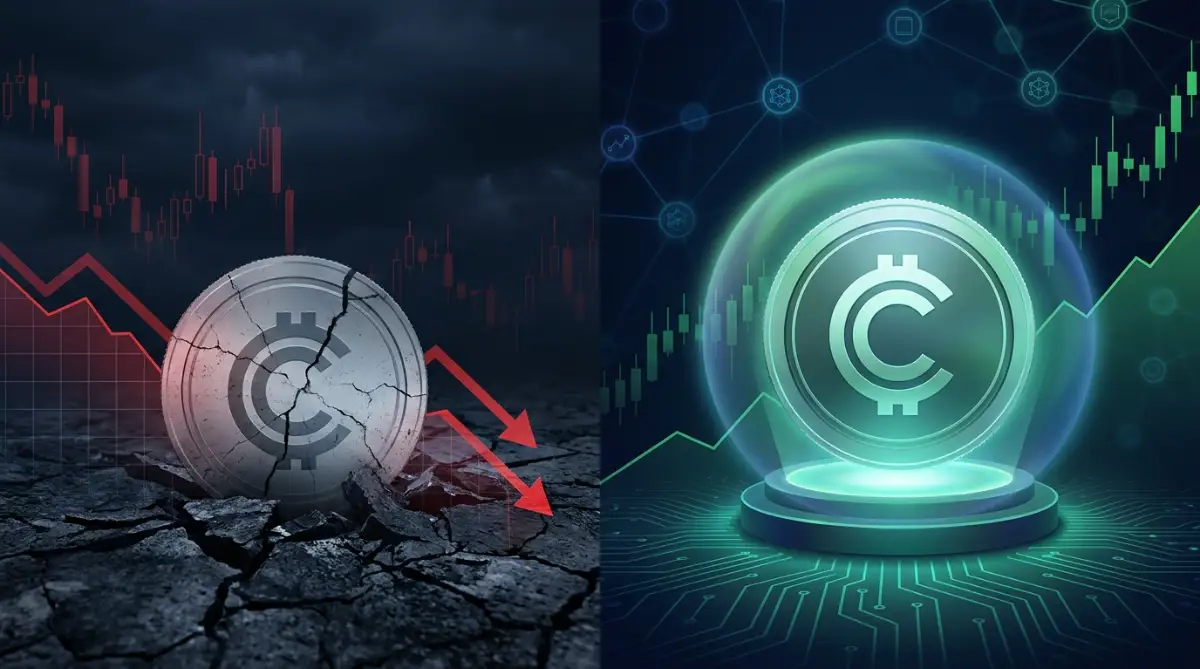
Market Psychology Plays a Bigger Role Than Most Investors Realize
Price movements are not driven only by technology.
Human emotions strongly influence cryptocurrency markets.
Fear often causes investors to sell quality assets alongside weaker ones.
Likewise, excitement can temporarily push low-quality projects to unrealistic valuations.
Understanding investor psychology helps explain why prices sometimes disconnect from fundamentals in the short term.
However, over longer periods, strong fundamentals tend to matter much more.
Projects without substance eventually struggle to maintain investor confidence.
Meanwhile, fundamentally strong projects often recover after broader market conditions improve.
Common Warning Signs Investors Should Never Ignore
Learning to recognize risk early can help investors make more informed decisions.
Some important warning signs include:
Anonymous or Unverified Teams
While privacy exists within the crypto industry, completely anonymous leadership combined with limited transparency may increase uncertainty.
Investors often prefer projects providing clear information about leadership and development progress.
Unrealistic Promises
Be cautious whenever projects guarantee extraordinary returns or claim they cannot fail.
Financial markets always involve uncertainty.
Responsible projects focus on technology, adoption, and development rather than promising guaranteed profits.
Minimal Development Updates
Healthy blockchain projects communicate regularly.
Long periods without meaningful progress can indicate deeper problems.
Development activity often matters more than promotional announcements.
Heavy Insider Ownership
If a small number of wallets control a large percentage of tokens, market stability becomes more fragile.
Large holders selling significant amounts may create substantial downward pressure.
Diversified ownership generally reduces concentration risk.
Weak Security Practices
Security remains essential.
Projects experiencing repeated hacks or failing to improve security measures may lose user trust permanently.
Once confidence disappears, recovery becomes increasingly difficult.
Why Patience Often Outperforms Emotional Decisions
Bear markets test every investor.
Watching portfolio values decline can create anxiety, frustration, and uncertainty.
However, reacting emotionally often leads to poor decisions.
Experienced investors frequently spend more time evaluating project quality than predicting short-term price movements.
Instead of asking, "Will this coin rise next week?"
They ask questions like:
- Is development still active?
- Are users continuing to adopt the platform?
- Is the technology improving?
- Does the project solve an important problem?
- Can the team survive a prolonged downturn?
These questions focus on long-term resilience rather than temporary market fluctuations.
Looking Beyond Price Charts
One of the biggest mistakes beginners make is assuming price alone reflects quality.
A rapidly increasing price does not necessarily indicate a strong project.
Similarly, a temporary decline does not automatically mean a valuable cryptocurrency has failed.
Successful investing requires examining multiple factors together, including technology, adoption, security, governance, community strength, tokenomics, liquidity, and development activity.
The projects that survive difficult markets usually demonstrate strength across many of these areas rather than relying on hype alone.
A Practical Framework for Evaluating a Cryptocurrency Before Investing
A lot of investors end up asking the same thing after watching a coin drop hard: “Could I have seen this coming?”
The truth is, nobody can predict the future with certainty. But having a solid way to evaluate projects can seriously improve your chances of spotting stronger ones and avoiding unnecessary risks.
Instead of chasing hype, social media buzz, or FOMO, it helps to get into the habit of breaking down every cryptocurrency using a simple, structured approach.
Look at the Problem the Project Is Trying to Solve
Every real technology starts with a purpose.
Ask yourself:
- Does this project actually solve a real problem?
- Does it really need blockchain, or is it just using it for hype?
- Who actually benefits from it?
- Could a normal, traditional system do the same job better?
Projects that only exist because “blockchain is trendy” usually don’t last very long.
On the flip side, projects that tackle real issues in finance, infrastructure, digital identity, data storage, or decentralized apps tend to have better long-term potential.
Check the Competition
No crypto project exists in a vacuum.
Almost every coin out there has competitors doing something similar.
Understanding the competition helps you figure out whether a project actually has room to grow.
Some things to think about:
- What makes this one different?
- Is it faster?
- Is it more secure?
- Are fees lower?
- Is it easier for developers to build on?
These advantages matter even more during bear markets, when only the strongest projects tend to survive and keep users.
Look at Real Network Activity (Not Just Headlines)
News and social media usually focus on price moves, but that doesn’t tell the full story.
Long-term investors should pay more attention to actual usage.
Things worth checking:
- Active wallet addresses
- Transaction volume
- Developer activity
- Growth of apps built on the network
- Community engagement
- Ongoing upgrades
If people are still using the network even when prices are down, that’s usually a good sign.
How Diversification Can Help Reduce Risk
One big mistake a lot of investors make is going all-in on one coin.
Even strong projects come with uncertainty.
Diversifying helps reduce the damage if one investment doesn’t work out.
It won’t guarantee profits or remove risk completely, but it can help balance things out.
You can diversify across areas like:
- Established blockchains
- Smart contract platforms
- Infrastructure projects
- Payment-focused coins
- Privacy-focused projects
- DeFi ecosystems
The goal isn’t just to own a bunch of coins—it’s to spread exposure across different parts of the crypto space while understanding the risks in each.
Why Market Cycles Keep Repeating
Even though every cycle is a bit different, investor emotions tend to follow the same pattern.
Optimism
People get excited about new opportunities.
Sentiment improves.
Excitement
Prices start climbing.
More investors jump in.
Media attention increases.
Euphoria
People think prices will only go up.
Risk gets ignored.
Speculation goes wild.
Fear
Prices start dropping.
Uncertainty kicks in.
Panic
People sell just because others are selling.
Good and bad projects both get hit.
Recovery
Stronger projects slowly rebuild trust.
Development continues.
Adoption improves over time.
Knowing these patterns can help you avoid emotional decisions.

Simple Habits That Improve Your Decisions
Good investing is more about habits than finding the “perfect” coin.
Read the Official Docs
Whitepapers and official updates give you the clearest picture of what a project is actually trying to do.
Don’t rely only on short social media posts.
Double-Check Information
Crypto moves fast, and misinformation spreads even faster.
Always compare multiple sources before believing anything important.
Pay Attention to Security
Security is a big deal for long-term survival.
Look for:
- Security audits
- Bug bounty programs
- Regular updates
- Clear communication after issues
Focus on Learning, Not Just Trends
The best investors usually spend more time learning than trading.
Understanding basics like blockchain tech, tokenomics, and market psychology pays off over time.
Common Misconceptions in Crypto
A lot of ideas sound right at first but don’t hold up well.
“Cheap coins have more upside”
A low price doesn’t mean better potential.
Market cap and supply matter way more.
“Big communities guarantee success”
A large following helps, but it’s not enough on its own.
Real usage and development matter more.
“Past performance predicts the future”
Some projects bounce back, others don’t.
History helps, but it’s never a guarantee.
“Every bear market creates the same winners”
Each cycle is different.
New tech, new rules, and new trends always change the outcome.
A Quick Checklist Before Investing
Before putting money into any crypto, it helps to ask:
- Does it solve a real problem?
- Is development active?
- Are people actually using it?
- Is the token supply reasonable?
- Is security taken seriously?
- Is liquidity healthy?
- Is the team transparent?
- Are partnerships real or just marketing?
- Is the community focused on learning or just hype?
- Have I actually done my own research?
Being honest with these answers can save you from a lot of bad decisions.
Thinking Long Term
Short-term price moves get all the attention, but they don’t tell the full story.
Long-term investors usually care more about things like:
- Will this still matter in a few years?
- Is the team still building?
- Is adoption growing?
- Does it actually create value?
Thinking this way helps you stay calmer and avoid emotional reactions.
Key Takeaways
Crypto rewards research and patience way more than emotional decisions.
The projects that survive tough markets usually have strong fundamentals, active development, real users, and the ability to adapt.
On the other hand, many failing projects show warning signs long before they collapse.
Instead of trying to find “guaranteed winners,” focus on building the skills to evaluate projects properly. Markets will always go through ups and downs, but good research stays useful no matter what.
Being able to tell the difference between real long-term value and short-term hype is one of the most important skills in crypto investing. The more you focus on learning and risk awareness, the better prepared you’ll be for whatever the market does next.
Frequently Asked Questions
Can a cryptocurrency recover after losing most of its value?
Yes, it can happen. But it usually depends on things like continued development, real usage, strong community support, and good management. It’s possible—but never guaranteed.
Why do meme coins swing so much in price?
Meme coins often rely more on hype and social media than real utility, so their prices can move very quickly in both directions.
Is market cap more important than price?
Yes. Market cap gives a much better idea of a project’s size than the price of a single coin.
Should beginners only buy popular coins?
Not necessarily. Popularity helps, but it shouldn’t replace proper research into the project itself.
How often should I review my research?
It’s a good idea to check updates regularly so you’re not relying on outdated information.
Disclaimer
This article is for educational purposes only and should not be taken as financial, investment, legal, or tax advice. Cryptocurrency is highly volatile and involves risk, including possible loss of capital. Always do your own research and consider your financial situation and risk tolerance before investing.