Breaking Down Blockchain Confirmations and Why They Take Time
Sending crypto usually feels super quick. You type in a wallet address, pick an amount, hit send, and boom—it shows up almost instantly. But then a lot of people get confused when the transaction sits there in a “pending” state instead of arriving right away.
That’s when the big question comes up:
Why do blockchain confirmations take time?
The simple answer is: Blockchain s are designed to be secure first, not just fast. Instead of a bank or central authority handling everything, thousands of computers work together to double-check transactions before they’re finalized.
If you’re new to crypto, confirmations are something you really want to understand. Whether you’re sending Bitcoin, Ethereum, or any other coin, knowing how this works helps you stay relaxed and actually understand what’s going on behind the scenes.
In this guide, we’ll break down what confirmations are, why they matter, what slows them down, and why that “waiting time” is actually a good thing.
What Is a Blockchain Confirmation?
A blockchain confirmation happens when your transaction gets included in a newly verified block.
Think of a blockchain like a shared digital notebook that keeps getting new pages added. Every few minutes, a new page is created, and it contains a bunch of verified transactions.
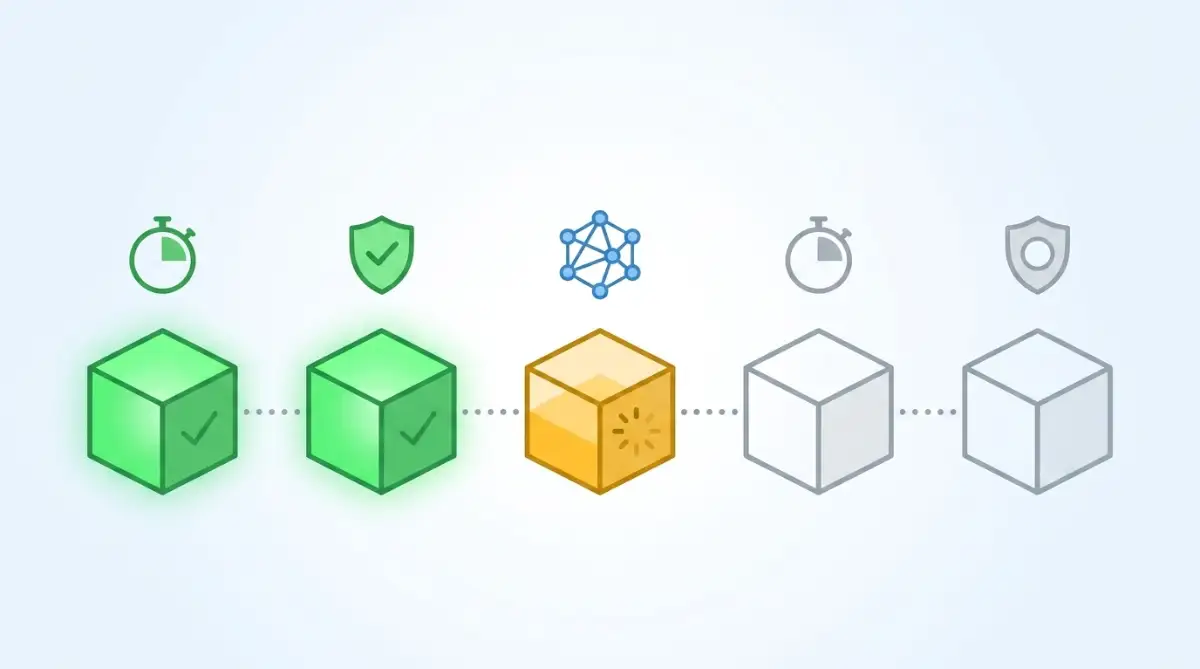
When your transaction lands on one of those pages, it gets its first confirmation.
After that, every new block added on top increases the confirmation count.
For example:
- Transaction enters Block 500
- Block 501 is added → 2 confirmations
- Block 502 is added → 3 confirmations
- Block 503 is added → 4 confirmations
The more confirmations you have, the harder it becomes for anyone to mess with or reverse that transaction.
Why Are Confirmations Necessary?
A lot of beginners expect crypto to be instant the moment they hit send.
But if it worked like that, the system would be way easier to exploit.
Confirmations exist for a few important reasons:
Preventing Double Spending
Without proper checks, someone could try to spend the same crypto twice.
Confirmations make sure that once a transaction is accepted, those coins can’t be used again somewhere else.
This is one of the biggest innovations blockchain brought to the table.
Building Trust Without Banks
In traditional systems, banks and payment processors handle trust.
They verify balances, approve payments, and sort out disputes.
Blockchain removes all of that and replaces it with a system where thousands of independent computers agree on what’s valid.
Confirmations are basically proof that the network is on the same page.
Increasing Security
Each new confirmation makes a transaction more permanent.
After a few confirmations, reversing it would require massive computing power and control over the network.
That’s why exchanges and wallets usually wait for multiple confirmations before marking a payment as fully done.
The Journey of a Crypto Transaction
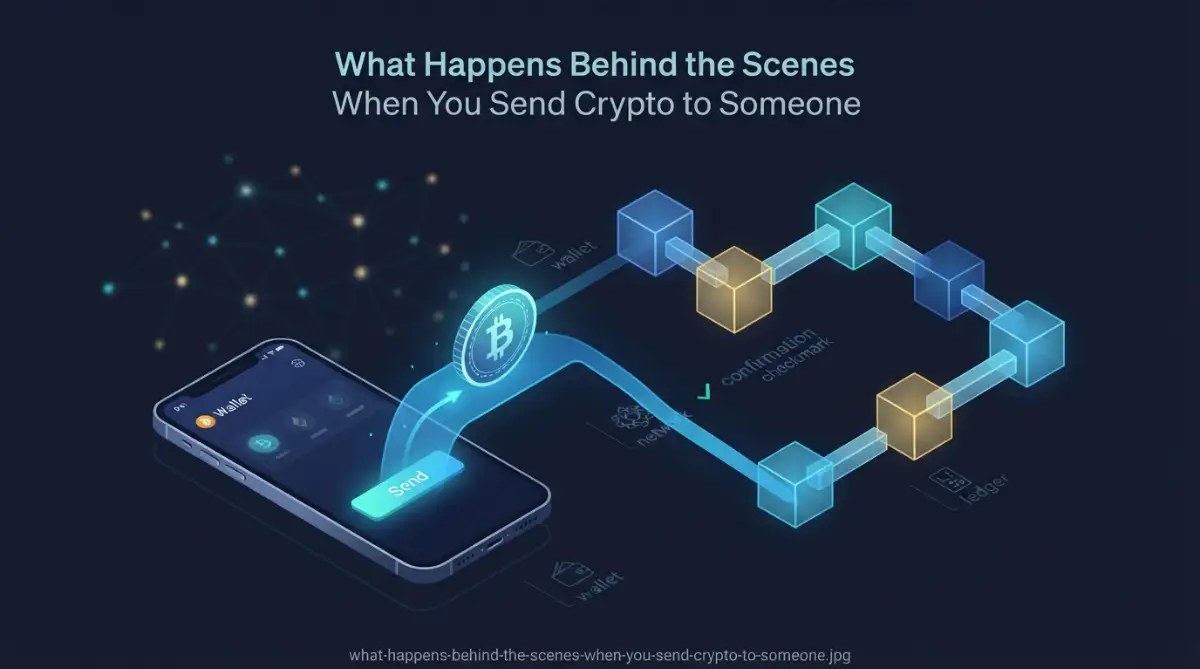
To really get why confirmations take time, it helps to see what actually happens after you hit “send.”
Step 1: Creating the Transaction
Your wallet builds a transaction that includes:
- Your wallet address
- The receiver’s address
- The amount
- A digital signature
- A network fee
This signature proves you actually own the funds.
Step 2: Broadcasting to the Network
Instead of going to one central server, your transaction gets sent out to the entire blockchain network.
Thousands of computers receive it almost instantly.
At this point, it’s visible—but not confirmed yet.
That’s why wallets show statuses like:
- Pending
- Unconfirmed
- Waiting for confirmation
Step 3: Verification by Network Nodes
Before anything gets added to a block, network nodes check the transaction.
They make sure:
- The signature is valid
- You actually have enough funds
- The coins haven’t already been spent
- The transaction follows network rules
If something doesn’t look right, it gets rejected immediately.
Step 4: Block Creation
Miners or validators then group valid transactions into a block.
Once the network agrees on it, that block gets added to the blockchain.
That’s when your transaction gets its first confirmation.
Step 5: More Confirmations Over Time
As new blocks keep getting added, your transaction becomes more and more secure.
This stacking process is what makes blockchain so reliable.
Why Confirmations Take Time
There isn’t just one reason for delays—it’s usually a mix of a few things.
Block Production Isn’t Instant
Every blockchain has its own rhythm for creating new blocks.
Some are fast, some are slower.
Since confirmations depend on new blocks being added, you just have to wait for the next one.
That’s simply how the system is built.
Network Congestion
Think of it like a busy highway.
When too many people are sending transactions at the same time:
- Blocks fill up fast
- Transactions get backed up
- Waiting times increase
This usually happens during high trading activity or big market moves.
Transaction Fees Matter
Most blockchain's prioritize transactions with higher or more competitive fees.
It doesn’t guarantee instant confirmation, but low-fee transactions may sit in the queue longer when things are busy.
The fee is basically an incentive for miners or validators to pick up your transaction.
Network Consensus
Before a block is accepted, the network has to agree it’s valid.
This agreement process is called consensus.
It adds a bit of time, but it’s also what keeps the system secure and decentralized.
Different Blockchain's Have Different Confirmation Times
Not all blockchain's work the same way.
Some are built for speed, others for security.
Bitcoin
Bitcoin focuses heavily on security.
Blocks are created roughly every 10 minutes, and many services wait for multiple confirmations before considering a transaction final.
Ethereum
Ethereum is usually faster than Bitcoin, but speeds can still change depending on how busy the network is.
Other Blockchain's
Some newer Blockchain's can confirm transactions in seconds using different systems.
But faster doesn’t always mean better—it often comes with trade-offs in decentralization or security.
Why Waiting Can Actually Protect You
It’s easy to see delays as annoying, but in blockchain, that waiting time is actually part of the safety system.
Each confirmation helps ensure that:
- The transaction is real
- The sender actually owned the funds
- The payment can’t be easily reversed
- The network stays consistent across all nodes
So instead of being a downside, confirmations are really what make crypto secure in the first place.
How Many Confirmations Are Usually Considered Safe?
One of the most common questions beginners ask is whether a single confirmation is enough. The answer really depends on a few things, like which blockchain you’re using, how much the transaction is worth, and how cautious you want to be.
For really small transfers, one confirmation might be totally fine for some wallets or services. But a lot of exchanges and businesses prefer waiting for a few confirmations before they actually credit the funds.
That extra wait just helps reduce the already small chance of things like temporary chain reorganizations or other rare network hiccups that could briefly affect transaction history.
Instead of worrying about a fixed number for every blockchain, it’s better to just get the main idea: each additional confirmation makes it more likely that the transaction is permanently locked into the blockchain.
Proof of Work vs. Proof of Stake: How Confirmations Differ
Not every blockchain reaches consensus the same way. Two of the most common methods are Proof of Work and Proof of Stake.
Proof of Work
In a Proof of Work network, powerful computers compete to solve complex math problems.
Whoever solves it first gets to add the next block.
Once the network verifies that block, the transactions inside it get their first confirmation.
This system is intentionally tough because it makes attacking the network extremely expensive and basically impractical.
Proof of Stake
Proof of Stake works a bit differently.
Instead of mining through computation, validators are chosen based on rules set by the blockchain protocol—often involving how much crypto they’ve locked up to support the network.
These validators confirm transactions, create new blocks, and help keep the network secure through a consensus process designed to be efficient while still decentralized.
Both systems confirm transactions, just in different ways.
What Happens If a Transaction Stays Pending?
A pending transaction doesn’t automatically mean something is wrong.
Most of the time, it just means the transaction is waiting to be picked up and included in a block.
Common reasons include:
- High network activity
- Low transaction fee
- Temporary blockchain congestion
- Wallet sync delays
- Exchange processing delays
In many cases, the best thing to do is just wait a bit.
You can also check a blockchain explorer to see whether the transaction is still pending or already getting confirmations.
Can Blockchain Confirmations Fail?
Most transactions do eventually get confirmed as long as they follow the network rules.
But there are a few situations where they might not go through.
For example:
- Very low fees during heavy congestion
- Invalid digital signature
- Not enough balance
- Network rules rejecting the transaction
- Wallet issues before broadcasting
These cases are pretty rare for everyday users who stick to trusted wallets and double-check their details before sending.
Understanding Network Congestion in Greater Detail
Network congestion is one of the main reasons confirmations can take longer than expected.
Each blockchain can only fit a limited number of transactions into each block.
When more transactions are sent than can be processed, a queue starts to build.
Think of it like an airport security line.
Even if everything is running smoothly, only so many people can get through at once. When more travelers show up, the line just gets longer.
Blockchain's work in a similar way.
Congestion doesn’t mean the network is broken.
It just means demand is temporarily higher than capacity.
Once things calm down, confirmation times usually go back to normal.
Why Transaction Fees Influence Confirmation Priority
Transaction fees are often misunderstood.
They’re not there to “speed up” the blockchain directly.
Instead, they help decide which transactions get picked first when space in a block is limited.
When the network is quiet, even low fees can confirm quickly.
But when it’s busy, higher-fee transactions usually get priority because block space becomes more competitive.
Most wallets will suggest a reasonable fee based on current conditions.
Following those suggestions usually helps avoid long delays without overpaying.
Common Misunderstandings About Blockchain Confirmations
A lot of myths still float around, especially for new users.
Let’s clear up a few of them.
Myth: Faster Always Means Better
Speed is just one part of the picture.
A faster blockchain might be making trade-offs in security or decentralization.
What matters most is whether the network fits your use case.
Myth: Pending Means Lost
A pending transaction is usually just waiting its turn.
Unless it gets rejected or expires, it’s still in the system.
You can track it using a transaction ID for peace of mind.
Myth: Every Blockchain Uses the Same Rules
Each blockchain is different.
Block times, fees, and confirmation requirements can vary a lot.
Knowing the specific network you’re using helps set better expectations.
Myth: Confirmations Are Only Important for Large Transactions
Security matters no matter the size.
Even small transfers rely on confirmations to make sure everything is valid and final.
 Practical Tips for Faster and Safer Transactions
You can’t really control the blockchain, but you can make smarter choices that help things go smoother:
- Double-check wallet addresses before sending
- Use trusted wallet apps
- Follow recommended network fees
- Avoid sending during peak congestion if timing isn’t urgent
- Keep your wallet updated
- Use reputable blockchain explorers to track transactions
- Learn how your most-used blockchain behaves
These small habits can save you a lot of confusion later.
Why Exchanges Often Wait Longer Than Wallets
Sometimes your wallet shows a transaction as confirmed, but an exchange still says it’s pending.
That’s normal.
Exchanges handle funds for lots of users, so they tend to be extra cautious.
They often require more confirmations before crediting deposits to reduce risk from rare network issues.
The exact number depends on their internal policies and the blockchain involved.
It might feel slower, but it’s mainly for safety.
Looking Beyond Speed: The Bigger Picture
It’s easy to compare crypto transactions to traditional payment systems, but they work very differently.
Traditional systems rely on centralized institutions to approve payments.
Blockchain's, on the other hand, rely on a distributed network of participants to verify everything.
That can take a bit longer, but it also brings transparency, resilience, and a public record anyone can verify.
So confirmations aren’t really a downside—they’re part of what makes the system trustworthy.
Frequently Asked Questions
Can I cancel a pending blockchain transaction?
Usually, no. Once a transaction is broadcast, it can’t just be canceled. Some wallets may offer special options in certain cases, but it depends on the network.
Do all cryptocurrencies require confirmations?
Most public blockchain's use some form of confirmation or finalization process, though the details vary.
Is one confirmation always enough?
Not always. It depends on the blockchain, the amount, and the rules of the service receiving the funds.
Why does my friend receive crypto faster than I do?
It could be due to different fees, different networks, or different levels of congestion at the time.
Can confirmation times change?
Yes, they often change based on network demand and available block space.
Key Takeaways
Blockchain confirmations might seem like a small detail, but they’re actually a core part of how crypto stays secure. Each confirmation adds more confidence that a transaction is valid, permanent, and protected from changes.
Waiting for confirmations can feel slow sometimes, but that delay is there for a reason. It helps prevent double spending, keeps the network honest, and makes sure everyone agrees on the same transaction history.
Once you get how confirmations work, it becomes a lot easier to read wallet activity, avoid unnecessary stress, and appreciate the balance between speed, security, and decentralization in crypto systems.
Disclaimer
This article is for educational and informational purposes only. It shouldn’t be taken as financial, investment, legal, or tax advice. Cryptocurrency transactions come with technical and financial risks, and blockchain networks can work differently depending on their protocols. Always double-check transaction details and do your own research before making decisions involving digital assets.