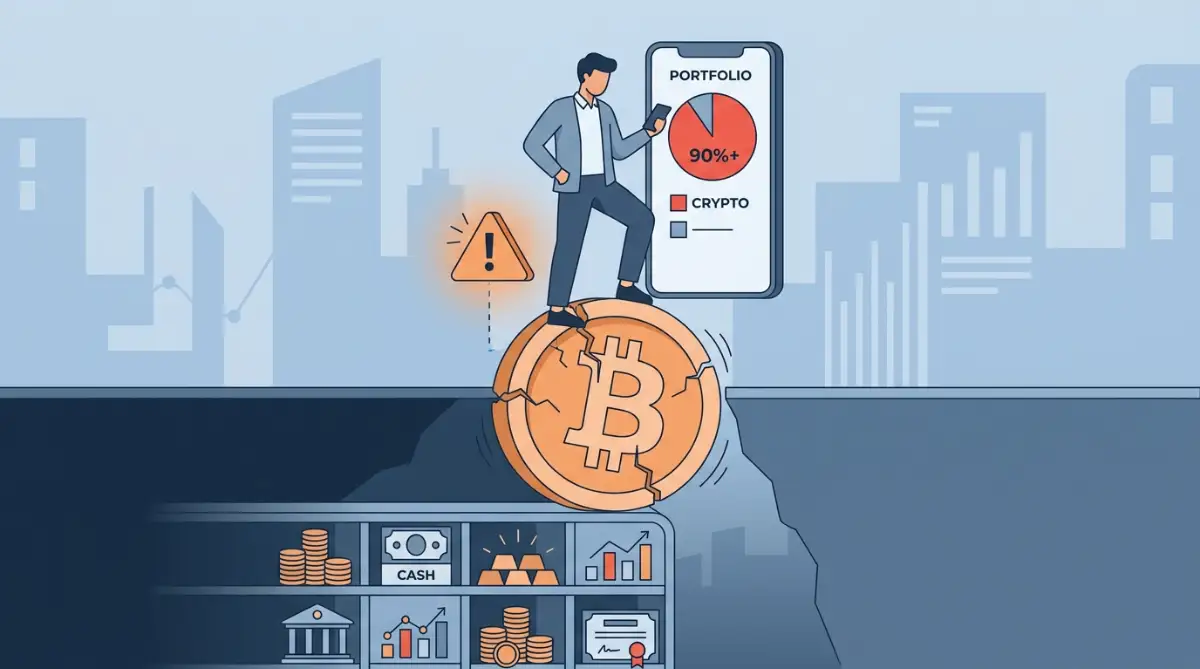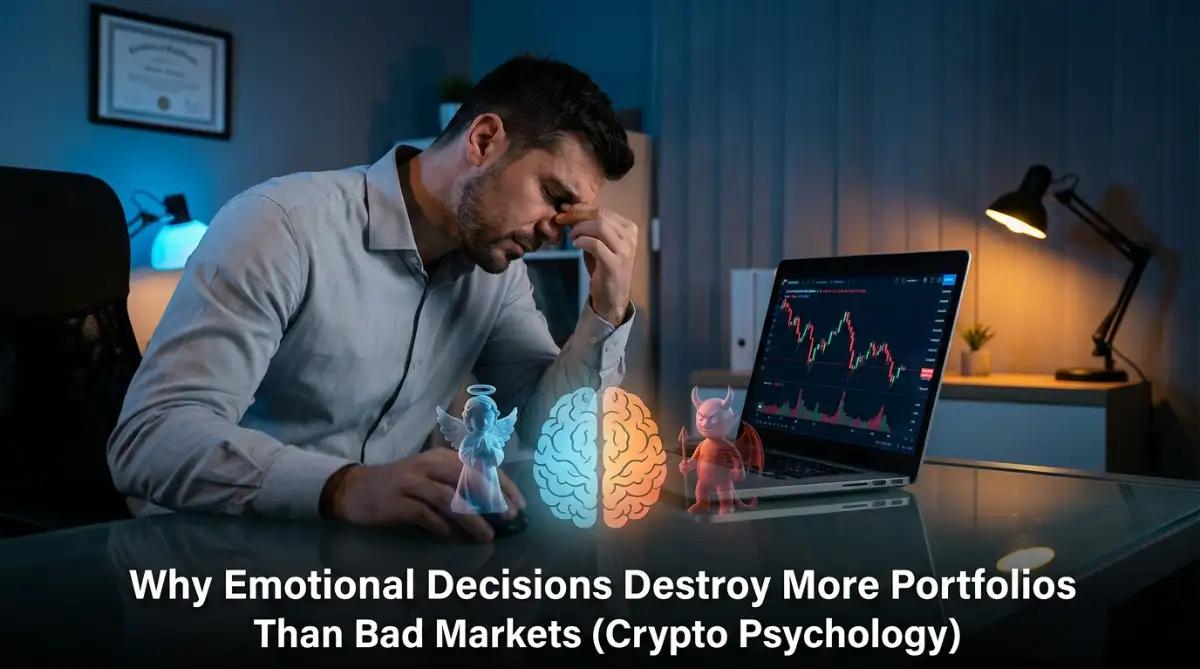
Why Emotional Decisions Destroy More Portfolios Than Bad Markets
Cryptocurrency markets are famous for dramatic price swings. One day, investors celebrate impressive gains. The next day, panic spreads as prices suddenly fall. Many people assume that market crashes are the biggest threat to investment success. Surprisingly, that is only part of the story.
History repeatedly shows that markets eventually recover from many downturns. However, investors who make emotional decisions often fail to recover because they buy and sell at exactly the wrong moments. Instead of following a carefully planned strategy, they react to fear, excitement, regret, or overconfidence.
This is why crypto psychology has become one of the most important topics for anyone who wants to build wealth through digital assets. Understanding how emotions influence financial decisions can be more valuable than finding the next popular cryptocurrency.
In this guide, you'll learn why emotional investing damages portfolios, how common psychological traps affect investors, and practical techniques to stay disciplined during both bull and bear markets.
The Real Enemy Is Often Inside Your Mind
Many beginners spend hundreds of hours learning technical analysis, reading market news, and studying blockchain technology. While these skills are valuable, they often overlook one critical factor—their own behavior.
Markets move because millions of people make decisions every second. Those decisions are driven not only by logic but also by emotion.
Common emotional reactions include:
- Buying because everyone else seems to be making money.
- Selling during panic after prices drop sharply.
- Holding losing investments simply because selling feels painful.
- Taking unnecessary risks after several successful trades.
- Ignoring warning signs because of excessive optimism.
The market itself doesn't force these mistakes. Our emotions do.
Learning to manage your emotions is often more important than predicting short-term price movements.
Why Fear Can Be More Dangerous Than a Market Crash
Fear is one of the strongest emotions in investing.
When prices fall quickly, investors naturally worry about losing their savings. The brain interprets financial losses similarly to physical threats, making emotional reactions stronger than rational thinking.
As fear grows, many investors:
- Sell quality assets during temporary declines.
- Stop following their long-term investment plan.
- Refuse to invest again even after markets stabilize.
- Constantly check prices, increasing anx০iety.
Ironically, selling during panic often locks in losses that might have recovered over time.
Experienced investors understand that market volatility is normal. They prepare emotionally before difficult periods arrive instead of reacting after they begin.
How Greed Leads Investors Into Costly Mistakes
Fear causes people to sell too early.
Greed causes people to buy too late.
When cryptocurrency prices rise rapidly, headlines become increasingly optimistic. Social media fills with stories of overnight success. Friends begin talking about massive profits.
This creates a powerful emotional pressure called Fear of Missing Out (FOMO).
Instead of asking:
"Is this investment still reasonably valued?"
People begin asking:
"What if I miss the next huge rally?"
That small mental shift can completely change investment behavior.
Greed often leads to:
- Buying after large price increases.
- Investing money needed for important expenses.
- Ignoring risk management.
- Chasing speculative projects.
- Believing prices can only continue rising.
Successful investing requires patience, not excitement.
The Psychological Biases That Influence Crypto Decisions
Human brains are designed to make quick decisions, but investing requires careful thinking.
Several psychological biases repeatedly affect investors.
Confirmation Bias
People naturally search for information that supports what they already believe.
If someone believes a particular cryptocurrency will rise forever, they may ignore negative news while only reading positive articles.
Balanced investing requires considering both opportunities and risks.
Loss Aversion
Research suggests people feel the pain of losing money more strongly than the pleasure of gaining the same amount.
Because of this, investors sometimes hold losing positions far longer than they should, hoping prices will eventually recover.
Recency Bias
Recent events often appear more important than long-term history.
After several weeks of rising prices, investors may assume the trend will continue indefinitely.
Similarly, after a market decline, they may believe prices will never recover.
Neither assumption is guaranteed.
Overconfidence
After several profitable investments, confidence naturally increases.
Unfortunately, excessive confidence often leads investors to:
- Increase position sizes.
- Ignore diversification.
- Stop researching investments.
- Take unnecessary risks.
Confidence should always be supported by preparation, not recent success.
Social Media Can Amplify Emotional Investing
Modern investors receive information faster than ever before.
News spreads within minutes.
Opinions spread even faster.
While social media provides educational opportunities, it also encourages emotional decision-making.
Trending posts often highlight:
- Extraordinary profits.
- Dramatic losses.
- Bold predictions.
- Extreme opinions.
- Viral rumors.
These stories attract attention because they trigger emotional responses.
However, they rarely represent the average investor's experience.
Before making financial decisions based on online content, ask yourself:
- Is the information supported by reliable evidence?
- Is this opinion based on facts or emotions?
- Would I make the same decision without seeing this post?
These simple questions can prevent many expensive mistakes.
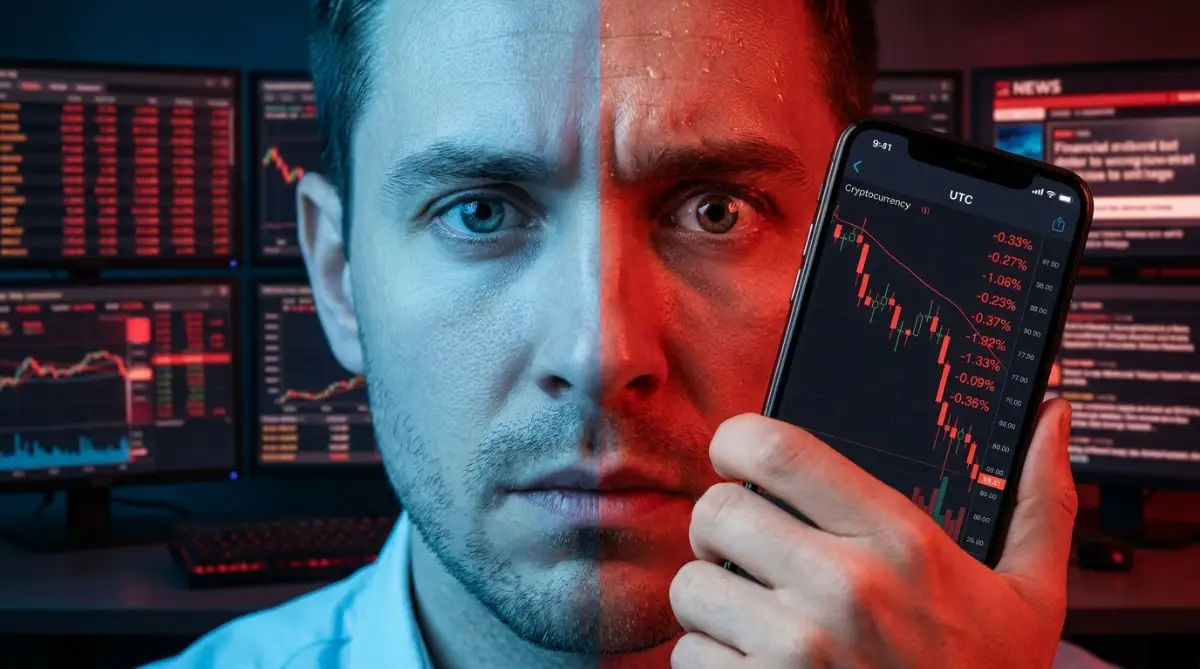
Why Successful Investors Build Rules Before Investing
One of the biggest differences between experienced and inexperienced investors is preparation.
Professionals don't rely on emotions.
They rely on systems.
Before investing, many experienced investors define rules such as:
- Maximum amount invested in one asset.
- Acceptable level of portfolio risk.
- Long-term investment objectives.
- Conditions for buying.
- Conditions for reducing exposure.
- Portfolio review schedule.
Having predefined rules reduces emotional reactions during volatile markets.
Instead of making decisions under pressure, investors simply follow their plan.
The Hidden Cost of Constant Portfolio Checking
Technology makes it possible to monitor cryptocurrency prices every minute.
Although convenient, this habit can become harmful.
Frequent price checking often increases:
- Stress
- Anxiety
- Impulsive trading
- Emotional exhaustion
Small market movements that have little long-term significance may suddenly feel extremely important.
Many long-term investors intentionally limit how often they review their portfolios.
This helps them focus on long-term progress instead of short-term market noise.
Why Patience Often Outperforms Constant Activity
Many people believe successful investing means making frequent trades.
In reality, more activity does not always produce better results.
Every investment decision carries uncertainty.
Constantly buying and selling increases opportunities for emotional mistakes.
Patience allows investors to:
- Follow long-term goals.
- Reduce emotional pressure.
- Avoid reacting to temporary volatility.
- Evaluate investments more carefully.
Sometimes the most productive decision is simply waiting rather than acting immediately.
Building Emotional Discipline for Long-Term Success
Emotional control is not something investors are born with. It develops through consistent habits, realistic expectations, and a willingness to learn from past experiences.
Instead of trying to eliminate emotions completely—which is impossible—the goal is to recognize them before they influence important financial decisions.
Simple practices such as keeping an investment journal, reviewing decisions objectively, maintaining diversification, and following a written investment plan can significantly improve discipline over time.
Every market cycle presents new challenges. Prices will rise, fall, recover, and fluctuate again. Investors who remain calm during these changes are often better positioned to make thoughtful decisions than those who react to every headline or price movement.
Developing a strong investment mindset is a continuous process. As your knowledge grows, your confidence should come from preparation, research, and patience—not from short-term market excitement. The investors who consistently achieve long-term success are rarely those who predict every market move correctly. More often, they are the ones who manage their emotions effectively, stay committed to their strategy, and make decisions based on reason instead of impulse.
Strengthening Your Investment Mindset During Market Volatility
Understanding emotional investing is only the beginning. The next step is developing habits that help you stay consistent regardless of what the market is doing. Every investor experiences uncertainty, excitement, disappointment, and optimism. The difference is that disciplined investors acknowledge these emotions without allowing them to control every decision.
A strong investment mindset is built gradually through preparation, self-awareness, and continuous learning. Rather than trying to predict every market movement, focus on creating a decision-making process that remains effective in both rising and falling markets.
Below are practical strategies that can help investors reduce emotional mistakes while improving long-term consistency.
Create an Investment Plan Before You Buy Anything
One of the simplest ways to reduce emotional investing is to write down your investment plan before purchasing any asset.
Your plan should answer questions such as:
- Why am I investing in this asset?
- What is my investment time horizon?
- How much of my portfolio should this investment represent?
- What risks am I willing to accept?
- Under what conditions would I reduce or increase my position?
When these decisions are made in advance, you are less likely to react emotionally when prices change.
A written investment plan also provides an objective reference whenever market volatility creates uncertainty.
Separate Short-Term Noise From Long-Term Progress
Financial markets generate enormous amounts of information every day.
Breaking news, social media discussions, price alerts, expert opinions, and market rumors compete for attention.
Not every update deserves immediate action.
Successful investors learn to distinguish between temporary market noise and meaningful long-term developments.
Ask yourself:
- Has the fundamental reason for my investment changed?
- Is this event likely to affect long-term adoption or value?
- Am I reacting to facts or simply reacting to price movement?
Often, short-term volatility creates emotional pressure without changing the original investment thesis.
Learning this distinction helps investors avoid unnecessary portfolio changes.
Build Confidence Through Research Instead of Predictions
Many investors search for people who claim they know exactly where the market is going.
In reality, nobody can consistently predict every market movement.
Instead of relying on predictions, build confidence by understanding:
- Blockchain technology
- Project fundamentals
- Development activity
- Real-world use cases
- Risk factors
- Market cycles
Knowledge reduces uncertainty.
The better you understand an investment, the less likely you are to panic during temporary price declines.
Research creates confidence that is based on facts rather than hope.
Learn to Recognize Emotional Triggers
Every investor has emotional triggers.
Some people become anxious after losing money.
Others become overly confident after making profits.
Recognizing these patterns is one of the most valuable skills in crypto psychology.
Common emotional triggers include:
Large Daily Price Swings
Sudden gains or losses often encourage impulsive decisions.
Instead of reacting immediately, give yourself time to evaluate the situation objectively.
Constant Exposure to Social Media
Following market discussions all day can increase stress and create unnecessary urgency.
Limiting exposure during highly volatile periods can improve decision quality.
Comparing Yourself With Others
Seeing stories about extraordinary profits can create unrealistic expectations.
Remember that people often share their successes while rarely discussing mistakes or losses.
Focus on your own financial goals rather than someone else's results.
Diversification Can Reduce Emotional Pressure
Putting too much money into a single investment increases emotional stress.
Every price movement feels more significant.
Diversification helps distribute risk across multiple investments instead of relying on one outcome.
While diversification cannot eliminate risk, it often reduces emotional reactions because portfolio performance becomes less dependent on a single asset.
A balanced approach encourages more rational decision-making during volatile periods.
Accept That Losses Are Part of Investing
Many investors believe successful investing means never making mistakes.
That expectation is unrealistic.
Even experienced investors occasionally make poor decisions or encounter unexpected market events.
The important question is not whether losses occur.
The important question is how you respond to them.
Healthy responses include:
- Reviewing what happened objectively.
- Identifying lessons.
- Improving your investment process.
- Avoiding emotional revenge trading.
- Maintaining realistic expectations.
Every investment journey includes both successful and unsuccessful decisions.
Growth comes from learning rather than seeking perfection.
Keep an Investment Journal
An investment journal is one of the most overlooked tools for improving decision-making.
Record details such as:
- Why you entered an investment.
- Market conditions at the time.
- Your expectations.
- Emotional state.
- Lessons learned afterward.
Over time, patterns become visible.
You may discover that your worst decisions happened during periods of excitement.
Or perhaps your best investments occurred when you followed your original strategy patiently.
Documenting decisions transforms experience into practical knowledge.
Focus on Process Instead of Daily Results
Daily market performance does not always reflect the quality of your investment decisions.
Good decisions sometimes produce temporary losses.
Poor decisions sometimes produce temporary gains.
Instead of judging yourself solely by short-term outcomes, evaluate whether you followed your investment process.
Ask questions like:
- Did I research thoroughly?
- Did I follow my risk management plan?
- Did I avoid emotional reactions?
- Did I stay consistent with my objectives?
Strong processes generally produce better long-term results than emotional decision-making.
Healthy Habits That Improve Financial Decisions
Investment psychology extends beyond charts and prices.
Physical and mental well-being influence financial judgment more than many people realize.
Helpful habits include:
- Getting enough sleep.
- Taking breaks from market screens.
- Exercising regularly.
- Maintaining balanced daily routines.
- Avoiding investment decisions during periods of extreme stress.
Clear thinking becomes easier when overall health is supported.
Good financial decisions often begin with good personal habits.
Common Emotional Mistakes Investors Continue to Repeat
Even after gaining experience, many investors repeatedly encounter similar psychological challenges.
Some of the most common include:
Chasing Every Popular Trend
Not every trending project becomes a long-term success.
Avoid investing solely because something is currently receiving attention.
Ignoring Personal Risk Tolerance
Every investor has different financial circumstances.
Strategies suitable for one person may not be appropriate for another.
Always make decisions based on your own financial goals and comfort with risk.
Expecting Constant Profits
Markets naturally experience periods of growth, correction, recovery, and consolidation.
Expecting continuous gains often creates disappointment and emotional decision-making.
Patience remains one of the most valuable investment qualities.
Reacting Too Quickly
Immediate emotional reactions frequently produce avoidable mistakes.
Creating a habit of waiting before making significant investment decisions allows emotions to settle and rational thinking to return.
Developing Long-Term Emotional Resilience
Emotional resilience is not about ignoring feelings.
It means responding thoughtfully rather than reacting impulsively.
Over time, resilient investors learn to:
- Stay calm during uncertainty.
- Accept temporary setbacks.
- Continue learning.
- Adapt when necessary.
- Maintain realistic expectations.
This resilience becomes increasingly valuable as markets evolve.
Rather than fearing volatility, disciplined investors prepare for it.
Preparation reduces emotional pressure and improves confidence.
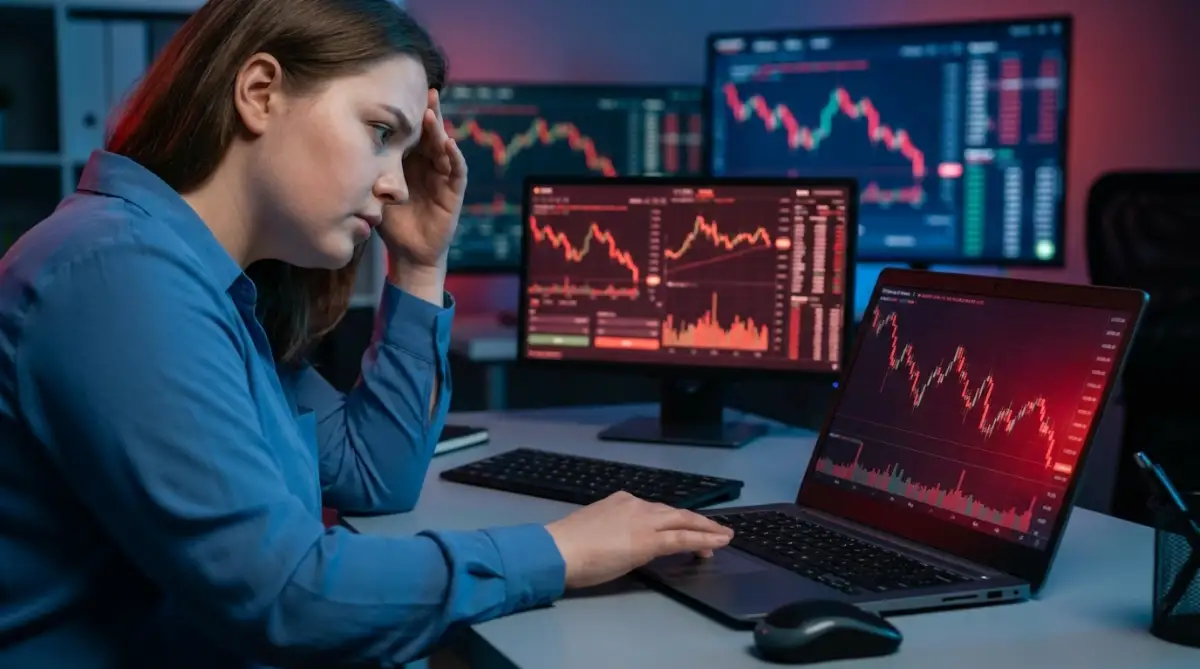
The Lasting Advantage of Emotional Discipline
Many investment discussions focus on identifying the next opportunity, the next trend, or the next technological innovation.
While these topics are important, lasting success often depends on something much simpler—consistent decision-making.
Emotional discipline helps investors remain focused when markets become unpredictable.
It encourages patience when others become impatient.
It promotes thoughtful analysis when emotions dominate public conversations.
Most importantly, it supports decisions based on evidence instead of fear or excitement.
Markets will always experience periods of optimism and uncertainty. Economic conditions, investor sentiment, technological developments, and global events will continue to influence prices. These factors cannot be controlled.
What investors can control is their preparation, research, risk management, and emotional response.
Developing these skills takes time, but they often become some of the most valuable assets an investor can possess.
A portfolio may grow through successful investments, but long-term financial confidence grows through discipline, continuous education, and the ability to remain steady when emotions encourage impulsive choices.
Frequently Asked Questions
Can emotional investing affect experienced investors?
Yes. Experience reduces emotional mistakes but does not eliminate them completely. Even professional investors use structured processes and risk management to minimize emotional decision-making.
Why is fear more powerful than logic during market declines?
Fear is a natural human response to uncertainty and potential loss. During periods of high volatility, emotions can become stronger than rational analysis, making disciplined planning especially important.
Is checking crypto prices multiple times a day harmful?
Not necessarily. However, excessive monitoring can increase stress and encourage impulsive decisions. Many long-term investors choose a structured review schedule instead of constantly watching prices.
Does emotional discipline guarantee investment success?
No. Emotional discipline cannot remove market risk or guarantee positive returns. However, it can reduce avoidable mistakes and help investors make more consistent, well-informed decisions over time.
How can beginners improve investment psychology?
Beginners can improve by creating a written investment plan, learning about risk management, keeping an investment journal, avoiding impulsive decisions, and focusing on long-term education instead of short-term market excitement.
Disclaimer
This article is intended for educational and informational purposes only and should not be considered financial, investment, legal, or tax advice. Cryptocurrency and other investments involve risk, including the possible loss of capital. Always conduct your own research, evaluate your financial circumstances, and consider consulting a qualified financial professional before making investment decisions.