When Your Crypto Portfolio Looks Fine but Carries Too Much Risk
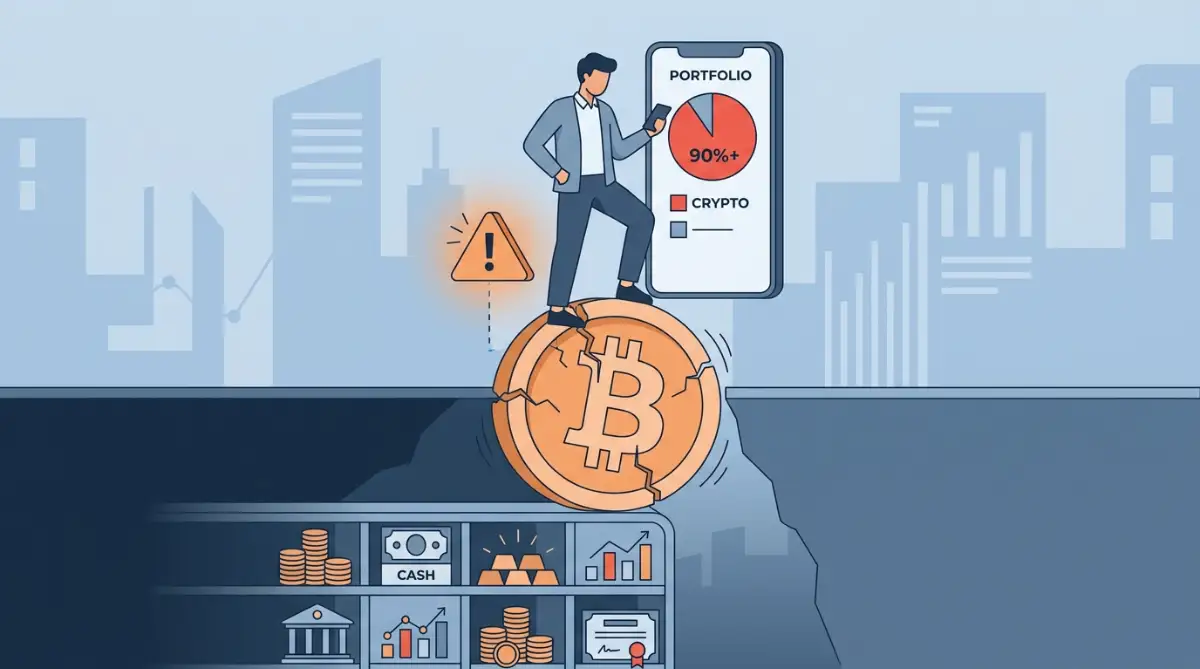
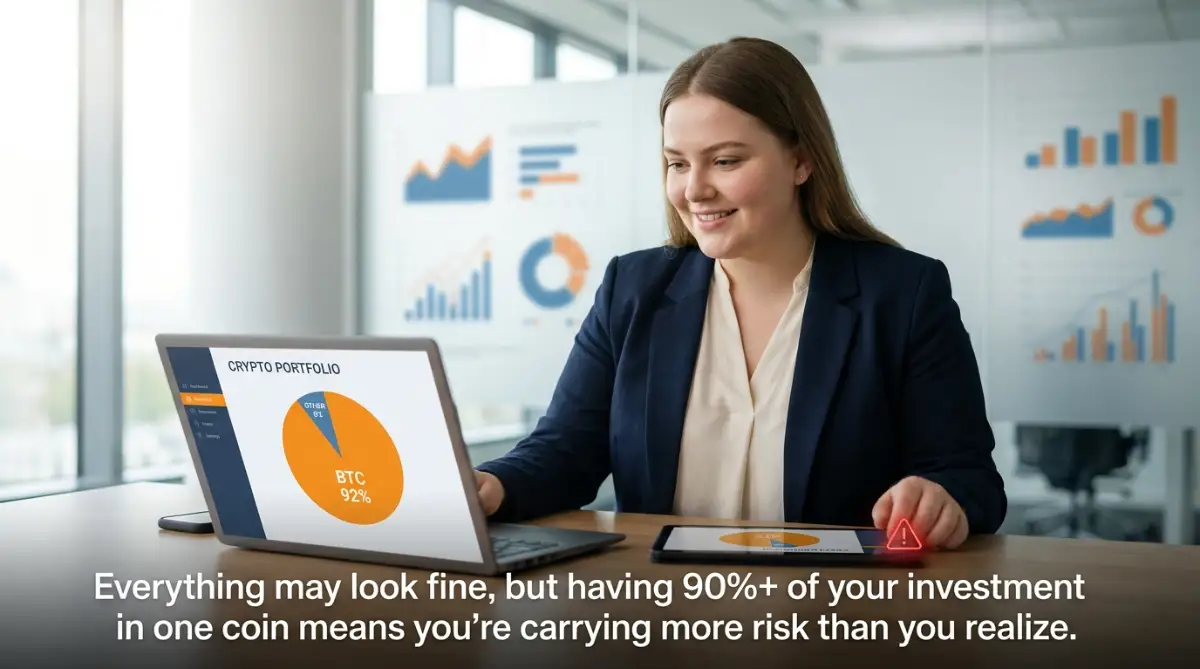
Imagine checking your crypto portfolio and seeing a healthy-looking balance. Nothing seems obviously wrong, but one sharp market move could hit your finances much harder than you expected.
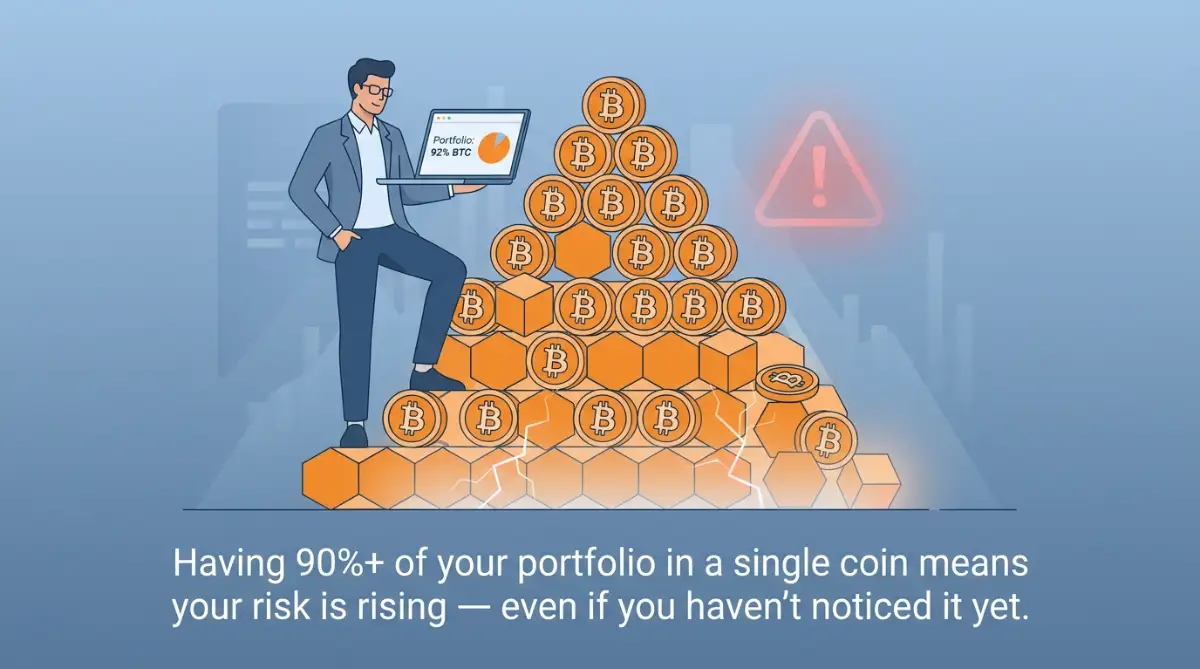
This happens when too much of your financial life depends on one asset, one crypto sector, one exchange, or one market outcome. You might own several coins and still be exposed to the same underlying risk.
The problem is not simply owning cryptocurrency. The bigger issue is losing track of how much of your overall financial position depends on it.
The CFTC warns that virtual currencies can experience significant price swings and that crypto markets also carry risks involving liquidity, platforms, cybersecurity, and market manipulation.
You can also check out FINRA's guidance on concentration risk, which explains why putting a large share of your holdings into one investment or market segment can make losses worse.
Why Crypto Overexposure Is So Easy to Miss
Most investors do not wake up one morning and decide, “I want to take excessive risk.”
It usually happens little by little.
- A coin does well, so you buy more.
- You add another token from the same sector.
- Your crypto holdings grow while your other assets stay about the same.
- You start treating unrealized gains like permanent savings.
- Social media makes holding more crypto feel normal because everyone around you seems heavily invested.
The result can be a portfolio that looks diversified on a screen but is highly concentrated underneath.
For example, someone might hold Bitcoin, several large-cap tokens, a few DeFi assets, and multiple blockchain-related investments. That sounds diversified, but a broad crypto market drop could still affect most of those positions at the same time.
That is why simply counting the number of coins you own is not enough.
The Emotional Cost of Being Too Exposed
Overexposure is not just a financial problem.
It can affect how you think, sleep, spend, and make decisions.
- You may check prices constantly because a normal market move suddenly feels personal.
- You may avoid selling because you are worried about missing the next rally.
- You may put in more money after a drop because you want to make back what you lost.
- You may feel unusually stressed whenever crypto prices move sharply.
- You may start judging your financial success almost entirely by your portfolio balance.
This can create a tough cycle.
A falling market causes anxiety, anxiety leads to impulsive decisions, and those decisions can increase the risk you were already trying to get away from.
A portfolio should support your financial goals, not control your daily emotions.
If your crypto holdings are large enough that a major price drop would affect your ability to pay bills, handle emergencies, or reach important financial goals, the issue may be your level of exposure rather than the next market prediction.
The Real Problem: You May Be Measuring the Wrong Thing
One of the easiest mistakes is asking:
“How many different cryptocurrencies do I own?”
A better question is:
“How much of my overall financial position depends on crypto doing well?”
That difference matters.
Consider two hypothetical investors.
Investor A owns eight different crypto assets, but 75% of their investable money is still tied to crypto.
Investor B owns only two crypto assets, but crypto makes up 8% of their broader investment portfolio.
Investor A owns more individual assets, but may still face much greater concentration risk.
FINRA notes that diversification means spreading investments across and within asset classes, while concentration risk can increase when a large portion of a portfolio depends on one investment, asset class, or market segment.
This is why asset count is not the same as risk control.
Three Practical Checks That Can Reveal Hidden Crypto Exposure
1. Calculate Your Real Crypto Weight
The first step is pretty simple: stop looking at your crypto portfolio by itself.
Instead, look at your bigger financial picture.
Add up the investments and financial assets that matter to your situation, then estimate what percentage is exposed to crypto.
You do not need fancy software.
A basic spreadsheet is enough.
Create a Simple Exposure Snapshot
Write down:
- Cash and emergency savings
- Stocks or other investments
- Bonds or fixed-income holdings, if applicable
- Retirement investments
- Crypto assets
- Other significant investments
- Any borrowed money connected to investing
Then calculate the approximate share represented by crypto.
For example, imagine someone has:
Crypto would represent roughly 29% of this total.
That number tells you much more than simply knowing you own ten different tokens.
There is no universal crypto allocation that works for everyone. Your income, emergency savings, debt, financial goals, investing experience, and ability to handle losses all matter.
Ask Yourself One Uncomfortable Question
If my crypto holdings suddenly lost half their value, what would change in my real life?
Would you still be able to cover your normal expenses?
Could you handle an unexpected repair or medical bill?
Would your long-term financial plans still be okay?
Would you feel forced to sell other investments?
Your answers can tell you more about your actual risk exposure than a chart showing potential returns.
2. Look for Concentration Inside Your Crypto Holdings
Even after calculating your total crypto allocation, there is another layer to check.
You may be concentrated within crypto itself.
Owning ten tokens does not automatically mean you have ten separate sources of risk.
Many crypto assets can react to the same market conditions.
If the market enters a broad risk-off period, several assets may fall together.
Watch for These Hidden Concentration Patterns
One Asset Dominates the Portfolio
Suppose one cryptocurrency makes up 70% of your crypto holdings.
You may technically own seven other assets, but most of your crypto performance still depends on one position.
That is concentration.
Several Tokens Depend on the Same Theme
Imagine your portfolio includes several assets tied to the same sector, technology, or investment trend.
They may look different because their names and logos are different.
From a risk perspective, though, they may behave in very similar ways.
Different assets do not always mean different risks.
Your Income and Investments Depend on the Same Industry
This is something investors sometimes miss.
Imagine someone earns their income from a technology-related business and also has a large investment position in technology-linked crypto projects.
If that sector takes a major hit, both their income and investments could come under pressure.
The danger is not just losing money in your portfolio.
It is having several financial problems show up at the same time.
A Useful Mental Model
Think of your portfolio as a group of boats.
If every boat is tied to the same dock, having twenty boats will not protect you from a problem at that dock.
The point of diversification is not to avoid every loss.
It is to avoid having one event control the outcome of your entire financial plan.
3. Check Whether Your Risk Is Bigger Than Your Position Size
There is another type of overexposure that is easy to miss: leverage.
You might have a relatively small amount of your own money in crypto but take on extra exposure through borrowed funds, margin, derivatives, or other leveraged products.
That changes the math.
A position can become much more sensitive to market moves when borrowed money is involved.
The CFTC specifically warns that leverage can amplify losses in virtual currency derivatives and that traders can potentially lose more than their initial amount in certain leveraged situations.
Why Leverage Changes the Risk Equation
Suppose an investor puts $2,000 of their own money into a position.
Without leverage, a 30% decline would mean a loss of about $600.
With borrowed exposure, the same market move can create a much larger loss compared with the investor's own capital.
That is why looking only at the cash you personally deposited can give you the wrong picture.
Always ask how much market exposure you actually control, not just how much money you initially put in.
A Simple Rule for Better Decision-Making
Before using any leveraged crypto product, make sure you can clearly explain:
- How the product works
- How profits are calculated
- How losses are calculated
- When liquidation can occur
- What fees apply
- What happens during extreme volatility
- Whether you could owe more than you initially committed
If you cannot explain these points in plain language, you probably do not understand the risk well enough to use the product confidently.
The CFTC also advises consumers not to use investment products or strategies they do not understand.
A Quick Exposure Audit You Can Do Today
You do not need to predict Bitcoin's next move to improve your risk management.
You can start by writing down five numbers.
Your Personal Risk Snapshot
1. Total financial assets:
How much money do you have across savings and investments?
2. Total crypto exposure:
How much is directly or indirectly connected to crypto?
3. Largest individual crypto position:
Which asset would hurt you most if it dropped sharply?
4. Borrowed exposure:
Are you using margin, loans, or leveraged products?
5. Emergency liquidity:
How much money can you access without selling risky investments?
This exercise can reveal problems that price charts hide.
For example, an investor might discover that crypto makes up 40% of their investment assets, their largest token represents more than half of their crypto holdings, and they have only a small emergency reserve.
That is a very different risk picture from simply saying, “I have a diversified crypto portfolio.”
Don't Confuse Confidence With Risk Capacity
A common mistake is assuming that being comfortable with volatility automatically means you can afford high exposure.
These are not the same thing.
You may be emotionally okay watching your portfolio fall.
But if you need that money for tuition, housing, family expenses, debt payments, or an emergency, your financial ability to absorb a loss may be much lower than your emotional tolerance suggests.
Risk Tolerance vs. Risk Capacity
Risk tolerance asks:
“How much loss can I emotionally handle?”
Risk capacity asks:
“How much loss can my financial situation actually withstand?”
The second question is often more important.
Someone with stable income, enough emergency savings, manageable debt, and a long investment horizon may have a different risk capacity from someone who needs their invested money soon.
That is why copying another investor's portfolio can be risky.
Their risk capacity is not your risk capacity.
One More Warning Sign: Your Portfolio Needs a Bull Market to Work
Here is a simple test.
Ask yourself:
“If crypto prices stayed weak for a long time, would my financial plan still work?”
If the answer is no, your portfolio may be relying too much on continued market growth.
A strong investment plan should not need perfect market conditions.
This does not mean you have to avoid crypto.
It means your broader financial setup should still work even when one part of it performs badly.
For investors who prefer a long-term approach, understanding why patience can matter more than trying to predict short-term price movements can also help reduce emotional decisions. You can explore this idea in our guide to long-term crypto investing and patience.
The Hidden Exposure You May Not See in Your Wallet
There is one final issue worth checking: indirect exposure.
Your crypto risk may exist outside the wallet or exchange account you normally watch.
For example, you might hold a token directly while also owning another investment whose performance is closely tied to the same market theme.
You might also keep a large amount of crypto on one platform.
That creates another kind of concentration.
The SEC's investor guidance has warned that crypto-related investments can involve volatility, illiquidity, platform failure, hacking, fraud, and other risks.
This means risk management is not just about asking, “Which coin should I buy?”
It is also about asking:
Where is my money held? Who controls it? How easy is it to access? What happens if the platform becomes unavailable? What happens if the asset becomes difficult to sell?
Understanding the difference between blockchain transparency and practical transaction privacy can also help investors think more carefully about how crypto activity works. Our guide on whether blockchain transactions can be traced provides additional educational context.
A Better Way to Think About Crypto Risk
The goal of risk management is not to remove every chance of losing money.
That is impossible.
The goal is to make sure one bad outcome does not wreck your wider financial plan.
Before adding another asset, ask yourself:
- Does this increase my overall crypto allocation?
- Does it increase exposure to a risk I already have?
- Is this asset genuinely different from what I already own?
- Could I handle a major decline?
- Do I understand how I would exit?
- Am I buying because of research or because everyone around me seems excited?
Those questions may feel less exciting than trying to predict the next big winner.
But they can lead to much better decisions.
The strongest risk-management habit is knowing how much risk you already have before taking on more.
Seeing the Risk Beneath the Surface
Part 1 showed why simply counting coins or checking your portfolio balance can make you feel safer than you really are. Now let’s take things one step further and look at risks that often stay hidden until the market gets rough.
The goal isn’t to predict what the market will do next. It’s to build a portfolio you can live with when things don’t go according to plan.
When Diversification Looks Better Than It Really Is
A portfolio can hold lots of different assets and still act like one big bet.
That happens when several holdings react to the same economic pressure, market mood, technology trend, or crypto cycle.
Think in Terms of Behavior, Not Names
Imagine you own five different tokens.
One is tied to decentralized finance, another to smart-contract infrastructure, another to a related application, and two more depend heavily on the same broader ecosystem.
On paper, you have five positions.
But during a serious market downturn, they may all respond to the same pressure.
The real question isn’t “How many assets do I own?” It’s “How many different risks do those assets actually represent?”
That’s why experienced investors look at correlation instead of relying only on the number of holdings.
A simple spreadsheet can help.
Add columns for the asset, sector or theme, approximate portfolio weight, and the main reason you own it.
If several rows keep pointing back to the same theme, you may be more concentrated than you first realized.
Give Your Portfolio a Stress Test
You don’t need a complicated financial model to test your exposure.
Instead, imagine a few uncomfortable but realistic situations.
Scenario: A Major Crypto Drop
Ask yourself:
What happens to my total financial position if most of my crypto holdings fall sharply at the same time?
Don’t focus only on the dollar loss.
Think about what that loss might force you to do.
Would you delay an important financial goal?
Would you need to sell another investment?
Would you borrow money?
Would you stop contributing to savings?
Your answers can show whether your current allocation actually fits your financial situation.
Scenario: Your Biggest Holding Falls Alone
Now imagine your largest crypto position drops while the rest of the market stays fairly stable.
If that one event would cause serious financial damage, you may have a single-position problem.
That’s different from broad market exposure.
You can have a moderate overall crypto allocation and still take on too much risk through one oversized position.
Scenario: You Cannot Sell When You Want
Liquidity deserves just as much attention.
An asset may show a price on your screen, but that doesn’t mean you can always sell a large position at that price.
During stressful market conditions, liquidity can change.
A theoretical portfolio value isn’t the same as cash you can access right away.
Build a “What If?” Routine Before the Market Forces You To
One useful habit is to review your exposure while you’re calm, not while prices are falling.
When markets drop quickly, people often make decisions out of fear.
A written plan can take some of that pressure off.
Your Personal Stress-Test Questions
Keep these questions somewhere you can easily review them:
- What percentage of my financial assets is exposed to crypto?
- What happens if my largest holding falls sharply?
- What happens if several holdings drop together?
- How much cash would I still have available?
- Would I need to sell during a downturn?
- Am I using borrowed money?
- Is too much of my crypto sitting on one platform?
- Has my portfolio grown beyond the level I originally intended?
You don’t need to make a perfect prediction.
You’re checking whether your financial plan can handle an imperfect outcome.
That’s a much more useful exercise.
Watch the Portfolio, Not Just the Price Chart
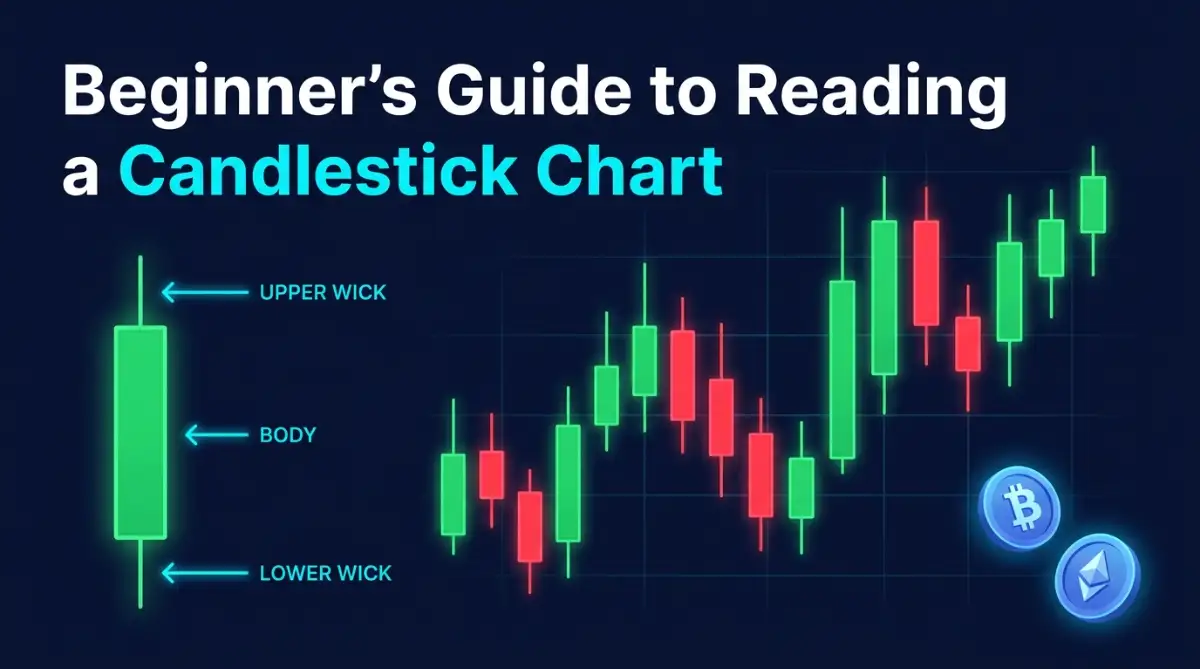
Crypto investors often spend hours watching candles, support levels, market predictions, and social-media commentary.
But one of the most useful numbers may be outside the trading screen.
It’s your total portfolio exposure.
Suppose your crypto holdings rise significantly while your savings and other investments stay the same.
Even if you never buy another coin, your crypto percentage may quietly become much larger.
That means you can become overexposed without making a new investment decision.
The Silent Drift Problem
Imagine you originally decided that crypto would make up a modest part of your overall investments.
Then a long stretch of strong performance pushes that percentage much higher.
Nothing feels wrong because your account balance looks better.
But your portfolio has changed.
This is called allocation drift.
A simple review process can help you spot it before the position becomes uncomfortable.
Let Your Rules Survive Your Emotions
One of the best ways to manage overexposure is to decide on your review rules before you get emotionally attached to an asset.
You might choose to review your overall allocation on a regular schedule or whenever something major changes in your financial situation.
The right timing depends on your circumstances.
A Simple Review Framework
When reviewing your portfolio, ask three separate questions.
Has my financial situation changed?
Maybe your income changed, your expenses went up, or you now need money for an upcoming goal.
Has the portfolio changed?
An asset may have grown so much that its percentage of your total investments is now very different.
Has my original reason for owning the asset changed?
If your original research no longer supports the position, that’s worth paying attention to.
Keeping these questions separate can help you avoid making decisions based only on whether the price is going up or down right now.
Platform Concentration Can Become a Second Layer of Risk
Your investments may be spread across several assets while your custody setup is still heavily concentrated.
For example, you might own different cryptocurrencies but keep most of them on one exchange or through one service.
That creates a separate dependency.
If access to that platform is disrupted, your problem isn’t just market volatility anymore.
It can become an access, custody, operational, or liquidity problem.
Separate Investment Risk From Custody Risk
Think of these as two different questions:
Investment risk:
“What happens to the value of my asset?”
Custody risk:
“What happens to my ability to access or control the asset?”
They can happen independently.
That distinction is easy to miss when your entire portfolio appears in one convenient app.
A good risk-management plan should consider both.
For more guidance on spotting suspicious behavior before committing funds, you can also review our practical guide to crypto scam warning signs.
The “House Money” Trap
Here’s a psychological trap worth watching.
An investor buys an asset for $5,000.
It rises to $10,000.
They start thinking:
“The extra $5,000 is just profit.”
But economically, the full $10,000 belongs to them now.
The market doesn’t know which dollars were originally deposited.
Why This Thinking Can Increase Risk
Once people mentally separate their original money from their gains, they may feel more comfortable taking extra risks with the position.
They might buy more assets.
They might use leverage.
They might refuse to reduce their exposure because they feel like they’re “playing with profits.”
But a gain shown on a screen isn’t guaranteed money.
Unrealized gains can disappear, just like unrealized losses can recover.
That doesn’t mean you should automatically sell profitable assets.
It means you should judge your current exposure based on its present value, not what you originally paid.
When Rebalancing Feels Emotionally Wrong
Portfolio management gets harder when an asset you love has performed extremely well.
You may think:
“Why would I reduce something that’s making money?”
That reaction is understandable.
But risk management sometimes means separating a good investment outcome from a good portfolio size.
An asset can perform well and still become too large a part of your portfolio.
A Simple Analogy
Imagine carrying a backpack on a long hike.
At first, one heavy item doesn’t feel like a big deal.
Then you keep adding more things to that same section.
Eventually, the backpack becomes hard to carry.
The problem isn’t that any one item is necessarily bad.
The problem is the total weight.
Crypto exposure can work the same way.
Habits That Help Keep Exposure Under Control
Managing risk once isn’t enough.
Your financial situation changes, markets move, and your priorities evolve.
A better approach is to create a simple routine you can repeat without turning investing into a full-time job.
Keep a Personal Allocation Record
Write down your intended allocation and the reasons behind it.
Don’t rely completely on memory.
A simple note might include:
- Why you hold crypto
- What role it plays in your wider financial plan
- Which risks concern you most
- How much volatility you can realistically handle
- Which financial goals need to stay protected
- How often you plan to review your exposure
This gives you something to compare against when emotions run high.
Why Written Rules Help
When prices rise quickly, excitement can make extra risk feel harmless.
When prices fall sharply, fear can make every decision feel urgent.
A written framework creates a pause.
That pause may be more valuable than another market prediction.
For a broader introduction to practical crypto risk controls, you can also use our guide on smart crypto risk-management strategies for beginner investors.
Five Risky Habits That Can Undo Good Planning
Even investors who understand concentration risk can fall into familiar traps.
Here are the behaviors worth watching most closely.
Chasing a Position Because It Is Rising
A rapidly rising asset can make you feel like you’re already late.
That pressure can lead you to increase a position right when it has become more expensive and more dominant in your portfolio.
Past performance doesn’t guarantee future performance.
Before adding money, check whether the purchase would push your overall exposure beyond a level you can realistically handle.
Treating Social Media as a Risk Assessment Tool
Online communities can offer ideas, but they can’t tell you what level of risk fits your finances.
A stranger may be comfortable losing money that you need for an important goal.
Someone posting a big gain may also leave out losses, debt, or other parts of their financial situation.
Use social content to come up with questions, not as a replacement for your own analysis.
Assuming More Coins Means More Safety
Adding another token can feel like diversification.
But if that token reacts to the same market forces as your existing holdings, the benefit may be smaller than you expect.
Before adding something new, ask what risk it actually adds or reduces.
If the answer isn’t clear, pause and do more research before increasing the position.
Ignoring Liquidity Until You Need Cash
An asset can look valuable while still being difficult to turn into cash during stressful conditions.
This matters even more if you might need the money quickly.
Keep your short-term financial needs separate from money you can afford to expose to major market uncertainty.
Don’t make a risky asset responsible for an expense that can’t wait.
Increasing Risk After a Loss
Losses can create a strong urge to recover your money quickly.
An investor might increase their position size, use leverage, or move into even more speculative assets.
That can turn one mistake into several.
If you feel like you “have to make the money back,” treat that feeling as a warning sign.
Step away from the screen and review your original financial plan before making another move.
A Small Portfolio Review Can Prevent a Large Problem
You don’t need to monitor your portfolio every hour.
A calmer system can be much more useful.
Try This Personal Review
Look at your total financial picture.
Don’t open only the crypto app.
Check concentration.
Look for one dominant asset, sector, theme, or platform.
Review leverage.
Make sure you understand exactly what obligations borrowed exposure creates.
Check liquidity.
Know which money is available for real-life needs without depending on a favorable crypto market.
Compare today with your original plan.
If your exposure has changed significantly, look into why.
This process is intentionally simple.
The goal isn’t to make investing complicated.
It’s to make hidden risk easier to spot.
Your “Tomorrow Morning” Action Plan
You can get started without buying, selling, or predicting anything.
Tomorrow, grab a blank sheet of paper and write:
My total financial assets: ______
My total crypto exposure: ______
My largest crypto position: ______
My largest crypto-related theme: ______
My platform concentration: ______
My borrowed exposure: ______
Money needed for near-term goals: ______
Then finish with one question:
“If the market moves against me, what decision would I regret being forced to make?”
That question shifts the focus from chasing returns to protecting your choices.
And having choices matters.
A Healthier Definition of Being a Crypto Investor
You don’t need to own every promising token.
You don’t need to predict every market turn.
You don’t need to react to every headline.
A thoughtful investor understands that survival, flexibility, and informed decision-making matter just as much as potential returns.
Being cautious doesn’t mean being afraid of crypto.
It means knowing what role crypto plays in your financial life and not letting that role become bigger than you intended.
The Final Checklist Before You Add More Risk
Before increasing your crypto exposure, pause and ask:
- Will this make crypto too large a part of my finances?
- Am I adding a genuinely different risk or another version of one I already have?
- Would I still be comfortable if prices fell sharply?
- Do I have enough accessible money for normal emergencies?
- Am I relying on borrowed money?
- Could I explain this investment to someone without using hype?
- Am I making this decision because of research or because I feel pressured?
You don’t have to answer every question perfectly.
You just need to be honest with yourself.
A Word to Take With You
The riskiest portfolio isn’t always the one filled with the most obviously risky assets.
Sometimes it’s the portfolio whose owner doesn’t realize how much risk has built up.
If you understand your exposure, review it calmly, and put your financial needs ahead of market excitement, you give yourself something many investors forget to protect: room to make decisions without panicking.
Start small.
Write down the numbers.
Check your assumptions.
Question the concentration.
And remember that good risk management isn’t about predicting the future—it’s about preparing for more than one possible future.
Important Disclaimer
This article is provided for general educational and informational purposes only and does not constitute financial, investment, legal, tax, or other professional advice.
Cryptocurrency and related investments can be highly volatile and may involve substantial risk of loss. The examples used in this article are hypothetical and are not recommendations to buy, sell, hold, or use any particular cryptocurrency, platform, or financial product.
Before making an investment decision, consider your own financial circumstances, objectives, and risk capacity, and seek advice from a qualified professional when appropriate.