
Common Mistakes That Can Weaken Your Body's Natural Defenses
Your body works around the clock to protect you from everyday health challenges. Every breath you take, every meal you eat, and every hour you sleep influences how well your natural defense system performs. While no lifestyle can guarantee perfect health, your daily habits can either support or place extra stress on your body's protective functions.
Many people focus only on taking supplements or searching for quick solutions when they feel run down. However, the strongest foundation for long-term wellness usually comes from consistent, healthy habits rather than temporary fixes. Small choices repeated every day often have a greater impact than dramatic changes made once in a while.
This guide explores some of the most common mistakes that may gradually weaken your body's natural defenses. More importantly, it explains practical ways to build healthier routines that support overall well-being without relying on unrealistic promises or misleading health claims.
Whether your goal is to improve your daily energy, reduce unnecessary health risks, or simply create a healthier lifestyle, understanding these common habits is an excellent place to start.
Why Your Body's Natural Defenses Matter
Your body's natural defense system is a complex network that includes organs, cells, tissues, and biological processes working together to help maintain your health. It responds to everyday environmental challenges while helping your body recover from normal physical stress.
A healthy lifestyle does not "boost" this system overnight. Instead, it helps your body function as efficiently as possible over time. This is why healthcare professionals consistently recommend balanced nutrition, quality sleep, regular physical activity, stress management, and proper hygiene as the foundation of good health.
Unfortunately, modern lifestyles often include habits that slowly interfere with these natural processes.
1. Not Getting Enough Quality Sleep
Sleep is one of the most overlooked aspects of overall wellness. During sleep, your body performs essential maintenance processes that support normal physical recovery and healthy biological function.
Many adults sacrifice sleep because of work, entertainment, or excessive screen time. Over weeks or months, this habit may contribute to fatigue, reduced concentration, mood changes, and decreased physical resilience.
Common sleep mistakes include:
- Going to bed at different times every night
- Using smartphones before sleeping
- Drinking caffeine late in the day
- Sleeping fewer hours than your body needs
- Frequently waking during the night
Healthier habits
- Maintain a consistent sleep schedule.
- Create a dark, quiet sleeping environment.
- Reduce screen exposure before bedtime.
- Limit caffeine later in the day.
- Develop a relaxing bedtime routine.
2.Eating Too Many Highly Processed Foods
Food provides the nutrients your body needs to maintain normal function. Diets dominated by highly processed foods often contain excess sugar, sodium, unhealthy fats, and fewer beneficial nutrients.
While enjoying occasional treats is perfectly normal, relying heavily on processed meals may reduce the overall nutritional quality of your diet.
Common examples include
- Sugary drinks
- Packaged snack foods
- Fast food
- Candy
- Highly processed frozen meals
Better choices
Aim to include more:
- Fresh vegetables
- Fruits
- Whole grains
- Lean protein
- Beans and legumes
- Nuts and seeds
- Healthy fats from foods like olive oil and avocado
A balanced eating pattern supports many important functions throughout the body.
3. Drinking Too Little Water
Hydration supports countless processes throughout the body, including temperature regulation, circulation, digestion, and normal cellular function.
Many people confuse thirst with hunger or simply forget to drink enough water during busy days.
Signs you may need more fluids
- Dark-colored urine
- Dry mouth
- Feeling thirsty
- Headaches
- Fatigue
Water needs vary depending on age, activity level, climate, and individual health conditions.
Keeping a reusable water bottle nearby can help make hydration a regular habit.
4. Living a Mostly Sedentary Lifestyle
Modern technology has made daily life more convenient, but it has also reduced everyday movement.
Sitting for long periods at work, school, or home means many people spend much of the day physically inactive.
Regular movement supports heart health, muscle strength, flexibility, circulation, and overall wellness.
Simple ways to move more
- Walk during breaks.
- Stretch every hour.
- Take the stairs when possible.
- Enjoy recreational activities.
- Follow a regular exercise routine approved by your healthcare provider if needed.
Even short periods of physical activity throughout the day can contribute to a healthier lifestyle.
5. Chronic Stress Without Healthy Coping Strategies
Stress is a normal part of life. Short-term stress can sometimes improve focus and performance.
However, ongoing unmanaged stress may affect many aspects of physical and emotional well-being.
Common sources of stress
- Financial concerns
- Work pressure
- Family responsibilities
- Relationship conflicts
- Poor work-life balance
Healthier coping techniques
- Deep breathing
- Regular physical activity
- Meditation
- Spending time outdoors
- Talking with trusted friends or family
- Practicing mindfulness
- Seeking professional support when appropriate
Managing stress is an important part of maintaining overall health.
6. Ignoring Basic Hand Hygiene
Simple hygiene habits remain one of the easiest ways to reduce exposure to everyday germs.
Many people unintentionally touch their eyes, nose, or mouth after contacting frequently touched surfaces.
Remember to wash your hands
- Before eating
- After using the restroom
- After coughing or sneezing
- After handling trash
- After returning home from public places
Proper handwashing with soap and water for at least 20 seconds is recommended in many everyday situations.
7. Smoking and Excessive Alcohol Consumption
Smoking and excessive alcohol use are well-known health risks associated with numerous long-term medical conditions.
Choosing not to smoke and drinking alcohol only within recommended guidelines—or avoiding it altogether—supports overall health.
If quitting smoking feels difficult, healthcare professionals can provide evidence-based support and resources.
8. Spending Too Little Time Outdoors
Fresh air, natural daylight, and moderate outdoor activity can positively support both physical and mental well-being.
Many people spend nearly the entire day indoors under artificial lighting.
Simple outdoor activities include:
- Walking in a park
- Gardening
- Cycling
- Outdoor stretching
- Family activities outside
Always follow appropriate sun safety practices, including protective clothing or sunscreen when necessary.
9. Skipping Regular Health Checkups
Many health conditions develop gradually without obvious symptoms.
Routine medical checkups can help identify potential concerns early and provide opportunities to discuss healthy lifestyle choices with healthcare professionals.
Preventive care is an important part of maintaining long-term wellness.
10. Believing Every Health Trend on Social Media
Health information spreads quickly online, but not all advice is supported by reliable scientific evidence.
Be cautious of content that promises:
- Instant results
- Miracle cures
- Guaranteed protection
- Secret ingredients
- Extreme diets
Instead, rely on information from qualified healthcare professionals, recognized medical organizations, and trusted public health sources.
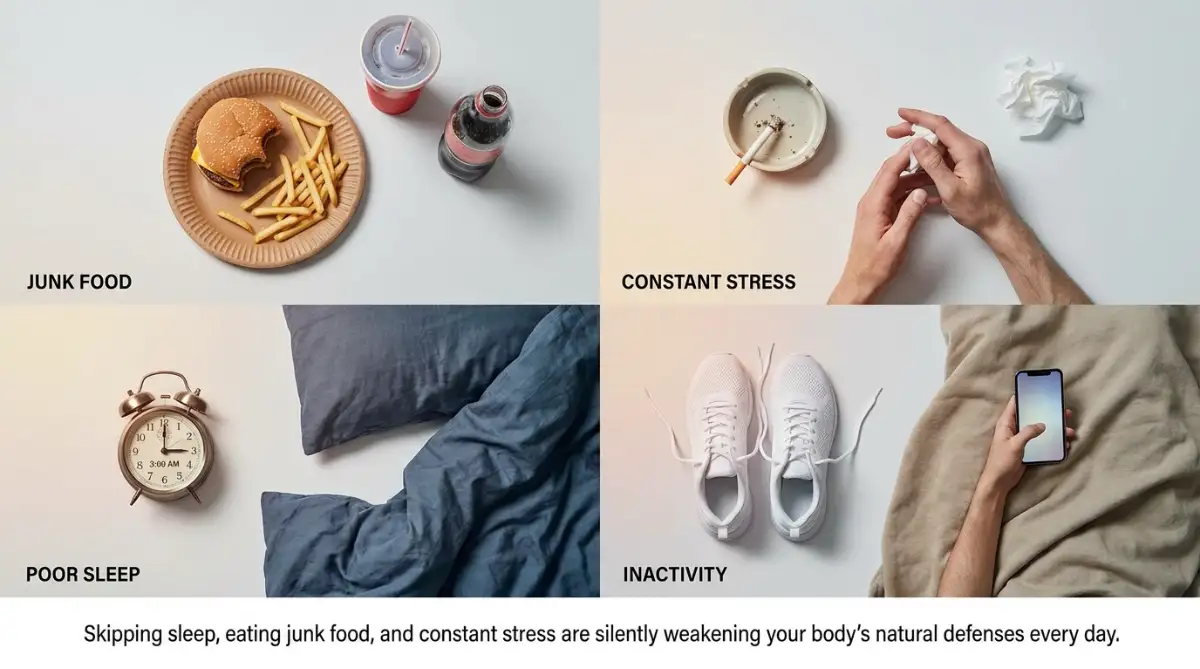
Small Daily Choices Create Long-Term Results
Protecting your body's natural defenses is rarely about making one dramatic change. Instead, it is the result of hundreds of small, consistent decisions made over time.
Choosing balanced meals, staying physically active, getting enough sleep, managing stress, practicing good hygiene, and following evidence-based health advice all work together to support overall well-being.
No one follows a perfect routine every day, and occasional setbacks are completely normal. The goal is progress rather than perfection. Building sustainable habits that fit your lifestyle is more effective than chasing quick fixes or unrealistic health trends.
Additional Everyday Habits That Support Your Body's Natural Defenses
Building a healthier lifestyle is not about following a perfect routine every day. It is about making practical choices that gradually become lifelong habits. Even if you have identified some of the common mistakes discussed earlier, positive changes can begin with small, manageable steps.
The following strategies focus on sustainable lifestyle improvements that can help support your body's normal functions while reducing unnecessary stress on your overall health.
Prioritize a Balanced Plate Instead of Chasing "Superfoods"
Many advertisements and social media posts promote certain foods as miracle solutions for health. While some foods are highly nutritious, no single ingredient can replace a consistently balanced diet.
Instead of searching for one magical food, aim to include a wide variety of nutrient-rich options throughout the week.
A balanced meal often includes:
- Colorful vegetables
- Fresh fruits
- Whole grains
- Lean protein sources
- Healthy fats
- Fiber-rich foods
Eating a diverse diet provides your body with a broad range of vitamins, minerals, antioxidants, and other nutrients that contribute to overall wellness.
Build Consistent Healthy Habits Instead of Depending on Motivation
Motivation comes and goes, but routines are more reliable.
Many people start healthy habits with excitement but lose consistency after a few days. Creating simple routines makes long-term success much more realistic.
Examples include:
- Drinking a glass of water after waking up.
- Taking a short walk after lunch.
- Preparing healthy snacks in advance.
- Going to bed at the same time each night.
- Scheduling regular physical activity.
Small actions performed consistently often produce better long-term results than occasional extreme efforts.
Pay Attention to Your Mental Well-Being
Physical health and mental health are closely connected.
When emotional well-being is neglected, healthy routines often become more difficult to maintain. Feeling overwhelmed may lead to poor eating habits, reduced physical activity, disrupted sleep, or increased stress.
Healthy ways to care for your mental wellness include:
- Practicing gratitude
- Spending time with supportive people
- Taking regular breaks from work
- Limiting unnecessary exposure to negative news
- Enjoying hobbies
- Seeking professional mental health support when needed
Looking after your emotional health is an important part of caring for your whole body.
Avoid Overusing Antibiotics
Antibiotics play an essential role in treating certain bacterial infections, but they are not effective against viral illnesses such as many common colds.
Using antibiotics without proper medical guidance may contribute to antibiotic resistance and other health concerns.
Always:
- Follow your healthcare provider's instructions.
- Complete prescribed courses when advised.
- Never share antibiotics with others.
- Avoid self-medicating.
Responsible medication use protects both individual and public health.
Support Your Gut Health
Researchers continue to study the relationship between gut health and overall wellness.
A healthy digestive system benefits from regular intake of fiber-rich foods and a balanced eating pattern.
Helpful dietary choices may include:
- Vegetables
- Fruits
- Whole grains
- Beans
- Lentils
- Yogurt with live cultures, if appropriate
- Fermented foods that fit your dietary preferences
Sudden or extreme dietary changes are usually less sustainable than gradual improvements.

Healthy Daily Habits That Are Easy to Maintain
Many healthy behaviors require very little money or special equipment.
Simple examples include:
Morning
- Drink water after waking.
- Eat a balanced breakfast if it fits your routine.
- Stretch for several minutes.
- Get natural daylight exposure.
Afternoon
- Take movement breaks.
- Eat balanced meals.
- Stay hydrated.
- Practice good posture while working.
Evening
- Reduce screen time before bed.
- Prepare healthy meals for the next day.
- Spend quality time with family.
- Create a relaxing bedtime routine.
Small improvements made every day can have meaningful long-term benefits.
Common Myths About Natural Defenses
Health misinformation spreads quickly online. Understanding common myths helps you make informed decisions.
Myth 1: Supplements Can Replace Healthy Living
Dietary supplements may be useful for some individuals under professional guidance, but they cannot replace balanced nutrition, adequate sleep, regular exercise, and healthy habits.
Food-first nutrition remains an important foundation for most healthy adults.
Myth 2: More Exercise Is Always Better
Regular exercise supports overall health.
However, excessive training without enough recovery may increase fatigue and raise the risk of injury.
Balance is important.
Include both activity and recovery in your routine.
Myth 3: Healthy People Never Get Sick
Even individuals who follow healthy lifestyles may experience illness.
Healthy habits help support normal body function and overall well-being, but they do not eliminate every health risk.
Myth 4: Natural Means Completely Safe
Natural products are not automatically risk-free.
Some herbs, supplements, and natural remedies may interact with medications or may not be suitable for everyone.
Consult a qualified healthcare professional before starting new supplements.
Myth 5: Skipping Meals Helps Your Health
Regular, balanced meals provide energy and nutrients throughout the day.
Frequently skipping meals without medical guidance may make it harder for some people to maintain healthy eating habits.
Individual nutritional needs vary.
Practical Tips for Families
Healthy routines become easier when everyone participates.
Ideas include:
- Preparing healthy meals together.
- Walking after dinner.
- Keeping fruits visible in the kitchen.
- Limiting sugary beverages at home.
- Encouraging children to play outdoors.
- Practicing hand hygiene together.
- Maintaining regular sleep schedules.
Healthy habits learned early often continue into adulthood.
Environmental Factors You Should Not Ignore
Your surroundings can influence your health more than many people realize.
Consider these simple steps:
- Keep your home well ventilated.
- Clean frequently touched surfaces regularly.
- Reduce indoor smoke exposure.
- Wash reusable water bottles frequently.
- Replace worn toothbrushes when appropriate.
- Store food safely.
- Follow proper kitchen hygiene.
Creating a clean living environment supports everyday wellness.
When Lifestyle Changes May Not Be Enough
Healthy habits are valuable, but they should never replace professional medical care.
Seek advice from a qualified healthcare provider if you experience symptoms that are severe, persistent, or concerning.
Examples include:
- High fever lasting several days
- Difficulty breathing
- Unexplained weight loss
- Persistent fatigue
- Severe pain
- Ongoing digestive problems
- Symptoms that continue to worsen
Early medical evaluation may help identify underlying conditions requiring treatment.
Frequently Asked Questions
Can one unhealthy meal weaken my body's natural defenses?
Occasional indulgences are a normal part of life. Overall dietary patterns matter much more than individual meals.
Is it necessary to exercise every day?
Regular physical activity is beneficial, but recovery is also important. The ideal routine depends on your age, health status, and fitness level.
Does drinking more water automatically improve health?
Hydration supports many normal body functions, but drinking excessive amounts of water is not necessarily better. Aim for appropriate hydration based on your individual needs.
Can stress affect physical health?
Yes. Long-term unmanaged stress may influence sleep, eating habits, physical activity, and overall well-being.
Learning healthy coping strategies can support both mental and physical health.
Should I take supplements every day?
Not everyone needs supplements.
A healthcare professional can determine whether supplementation is appropriate based on your individual health needs and dietary intake.
How long does it take to build healthier habits?
There is no universal timeline.
The most important factor is consistency rather than speed.
Small improvements repeated regularly often become lasting routines.
Bringing Everything Together
Your body's natural defenses depend on a combination of healthy lifestyle choices rather than any single product, diet, or trend. Sleep, nutrition, hydration, physical activity, stress management, hygiene, and preventive healthcare all work together to support your overall well-being.
Rather than trying to change everything at once, choose one or two habits to improve this week. Once those become part of your routine, gradually add another positive change. This steady approach is often easier to maintain and more effective over time.
Remember that health is a long-term journey, not a short-term challenge. Every balanced meal, every good night's sleep, every walk, and every healthy decision contributes to a stronger foundation for lifelong wellness. Progress may seem small from day to day, but consistent actions can make a meaningful difference over time.
Making informed choices based on reliable health information, listening to your body's needs, and seeking professional medical advice when necessary are among the best ways to care for your health. Sustainable habits—not quick fixes—are what truly support your body's natural ability to function at its best.
Disclaimer
This article is intended for educational and informational purposes only and should not be considered medical advice, diagnosis, or treatment. Health needs vary from person to person. Always consult a qualified healthcare professional regarding any medical concerns, persistent symptoms, medications, dietary supplements, or significant lifestyle changes. Never delay or disregard professional medical advice based on information found in this article.