The Untold Difference Between Holding and Actually Investing
Cryptocurrency has completely changed how people think about money, wealth, and financial freedom. Every day, millions of people buy digital assets hoping their portfolio will grow big over time. A lot of them proudly say they are "investing" in crypto just because they own Bitcoin, Ethereum, or other coins.
But here’s a real question:
Are you actually investing, or just holding coins and hoping for the best?
This difference gets ignored a lot, but it really matters when it comes to building real long-term success instead of making emotional decisions.
Just owning crypto doesn’t automatically make you an investor. Real investing takes planning, research, risk management, patience, and continuous learning. Holding without knowing what you own, why you own it, or what your plan is—that’s something very different.
Once you understand this, it becomes much easier to make smarter decisions, avoid common mistakes, and build a healthier mindset around crypto.
In this guide, you’ll see why holding and investing aren’t the same, how real investors think, and what habits actually lead to long-term success instead of random luck.
Why So Many People Confuse Holding with Investing
The crypto community often uses the word "HODL," encouraging people to just hold through all market conditions.
And yes, long-term holding can be part of a strategy—but holding alone isn’t a strategy.
Most beginners buy crypto because:
- A friend told them about it.
- Social media hype got them excited.
- They don’t want to miss out.
- Prices were going up fast.
- News made it sound like everyone was getting rich.
After buying, they just wait.
Weeks turn into months.
Months turn into years.
And during all that time, they rarely stop to ask:
- Why did I buy this in the first place?
- Does it still match my goals?
- Has the project changed?
- Is my portfolio balanced?
- Am I actually managing risk?
Without these questions, it’s not really investing—it’s more like passive guessing.
What Real Crypto Investing Actually Means
Real investing starts way before you hit the “Buy” button.
It starts with understanding.
A real investor usually knows:
- What problem the crypto is trying to solve.
- How the project actually works.
- How active the development is.
- Who is behind the project.
- How the token supply is structured.
- What risks are involved.
- Who the competitors are.
- Whether it has long-term potential.
Instead of chasing quick gains, investors make decisions based on research and realistic expectations.
They know there are no guarantees.
So instead of hoping, they prepare.
Ownership Without Purpose Creates Unnecessary Risk
Let’s say someone buys five different coins just because they were trending.
A few months later, they can’t really explain:
- Why they bought each one.
- What value each project brings.
- What risks they’re exposed to.
- When they should re-evaluate their choices.
This is actually very common.
Buying without understanding creates emotional attachment instead of confidence.
So when prices drop, panic kicks in—because there was never a clear reason for buying in the first place.
Purpose is what gives your investments direction.
Without it, every market move feels stressful and confusing.
Long-Term Investors Build a Personal Investment Thesis
Serious investors usually create a simple “investment thesis” before putting money in.
No fancy language needed—it just means answering a few basic questions:
- Why do I believe this project has value?
- What makes it different from others?
- What could go wrong?
- How long do I plan to hold it?
- What would make me change my mind?
Writing this down helps a lot.
Instead of reacting emotionally to news or price swings, you compare new information with your original reasoning.
This keeps your decisions more stable and less impulsive.

Research Is an Ongoing Process, Not a One-Time Event
A lot of beginners research before buying—and then never look again.
But real investing doesn’t work like that.
Projects change.
Technology evolves.
Regulations shift.
Competition grows.
New risks appear.
What looked strong a few months ago might not look the same today.
That’s why regular check-ins matter.
Knowledge keeps you calm.
Holding During Every Situation Is Not Always Smart
One big myth in crypto is that you should “just hold forever” no matter what.
But it’s not that simple.
Long-term investing doesn’t mean ignoring reality.
For example, if:
- Development stops
- The team disappears
- Security issues aren’t fixed
- The community dies out
- The technology becomes outdated
Then blindly holding can actually increase your risk instead of protecting you.
Good investors know the difference between:
- Temporary price drops
- Real long-term problems
And that difference comes from research, not emotion.
Investing Requires Clear Financial Goals
Every investment should have a purpose.
Without goals, you have no way to measure progress.
People invest for different reasons, like:
- Building long-term wealth
- Diversifying their money
- Saving for future goals
- Learning about new technology
- Protecting their purchasing power
And each goal needs a different approach.
Someone investing for 20 years will act very differently from someone saving for a house next year.
Neither is wrong.
What matters is having a clear goal in the first place.
When your goals are clear, market ups and downs feel less stressful because you’re focused on the bigger picture—not just daily price changes.
Risk Management Separates Investors from Speculators
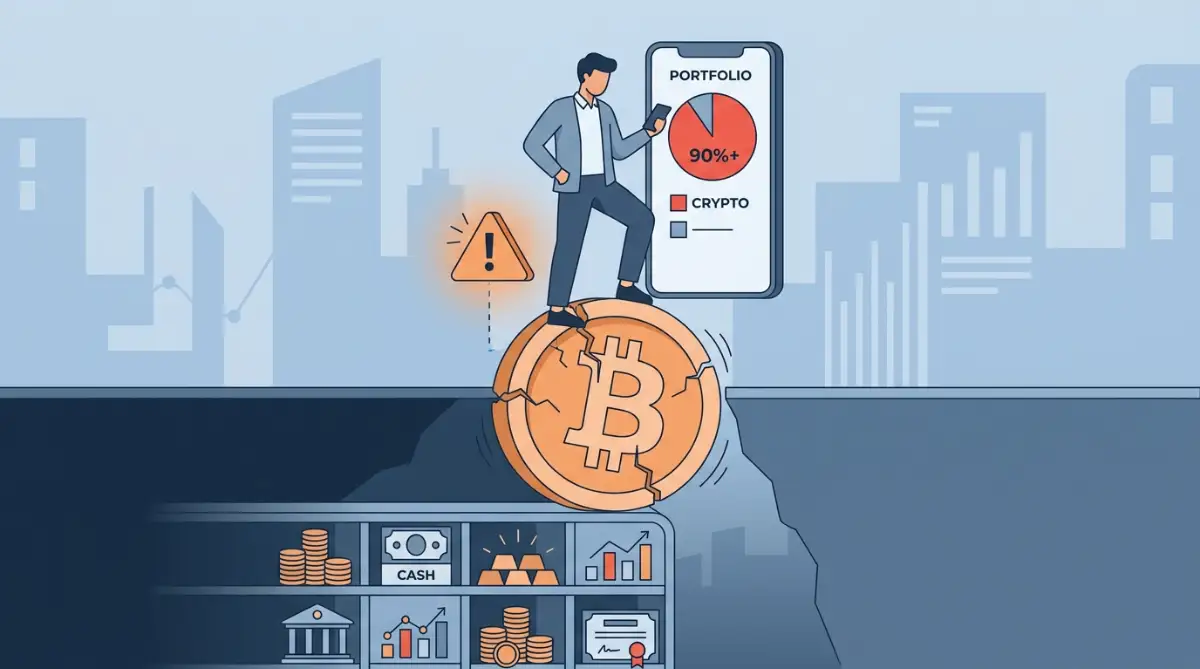
One of the clearest differences between just holding crypto and actually investing is how you handle risk.
A lot of people think buying a coin and just leaving it alone is enough. And while patience definitely matters, patience without a plan can still lead to avoidable losses.
A thoughtful investor knows every crypto comes with risk, no matter how popular it is or how high its market cap gets. Instead of assuming everything will bounce back eventually, they prepare for different scenarios.
Some simple risk habits include:
- Not putting all your savings into one crypto.
- Keeping emergency money separate from your investment funds.
- Checking your portfolio from time to time.
- Accepting that volatility is just part of crypto.
- Avoiding emotional moves during big price swings.
Risk management isn’t about predicting the future perfectly. It’s about making sure surprises don’t wreck your finances.
Building a Portfolio with Purpose
Owning a bunch of different cryptocurrencies doesn’t automatically mean you’re diversified.
A portfolio should feel balanced, not just “full.”
For example, someone might own ten different coins, but if they all depend on the same type of blockchain or move in the same direction, that portfolio is still basically concentrated.
Intentional investors think more carefully about diversification.
They ask things like:
- Does this actually add something new to my portfolio?
- Am I buying this because I understand it, or just because it’s trending?
- How much of my portfolio is tied to one narrative?
- Would I still want this if nobody on social media was talking about it?
These kinds of questions help you think independently instead of just following hype.
Emotional Discipline Is One of the Most Valuable Investment Skills
Crypto markets can move fast. Like, really fast.
Prices can pump one week and drop hard the next.
People who treat investing like just “holding” often end up letting emotions make their decisions.
Fear can make you sell at the worst time.
Excitement can make you buy right after a big run-up.
Real investors notice these emotional reactions and slow things down.
Instead of reacting instantly, they pause and look at the situation properly.
Helpful habits include:
- Waiting before making big decisions.
- Checking research instead of just headlines.
- Following a written plan.
- Remembering that short-term moves don’t always matter long-term.
Emotional discipline takes time, but it gets stronger with experience.
Understanding Opportunity Cost
Every investment choice has a trade-off.
If you put money into one crypto, you’re also choosing not to put it somewhere else—or to keep it in cash.
Smart investors understand that money is limited.
So instead of only asking, “Will this go up?” they also ask:
- Is this the best use of my money right now?
- Are there better opportunities I’m missing?
- Does this still match my goals?
- Has new information changed my mind?
Thinking this way helps you invest with intention instead of just collecting coins randomly.
Learning to Separate Noise from Useful Information
Crypto is full of information—every single day.
Some of it is helpful.
Some of it is opinion.
Some of it is pure hype.
And some of it is just there to grab attention.
Good investors learn how to filter it.
More reliable information usually includes:
- Tech updates and improvements
- Developer activity
- Security updates
- Network adoption
- Regulatory news
- Clear communication from projects
Less reliable information often looks like:
- “Guaranteed” price predictions
- Emotional clickbait headlines
- Unrealistic profit promises
- Random rumors
- Pressure to act immediately
Being able to tell the difference helps you avoid impulsive decisions.
Why Patience Looks Different for Real Investors
Patience doesn’t mean ignoring your investments completely.
It means staying involved without obsessing over every price move.
Patient investors still:
- Keep learning
- Follow important updates
- Re-check their original reasons for investing
They just don’t panic over daily charts.
Their patience is active, not passive.
Common Habits That Keep Beginners from Becoming Investors
A lot of beginners fall into patterns that make investing harder than it needs to be.
Here are some common ones:
Buying Without Understanding the Project
Buying something just because it’s popular rarely holds up when the market gets rough.
Understanding builds confidence.
Following Every Trend
New coins and narratives show up all the time. Trying to chase everything usually leads to confusion and bad decisions.
Ignoring Portfolio Reviews
Your portfolio shouldn’t stay frozen forever. It should adjust as your goals and the market change.
Expecting Immediate Results
Investing takes time. Expecting fast results usually leads to frustration.
Measuring Success Only by Price
Price matters, but it’s not everything. Skills, discipline, and risk control matter too.
Practical Habits That Strengthen Long-Term Investment Decisions
Good investing habits come from consistency, not perfection.
Here are a few useful ones:
Keep an Investment Journal
Write down why you bought each crypto.
Include things like:
- Your goal
- The risks you see
- Why you believe in it
- What would make you change your mind
Looking back on this later is incredibly helpful.
Schedule Portfolio Reviews
Instead of checking prices all day, set specific times to review your portfolio.
During reviews, look at:
- Allocation balance
- Project updates
- Security practices
- Your financial goals
- Market changes
This keeps decisions more rational.
Keep Learning
Crypto changes constantly.
The more you learn, the better your decisions become over time.
Security Is Part of Investing
Investing isn’t just about picking good assets—it’s also about protecting them.
Basic security habits include:
- Using strong, unique passwords
- Turning on two-factor authentication
- Keeping recovery phrases offline and private
- Double-checking websites before logging in
- Being careful with scams and fake messages
Even a great investment can be lost through poor security.
Measuring Progress Beyond Portfolio Value
Prices go up and down every day.
If you only measure success by your balance, your emotions will constantly swing with the market.
Instead, also look at things like:
- How much you’ve learned
- Better research skills
- Improved risk management
- Stronger emotional control
- More confident decisions
- A portfolio that actually fits your goals
These are often more important than short-term gains.

Developing an Investor's Mindset for the Future
Becoming an investor isn’t about how many coins you own.
It’s about how you make decisions.
Investors stay curious.
They ask questions.
They stay disciplined even when things get exciting.
And they accept that uncertainty is normal.
Instead of trying to predict everything perfectly, they focus on building good habits they can repeat over time.
That’s what helps them stay steady in changing markets.
A Smarter Perspective on Crypto Ownership
Owning crypto can definitely be part of investing—but ownership alone is just the starting point.
Instead of asking, “How long have I held this?” it’s often better to ask, “Do I still understand why I own this?”
That one question can tell you a lot about whether you’re just holding—or actually investing.
As your knowledge grows, your decisions get clearer, your confidence becomes more stable, and your approach becomes more intentional. Over time, these habits help you navigate crypto with a lot more clarity and less stress.
Disclaimer
This article is intended for educational and informational purposes only and should not be considered financial, investment, legal, or tax advice. Cryptocurrency investments involve risk, including the potential loss of capital. Always conduct your own research, assess your financial situation, and consider consulting a qualified financial professional before making investment decisions.