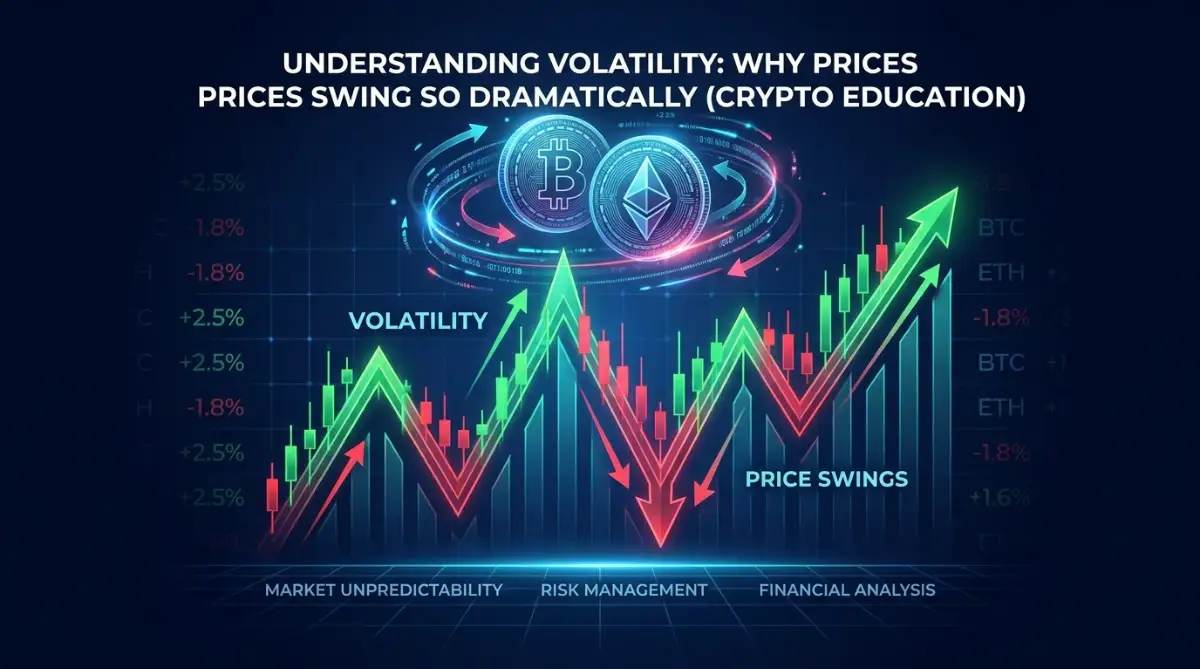
Understanding Volatility: Why Prices Swing So Dramatically
Cryptocurrency is one of the most exciting financial innovations ever introduced. It has opened up opportunities for innovation, global transactions, decentralized finance, and new investment strategies. At the same time, it’s also known for one thing that surprises almost every beginner: extreme price volatility.
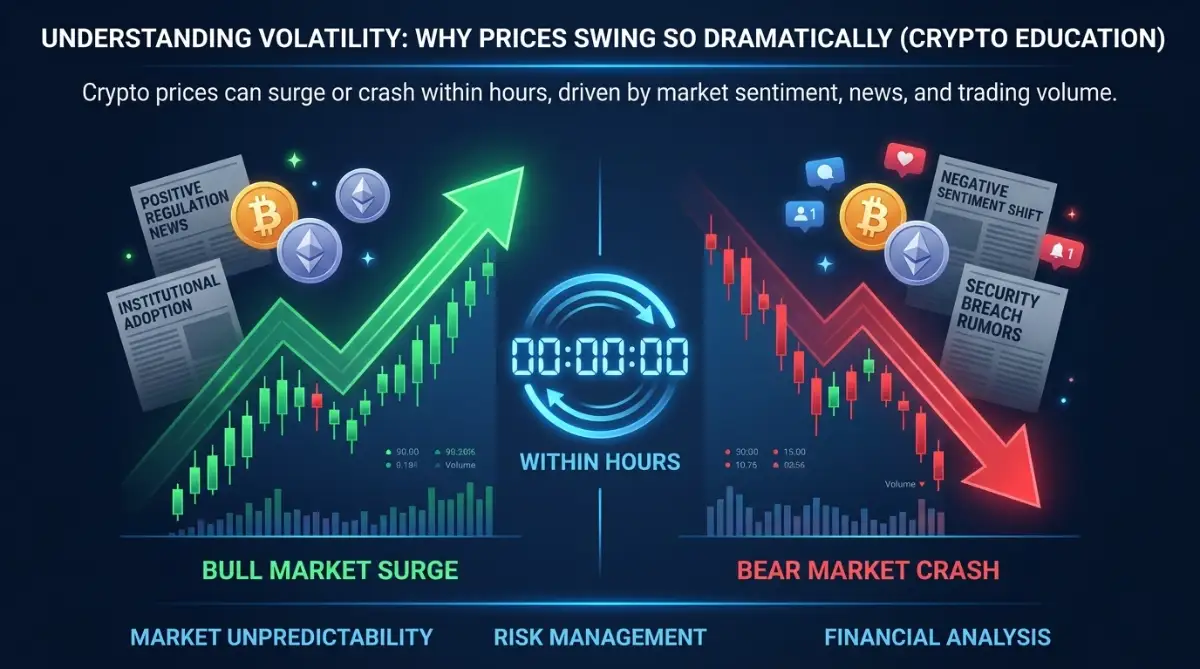
Unlike many traditional assets, cryptocurrencies can gain or lose a lot of value within hours or even minutes. A coin that looks stable in the morning might suddenly move sharply up or down by the end of the day. These sudden changes often confuse new investors and can lead to emotional decisions that aren’t always the best financially.
Getting a clear understanding of why volatility happens is one of the most important lessons for anyone entering the crypto market. Instead of seeing volatility as random chaos, it helps to realize that a mix of economic, technical, psychological, and market factors all play a role in shaping prices.
This guide breaks down the basics of crypto volatility, why prices move so dramatically, and how investors can better understand what’s really going on in the market.
What Does Volatility Really Mean?
Volatility simply refers to how much a price moves over a certain period of time.
When an asset has big and frequent price changes, it’s considered highly volatile. If the price stays within a small range and moves slowly, it’s considered low volatility.
For example:
- A cryptocurrency going up 12% in a single day shows high volatility.
- An asset moving only 0.5% in the same time is relatively stable.
Volatility itself isn’t good or bad.
It just describes how much prices move.
Some investors like volatility because it creates opportunities, while others prefer stability because it feels more predictable.
Understanding this helps investors focus more on learning and less on reacting emotionally.
Why Cryptocurrency Is More Volatile Than Traditional Markets
Many newcomers compare crypto with stocks or government-backed currencies and wonder why digital assets swing so much more.
There are a few key reasons for this.
Smaller Overall Market Size
Even though crypto has grown a lot, it’s still much smaller than traditional financial markets.
Because of that, large buy or sell orders can move prices more easily.
Think of it like this:
A small lake reacts strongly when you throw a rock into it.
An ocean barely notices the same rock.
Crypto markets behave more like the lake.
Around-the-Clock Trading
Stock markets usually open and close at set times.
Crypto markets never sleep.
Trading happens 24/7 across different countries and time zones.
Since there’s no break, news and events can impact prices instantly instead of waiting for market hours.
This nonstop activity naturally leads to more frequent price changes.
Rapid Information Flow
News spreads extremely fast through social media, news sites, developer communities, and global platforms.
Investors react quickly to things like:
- Regulatory updates
- Security issues
- Blockchain upgrades
- Economic news
- Institutional adoption
- Government policies
- Market rumors
Even before everything is fully confirmed, expectations alone can move the market.
The Powerful Role of Supply and Demand
At its core, crypto pricing still follows a simple rule: supply and demand.
When more people want to buy than sell, prices usually go up.
When more people are selling than buying, prices usually go down.
But in crypto, demand can shift very quickly because sentiment changes fast.
Demand often increases due to:
- Positive tech updates
- Growing awareness
- Higher adoption
- Partnerships
- Strong investor confidence
Demand often drops due to:
- Regulatory fear
- Economic uncertainty
- Security concerns
- Loss of confidence
- Market panic
These shifts tend to happen faster than in traditional markets.
Market Psychology Shapes Every Price Movement
One of the biggest drivers of volatility is human emotion.
Markets aren’t just numbers—they’re driven by people.
And people make decisions based on fear, excitement, hope, and uncertainty.
Fear
When investors get worried, many try to sell at the same time.
This increases supply and can push prices down quickly.
Fear can come from:
- Negative news
- Economic uncertainty
- Security breaches
- Sudden market events
Sometimes fear spreads even when nothing fundamental has changed.
Optimism
On the flip side, positive expectations can drive prices up.
When investors feel confident, they may rush to buy.
This increases demand and pushes prices higher.
Optimism can come from:
- Successful upgrades
- Wider adoption
- Good regulatory news
- Better infrastructure
- Strong market conditions
Often, expectations move the market even before real changes fully happen.
Liquidity and Its Effect on Price Swings
Liquidity is basically how easy it is to buy or sell something without affecting its price too much.
High liquidity usually means smoother price movement.
Low liquidity often means bigger price swings.
Think of it like selling something rare with only a few buyers—one trade can change the price a lot.
Many smaller cryptocurrencies have lower liquidity, which makes them more sensitive to trades.
The Influence of Large Investors
Some investors hold very large amounts of crypto.
Because of their size, their transactions can attract attention.
For example, when large holders move funds, people often start guessing what it means.
These guesses can sometimes trigger market reactions—even if nothing major is actually happening.
It’s important to remember that not every large transaction signals buying or selling pressure.
News Can Change Market Direction Within Minutes
Crypto markets react very quickly to new information.
Regulatory Developments
Government rules or legal clarity can affect confidence.
Clear rules can boost participation.
Uncertainty can slow things down.
Technology Improvements
Upgrades often create excitement because they can improve:
- Speed
- Security
- Scalability
- User experience
- Efficiency
Security Events
News about hacks, scams, or vulnerabilities can create short-term fear.
Even if only one project is affected, the overall market can still react.
That’s why experienced investors try to separate short-term events from long-term fundamentals.
Why New Investors Often Misinterpret Volatility
Many beginners think every price move needs an immediate reaction.
This often leads to emotional decisions.
But short-term changes don’t always reflect long-term direction.
Markets naturally move through cycles of growth, correction, and recovery.
Treating every dip or spike like an emergency usually just adds stress.
Learning to ignore short-term noise and focus on the bigger picture is a key skill.
Looking Ahead
Volatility is one of the defining features of the crypto market. While price swings can feel unpredictable, they’re usually driven by a mix of supply and demand, investor psychology, liquidity, market size, news, and ongoing tech development.
Once you understand these basics, it becomes much easier to read the market without overreacting emotionally. In the next part, we’ll look at other causes of volatility, common misunderstandings, simple risk-awareness strategies, and how long-term investors tend to think differently about market ups and downs.
Additional Factors That Can Increase Market Volatility
While supply and demand, investor psychology, and liquidity explain a lot of what moves cryptocurrency prices, there are still plenty of other things that can cause sudden swings. Knowing about these just helps you look at the market in a more realistic way instead of assuming every price move has one simple cause.
Macroeconomic Conditions
The cryptocurrency market doesn’t exist in a bubble. Bigger economic events can affect how confident investors feel across all kinds of assets.
For example:
- Changes in interest rate expectations
- Inflation concerns
- Global economic uncertainty
- Financial market instability
- Currency fluctuations in major economies
The connection between traditional markets and crypto also changes over time, so it’s important to keep an eye on the bigger economic picture instead of only focusing on blockchain news.
How Media Coverage Influences Investor Behavior
News sites, analysts, influencers, and social media all play a big role in how people see the market.
Good news can create optimism, while bad news can spark fear.
But not every headline tells the full story.
More experienced investors usually check a few reliable sources before reacting. They know headlines are often written to grab attention, while deeper research gives a clearer long-term view.
Getting into the habit of double-checking information before acting can really help reduce stress and lead to better decisions.
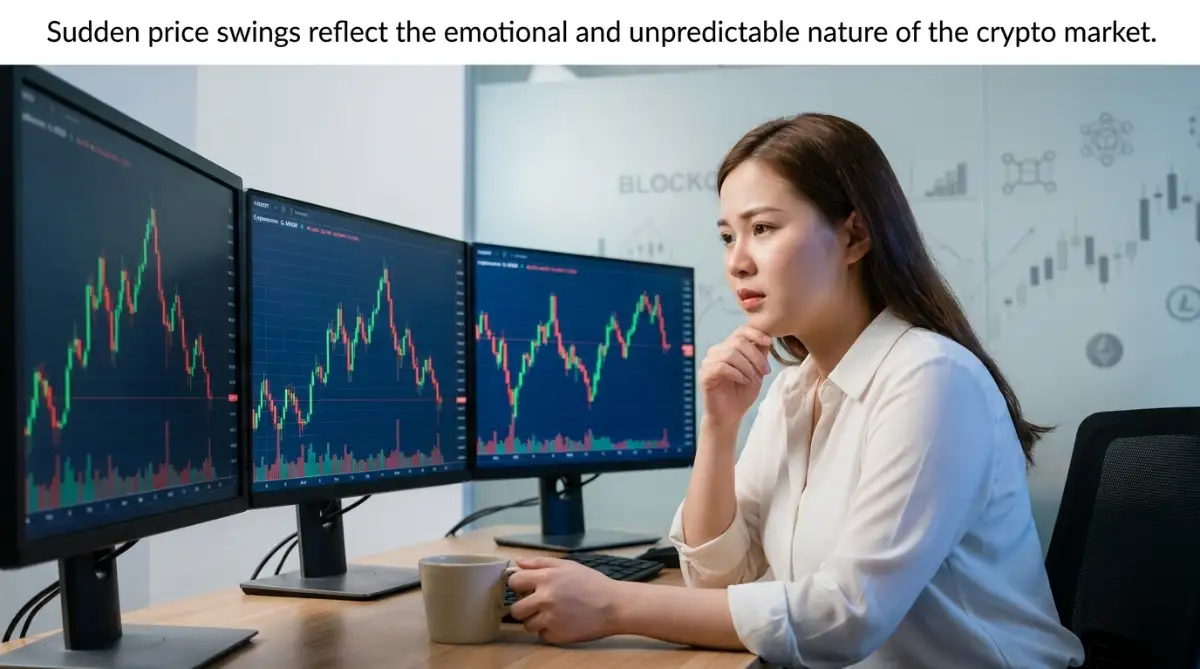
The Difference Between Healthy Volatility and Market Panic
Not every big price move is a disaster.
Healthy markets naturally go through cycles of growth, pullbacks, consolidation, and recovery.
Market panic, on the other hand, is when fear spreads quickly, selling speeds up, and uncertainty takes over.
Telling the difference takes patience, research, and focusing more on fundamentals instead of short-term emotions.
Common Misunderstandings About Volatility
A lot of beginners misunderstand how crypto markets work, which can lead to unrealistic expectations and poor decisions.
Myth: High Volatility Means the Market Is Failing
Reality: it’s not that simple.
Volatility just means buyers and sellers don’t agree on price right now. It doesn’t automatically mean the technology or project is broken.
A project can still be improving even while its price moves up and down a lot.
Myth: Every Price Drop Is a Permanent Crash
Price drops happen in almost every market.
Many of them are just normal corrections, not long-term failures.
Understanding market cycles helps you stay calmer during downturns.
Myth: Fast Price Increases Always Continue
Quick growth can be exciting, but nothing goes up forever.
Strong rallies are often followed by slower growth or pullbacks.
Knowing this helps set more realistic expectations and avoid emotional decisions.
Practical Habits for Navigating Volatile Markets
No strategy can remove risk completely, but a few habits can help you deal with volatility in a more balanced way.
Continue Learning
Crypto changes fast.
Reading, following trusted sources, and learning how different networks work can really help over time.
The more you learn, the less confusing the market feels.
Think Beyond Daily Price Changes
Checking prices all the time can get stressful.
Long-term investors usually care more about trends, development progress, adoption, and real usage instead of every small move.
Keeping perspective helps you avoid overreacting.
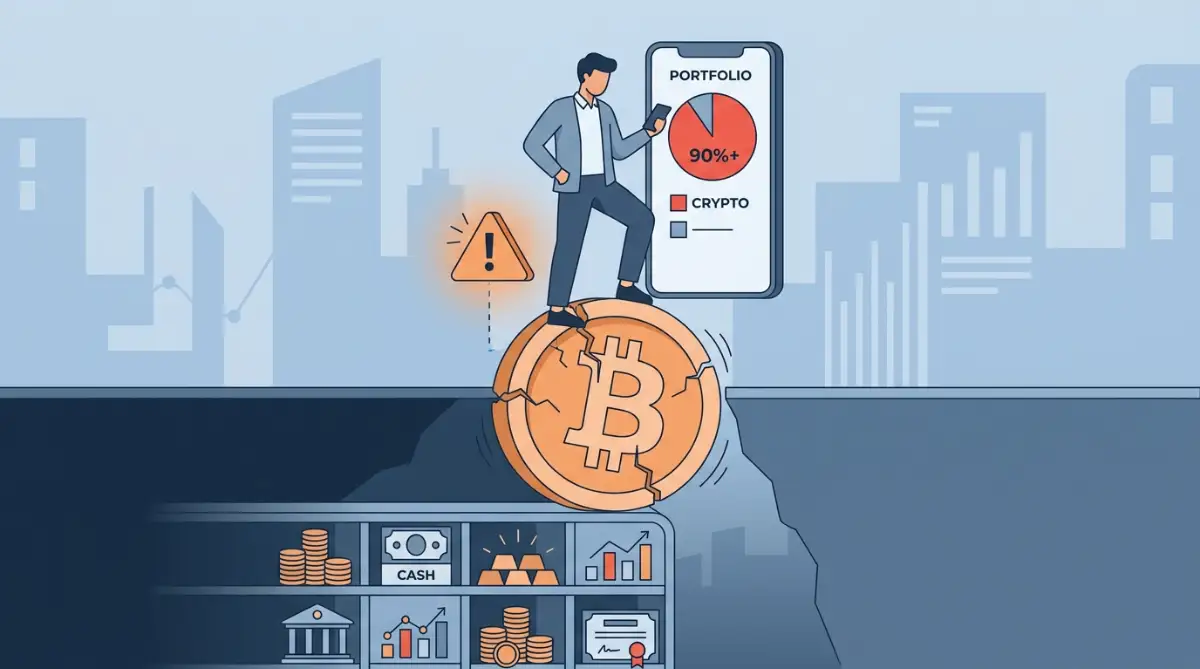
Diversify When Appropriate
Putting everything into one asset increases risk.
Diversification won’t remove volatility, but it can help reduce the impact of one asset underperforming.
It should always match your personal goals and risk comfort level.
Develop a Personal Investment Plan
Having a plan before investing makes it much easier to stay calm when the market moves.
A simple plan might include:
- Financial goals
- Risk tolerance
- Time horizon
- Asset allocation
- When to review decisions
A structured approach usually works better than reacting emotionally to market changes.
Why Emotional Decisions Often Lead to Poor Outcomes
Fear and excitement are normal, but decisions driven only by emotion often don’t end well.
Some common emotional habits include:
- Buying just because prices are pumping
- Selling right after a drop without thinking it through
- Constantly changing strategies
- Trusting rumors instead of solid information
- Obsessing over short-term price moves
Experienced investors usually focus more on discipline than trying to catch every market move.
Frequently Asked Questions
Is cryptocurrency volatility likely to disappear?
It might calm down over time as markets grow and adoption increases, but price swings will likely always be part of crypto because so many factors still influence it.
Does volatility always create investment opportunities?
Not always. Volatility brings both opportunities and risks. It can help some investors and hurt others depending on their strategy and timing.
Can anyone accurately predict every price movement?
No.
There are too many moving parts, so short-term predictions are extremely difficult. Good investing is about making informed decisions, not perfect guesses.
Why do different cryptocurrencies move differently?
Each crypto has its own technology, adoption level, market size, community, and use case. These differences affect how they react to market changes.
Should beginners fear volatility?
Not really. It’s better to understand it than fear it. Once you get how it works, it becomes much easier to handle.
Building Confidence Through Knowledge
Volatility is a core part of crypto investing, but it becomes a lot less intimidating once you understand what causes it. Price movements are shaped by economics, investor behavior, liquidity, news, technology, and shifting expectations.
Instead of reacting to every move, successful investors usually focus on learning, research, patience, and staying disciplined. Understanding volatility gives you a stronger base to judge risks and opportunities more calmly.
Crypto will keep evolving, and prices will keep moving. But people who stay informed and think long-term are usually better prepared to handle those changes without panicking. Knowledge, realistic expectations, and patience go a long way in this space.
Disclaimer
This article is for educational and informational purposes only. It is not financial, investment, legal, or tax advice. Cryptocurrency markets are highly volatile, and prices can change quickly. Always do your own research, think carefully about your financial situation, and consult a qualified professional if needed before making investment decisions.