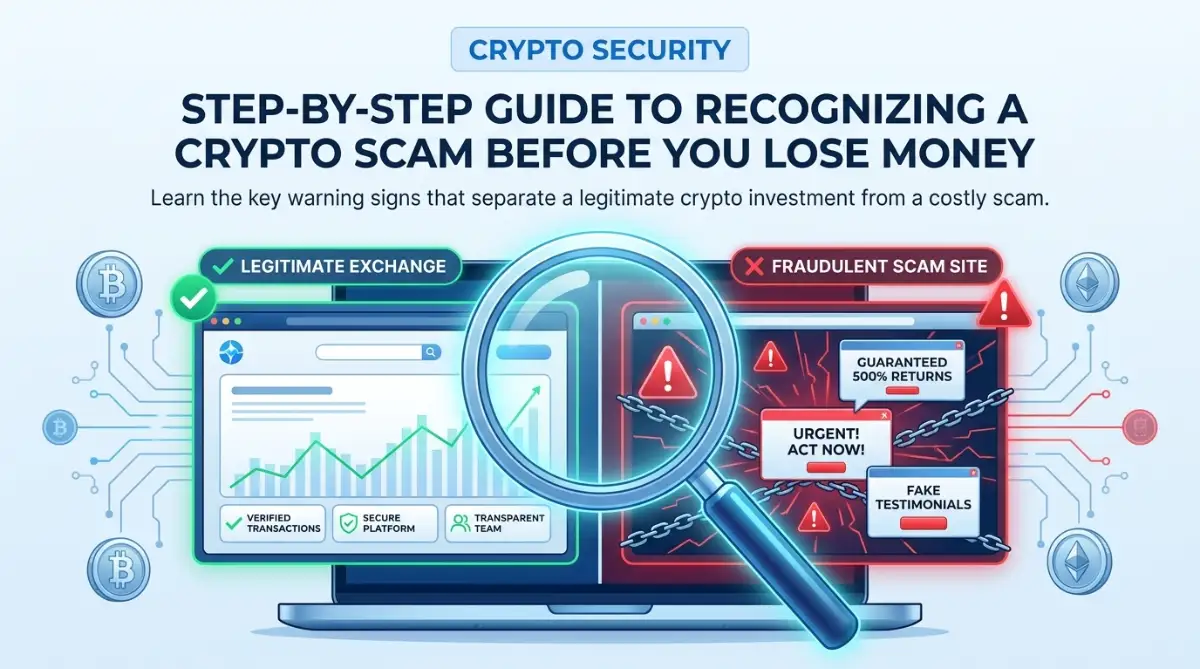
Step-by-Step Guide to Recognizing a Crypto Scam Before You Lose Money
The cryptocurrency industry has created some amazing opportunities for innovation, investing, and financial independence. Millions of people around the world are getting into digital assets for the first time, drawn by decentralized technology and the chance of long-term growth.
Unfortunately, wherever money flows, scammers aren’t far behind.
Crypto scams have become a lot more advanced. They don’t just rely on obvious fake websites or badly written messages anymore. Today’s scammers build convincing social media profiles, launch polished websites, create fake communities, and even use AI to mimic trusted people.
The result is simple but painful: people lose savings, investments, and confidence.
The good news is that most crypto scams give off warning signs before anything goes wrong. The tricky part is knowing what to look for before you send money or connect your wallet.
This guide breaks down how to spot crypto scams step by step, so you can build safer habits without relying on luck.
Why Crypto Scams Keep Growing
Scammers take advantage of a few key things:
- New investors with limited experience
- Fear of missing out on profits
- Anonymous online identities
- Limited regulation in some regions
- Complex blockchain systems that many people don’t fully understand
Instead of attacking blockchain technology directly, criminals usually target human emotions like excitement, greed, urgency, curiosity, or fear.
Understanding this is your first layer of protection.
The First Rule: Slow Down Before Trusting Anyone
Most scams work because people feel rushed.
You might see messages like:
- Limited-time investment window
- Exclusive invite only
- Only a few spots left
- Send funds immediately
- Prices will never be this low again
These are designed to stop you from thinking clearly.
Anytime someone pushes urgency around your money, treat it as a red flag—not an opportunity.
Real investments don’t usually require instant decisions.
Step One: Double-Check Who You’re Dealing With
The internet makes it super easy for scammers to pretend to be someone else.
Before trusting a project or person, take a moment to verify them.
Ask yourself:
- Does the company actually have a real website?
- Are the team members publicly listed?
- Can you verify those people outside their own site?
- Do their social media accounts match across platforms?
- Is there any independent media coverage?
A lot of scam projects use stolen photos and fake bios to create “executives” who don’t exist.
A quick reverse image search or checking multiple trusted sources can often expose this.
Never rely only on what the project says about itself.
Step Two: Don’t Be Fooled by a Fancy Website
One of the most common beginner mistakes is thinking a polished website automatically means a legit project.
The truth is, modern tools let anyone build a professional-looking site in hours.
Instead of focusing on looks, check the details.
Look for:
- Clear company information
- Proper documentation
- Real contact details
- Security policies
- Educational content
- Technical explanations (when relevant)
If a site mostly pushes deposits but doesn’t explain much else, be careful.
Good design should support transparency—not replace it.
Step Three: Be Careful With Big Promises
One of the oldest tricks in finance still works because people want certainty.
Watch out for claims like:
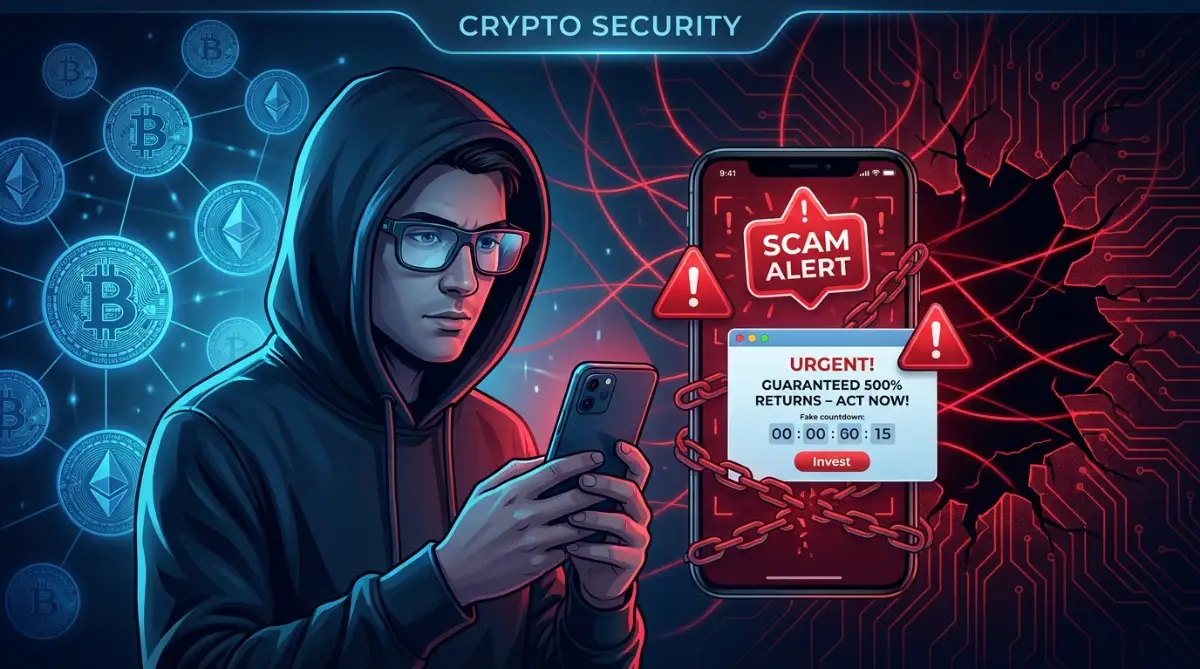
- Guaranteed profits
- Zero-risk investing
- Fixed daily returns
- Risk-free crypto income
- Guaranteed doubling of money
Crypto markets are unpredictable.
No real investment can promise consistent profits no matter what the market does.
Even experienced traders lose money sometimes.
If everything sounds “guaranteed,” it’s usually a sign to step back.
Step Four: Look at the Community, Not Just the Numbers
Many crypto projects show off huge communities on Telegram, Discord, or social media.
But big numbers don’t always mean real users.
A community with hundreds of thousands of followers can still be fake.
Pay attention to how people actually interact.
Healthy communities usually have:
- Real conversations
- Technical questions
- Constructive feedback
- Helpful moderators
- Educational discussions
Fake communities often look like:
- Repeated spam comments
- Over-the-top hype with no substance
- Constant price predictions
- Bots posting the same messages
- Questions being deleted or ignored
If criticism isn’t allowed, that’s a bad sign.
Step Five: Figure Out How the Project Actually Makes Money
Every legit project should be able to explain its business model in a simple way.
Ask basic questions:
- Where does the money come from?
- Who actually uses the product?
- What problem does it solve?
- Why does the token have value?
If no one can clearly answer these, slow down.
Simple questions shouldn’t need complicated explanations.
Step Six: Don’t Skip the Whitepaper
A lot of people ignore the whitepaper completely—but it can reveal a lot.
Look for:
- Clear goals
- Real use cases
- Technology breakdown
- Token distribution details
- Roadmap
- Risk explanations
Be cautious if it’s mostly marketing talk with very little real information.
Copied sections, messy writing, or unrealistic claims are also warning signs.
A white paper should explain things—not confuse you.
Step Seven: Check What Others Are Saying (Outside Their Own Bubble)
Don’t rely only on the project’s own content.
Look for independent opinions from:
- Security researchers
- Crypto news sites
- Blockchain analysts
- Developer communities
- Technical discussions
One positive review doesn’t prove anything.
One negative review doesn’t automatically mean it’s a scam.
What matters is the overall pattern across trusted sources.
Independent research helps cut through marketing hype.
Step Eight: Be Extra Careful With Wallet Connections
Not all scams ask you to send crypto directly.
Some just ask you to connect your wallet.
Connecting itself isn’t always dangerous—but approving the wrong permissions can be.
Before you approve anything:
- Read every permission carefully
- Double-check the website URL
- Avoid random links from DMs
- Revoke unused permissions regularly
- Review transactions before confirming
A bad smart contract approval can expose your funds without you ever “sending” them manually.
Knowing what you’re approving is just as important as protecting your private keys.

Common Emotional Triggers Scammers Use
Most scams don’t rely on tech—they rely on emotions.
Here are some common tricks:
Fear of Missing Out
“You’re missing the opportunity everyone else is already making money from.”
Authority
Fake endorsements from celebrities or experts. Always verify independently.
Urgency
“You must act now or lose everything.” Real opportunities don’t usually work like that.
Greed
“If it sounds too good to be true, it probably is.”
Fake Trust
Messages from hacked accounts pretending to be friends or contacts. Always double-check.
Early Red Flags You Shouldn’t Ignore
Many people later say they “had a feeling something was off.”
Common warning signs include:
- Pressure to invest immediately
- Requests for private keys or recovery phrases
- Guaranteed returns
- Lack of transparency
- Anonymous teams
- Fake testimonials
- Hidden fees
- Complicated withdrawal rules
- Constant referral pressure
- Overhyped marketing language
One sign alone might not mean fraud.
But several together? That’s when you should pause.
Building Safer Investment Habits
Avoiding scams isn’t about being paranoid—it’s about building simple habits before trusting any project with your money.
The best investors aren’t just good at finding opportunities—they’re also good at avoiding bad ones.
In the next part, we’ll go deeper into advanced verification methods, real scam patterns, and a practical checklist you can use before investing in any crypto project.
How to Do a Practical Crypto Scam Check Before Every Investment
Spotting red flags is a great first step, but having a simple, repeatable check you run every time is what really helps protect your money long-term. Instead of going off gut feeling, experienced investors usually follow a quick routine before sending funds, connecting a wallet, or jumping into a new project.
Here’s a checklist that can help you stay safer and make more informed decisions.
Double-Check the Official Website
Scammers love making fake websites that look almost exactly like the real thing. Sometimes it’s just one tiny letter off in the domain, and that’s enough to trick people into handing over sensitive info.
Before you interact with any crypto project:
- Type the website address yourself instead of clicking links
- Check the spelling carefully
- Make sure the site uses HTTPS
- Compare it with links from official social media accounts
- Avoid links from random emails, comments, or DMs
Don’t assume a site is legit just because it looks polished.
Look Into the Project’s Activity
Real blockchain projects usually leave a trail of ongoing work and updates.
You don’t need to be super technical, but it helps to see if things are actually being built and maintained.
Good signs include:
- Regular updates or releases
- Clear announcements
- Proper documentation
- Active developer discussions
- Realistic improvements over time
If a project goes quiet for a long time or keeps delaying things without clear reasons, that’s worth a closer look.
Check Token Distribution
Who holds the tokens matters more than most beginners realize.
If a few wallets control most of the supply, they can heavily influence the price.
Try to look at:
- Top wallet holdings
- Token allocation breakdown
- Team vs community distribution
- Vesting schedules (if available)
More balanced distribution usually means less risk of price manipulation.
Common Crypto Scam Types to Watch For
Scammers change tactics, but a lot of their tricks follow the same patterns.
Once you know them, they’re much easier to spot.
Fake Investment Platforms
These sites often show flashy dashboards with “profits” that look too good to be true.
The catch? Those numbers are usually fake.
At first, everything seems fine, but when you try to withdraw, problems suddenly appear—extra fees, taxes, or verification steps.
Real platforms are upfront about fees from the beginning.
Giveaway Scams
You’ve probably seen posts saying a big company or celebrity is “giving away” crypto.
The trick is simple: you’re told to send a small amount first to get a bigger reward back.
But nothing ever comes back.
Rule of thumb:
If you have to send crypto first to “receive” something, it’s a scam.
Fake Customer Support
Scammers often hang out on social media and forums looking for people with issues.
When someone asks for help, fake “support agents” jump in quickly.
They may ask for:
- Recovery phrases
- Private keys
- Remote access
- Wallet connection approvals
Real support will never ask for your private wallet info.
Romance and Friendship Scams
These scams usually start slowly, with friendly chats over weeks or months.
Once trust is built, crypto gets introduced as a “great opportunity.”
Eventually, the victim is pushed into an “exclusive investment.”
Because emotions are involved, these scams can be especially harmful.
Even if you trust someone online, stay cautious with money advice.
Fake Job Offers
Some scams pretend to be remote crypto jobs.
But instead of paying you, they ask you to:
- Pay training fees
- Buy software
- Handle suspicious crypto transfers
- Process payments for unknown clients
Real jobs don’t ask you to invest money just to get started.
Simple Security Habits That Help a Lot
You don’t need fancy tools—just consistent habits.
Turn On Multi-Factor Authentication
Enable it wherever possible (exchanges, wallets, email).
It adds an extra layer of protection if your password gets stolen.
If possible, avoid SMS-only authentication.
Use Strong, Unique Passwords
Don’t reuse passwords across accounts.
Each important account should have its own strong password.
Password managers can make this much easier.
Keep Everything Updated
Updates often fix security holes that hackers actively target.
Make sure you regularly update:
- Wallet apps
- Browsers
- Phones and devices
- Operating systems
Skipping updates can leave you exposed.
Separate Your Crypto Wallets
Many experienced users don’t keep everything in one place.
They often split funds into:
- Long-term storage
- Trading wallets
- Testing wallets
This way, if one wallet gets compromised, everything isn’t lost.
Mistakes That Often Lead to Losses
Sometimes the biggest risks come from simple mistakes.
Investing Without Doing Your Own Research
Following hype, influencers, or social media trends without checking things yourself is risky.
Always take time to verify before investing.
Ignoring Small Red Flags
A lot of people later realize they did notice something off.
Common signs include:
- Poor communication
- Vague documentation
- Aggressive marketing
- Weird withdrawal rules
- Constant urgency or pressure
One sign alone might not mean much—but several together usually do.
Acting on Emotion
Excitement and fear can cloud judgment fast.
Before investing, ask yourself:
- Do I actually understand this?
- Have I checked multiple sources?
- Would I still do this tomorrow?
A short pause can save you from bad decisions.
Oversharing Online
Posting your holdings or profits can attract the wrong attention.
The less people know about your finances, the better.
What to Do If You Think You’ve Been Scammed
If something feels wrong, act quickly.
- Stop sending money immediately
- Disconnect suspicious wallet connections
- Change your passwords
- Turn on stronger security settings
- Save all evidence (screenshots, addresses, messages)
- Report it to the platform or exchange
- Contact relevant authorities or cybercrime services
- Warn others responsibly (without spreading unverified claims)
Never pay anyone who promises to “recover” your lost crypto—those are often scams too.
Quick Safety Checklist Before Any Transaction
Before you hit confirm, take a second to ask:
- Do I really understand this project?
- Is the website legit?
- Is there pressure to act fast?
- Does it promise guaranteed returns?
- Have I checked multiple sources?
- Do I understand the wallet permissions?
- Would I be comfortable explaining this to someone else?
If anything feels off, it’s usually better to wait.
Building Long-Term Confidence in Crypto
Markets change. Technology evolves. And unfortunately, scams keep evolving too.
Your best protection is a clear mindset backed by steady research habits.
Focus on understanding, not hype.
Look for transparency, not promises.
Trust evidence more than excitement.
And remember—sometimes the smartest move is simply not investing.
Protecting your money is just as important as growing it.
The more careful and consistent you are, the more confident you’ll become over time.
Key Takeaways for Smarter Crypto Security
Spotting scams gets easier with practice. If you slow down, verify things properly, learn common scam patterns, and build good security habits, you’ll already be ahead of most risks out there.
No checklist can remove all danger, but a disciplined approach makes it much harder for scammers to catch you off guard. Treat every investment like something worth researching—not rushing—and always remember that protecting what you already have matters just as much as chasing new opportunities.
Disclaimer
This article is for educational purposes only and should not be taken as financial, investment, legal, or tax advice. Crypto investments are risky, and prices can change quickly. Always do your own research and consider speaking with a qualified professional before making financial decisions. The author and publisher are not responsible for any losses that may result from using this information.