The Real Reason Most New Investors Panic Sell Too Early
Cryptocurrency has introduced millions of people to investing. It offers exciting opportunities, rapid innovation, and the possibility of significant long-term growth. At the same time, it also exposes investors to one of the biggest challenges in personal finance: managing emotions.
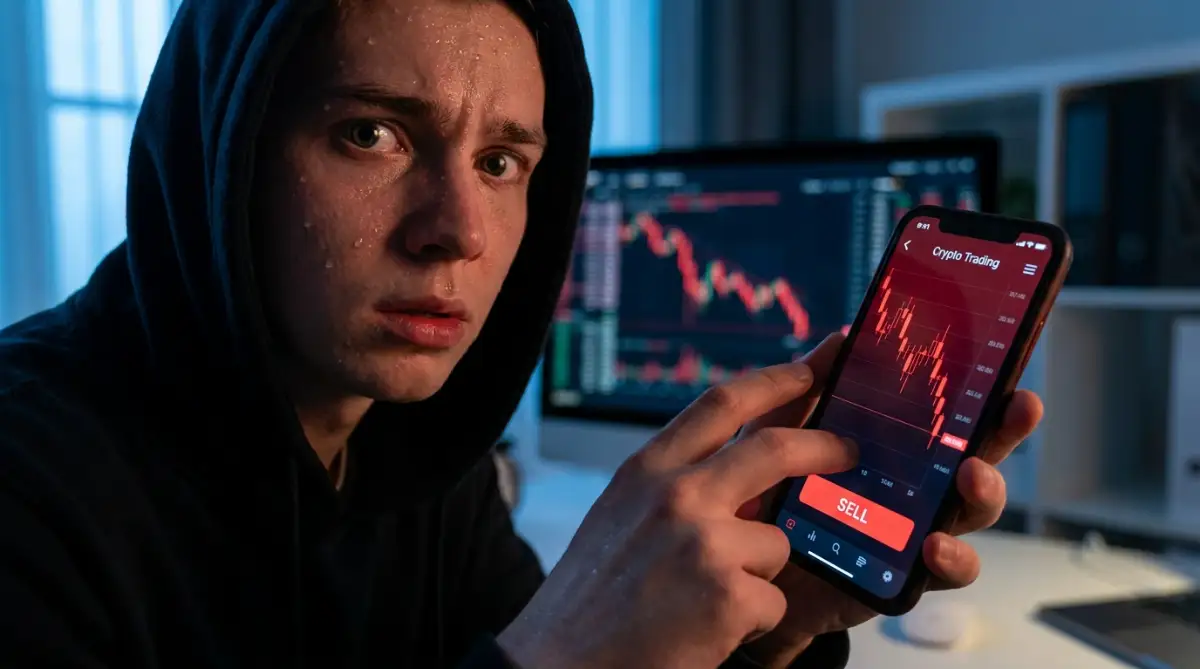
Many beginners enter the crypto market with confidence. They spend hours watching videos, reading articles, and following influencers. Everything feels exciting when prices continue climbing. However, the moment the market begins to decline, confidence often disappears.
Instead of following a well-planned investment strategy, many new investors make emotional decisions. They panic, sell their holdings at a loss, and leave the market disappointed. Ironically, many later watch the same assets recover without them.
Why does this happen so often?
The answer has less to do with cryptocurrency itself and much more to do with human psychology.
Understanding why panic selling happens is one of the most valuable lessons any investor can learn. By recognizing the emotional patterns behind these decisions, beginners can build healthier habits and make smarter long-term investment choices.
Why Market Drops Feel More Dangerous Than They Really Are
One of the biggest reasons people panic sell is because the human brain naturally reacts more strongly to losses than gains.
Behavioral economists describe this as loss aversion. Simply put, losing money feels much more painful than gaining the same amount feels rewarding.
Imagine these two situations:
- Your investment grows by 10%.
- Your investment falls by 10%.
Although the numbers are identical, the emotional impact is completely different. Most people worry far more during the decline than they celebrate during the increase.
This emotional imbalance causes investors to believe every market correction is the beginning of something much worse.
As a result, they sell not because their investment thesis has changed, but because they want the emotional discomfort to end.
The Excitement That Leads to Poor Timing
Many beginners accidentally create the perfect conditions for panic selling before they even make their first purchase.
They usually enter the market after seeing:
- News about rising prices
- Success stories on social media
- Friends discussing profits
- Positive headlines everywhere
By the time they invest, prices may already be significantly higher than before.
Then the market naturally corrects.
Since their investment immediately shows a loss, fear replaces excitement almost overnight.
Without experience, they mistake normal market movement for permanent failure.
The Emotional Roller Coaster Every Beginner Experiences
Most investors follow a surprisingly similar emotional journey.
Optimism
Everything appears simple.
The market keeps rising, and every investment seems successful.
Excitement
Confidence grows quickly.
Many begin checking prices several times every hour.
Anxiety
The first noticeable decline creates uncertainty.
Questions begin appearing:
- Should I sell?
- Is this the start of a crash?
- Did I make a mistake?
Fear
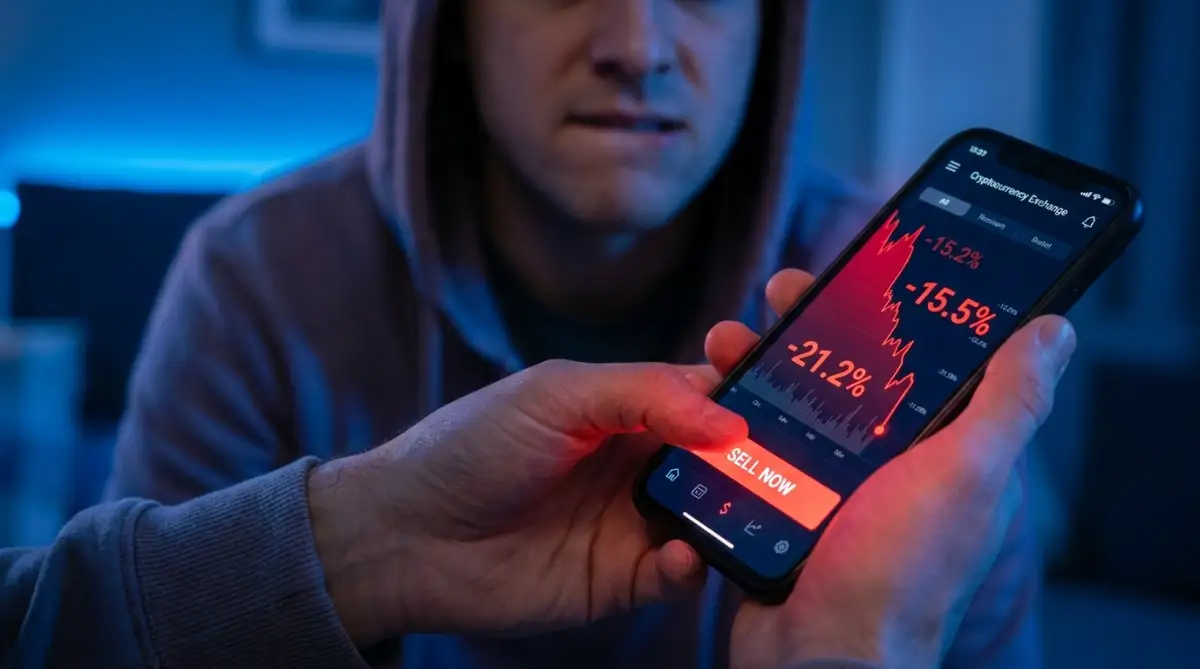
As prices continue falling, emotional thinking takes over.
Logic slowly disappears.
Panic
Instead of following a plan, investors sell simply to stop feeling stressed.
Regret
After selling, the market eventually stabilizes or recovers.
The investor realizes they sold at one of the worst possible moments.
Understanding this emotional cycle helps investors recognize these feelings before acting on them.

Social Media Can Make Fear Spread Faster
Today's investors receive more information than ever before.
Unfortunately, not all information is helpful.
During market downturns, social media platforms often become filled with:
- Fearful predictions
- Negative headlines
- Emotional opinions
- Rumors
- Extreme price forecasts
Even experienced investors can become overwhelmed by constant negative content.
Beginners are especially vulnerable because they often assume every opinion comes from an expert.
In reality, emotional posts spread faster than balanced analysis.
Learning to filter information carefully is an essential investing skill.
Why Short-Term Price Movements Feel So Personal
Many people unknowingly connect their self-worth to their investment performance.
When prices rise, they feel smart.
When prices fall, they feel like failures.
This emotional attachment creates unnecessary pressure.
Investments should be viewed as financial decisions—not personal judgments.
Markets move because millions of participants make independent decisions every day.
A temporary decline does not define your intelligence or your future success as an investor.
The Hidden Cost of Watching Prices Constantly
Checking your portfolio every few minutes rarely improves investment results.
Instead, it often increases stress.
Every small market movement feels important even when it has little long-term significance.
Research in behavioral finance consistently suggests that investors who obsess over short-term price fluctuations experience more emotional discomfort.
This discomfort increases the likelihood of panic selling.
Creating healthy boundaries around market monitoring can reduce unnecessary anxiety and encourage better decision-making.
Unrealistic Expectations Create Emotional Pressure
Some beginners expect cryptocurrency investments to grow quickly without significant declines.
When reality turns out differently, disappointment sets in.
Every investment carries uncertainty.
Markets naturally experience:
- Corrections
- Consolidation periods
- Increased volatility
- Unexpected news events
Accepting these realities before investing creates stronger emotional resilience.
Investors who understand volatility are less likely to react impulsively when prices temporarily decline.
Why Having No Investment Plan Leads to Panic
Many investors spend hours choosing which cryptocurrency to buy.
Very few spend time planning what they will do afterward.
Without a written strategy, emotions become the decision-maker.
Questions such as these should be answered before investing:
- Why am I buying this asset?
- How long do I plan to hold it?
- What level of risk am I comfortable accepting?
- What events would justify selling?
Having clear answers reduces emotional decision-making during periods of uncertainty.
Fear of Missing Out Often Turns Into Fear of Losing Everything
FOMO encourages investors to buy during periods of extreme excitement.
Ironically, that excitement often appears near local market highs.
Later, when prices decline, the emotional experience becomes even more painful because the purchase happened under pressure rather than careful planning.
Replacing FOMO with patience allows investors to make decisions based on research instead of urgency.
Patient investing usually produces calmer decision-making over time.
The Difference Between Temporary Volatility and Permanent Problems
Not every price decline means an investment has fundamentally changed.
Sometimes prices move because of:
- Overall market sentiment
- Economic uncertainty
- Regulatory discussions
- Reduced trading activity
- Short-term investor behavior
Other times, genuine problems exist within a project.
Learning to separate temporary volatility from fundamental changes requires careful research rather than emotional reactions.
This distinction becomes one of the most valuable skills in long-term investing.
Why Experienced Investors Often Stay Calm
New investors sometimes believe experienced investors never feel fear.
That isn't true.
Experienced investors still experience uncertainty.
The difference is that they recognize emotional reactions before acting on them.
They understand:
- Markets move in cycles.
- Volatility is normal.
- Emotional decisions often produce poor outcomes.
- Long-term thinking reduces unnecessary stress.
Experience doesn't eliminate emotions.
It improves emotional management.
Building Confidence Through Education Instead of Predictions
No one can predict every market movement accurately.
Instead of searching for perfect predictions, successful investors focus on improving their knowledge.
Learning about:
- Risk management
- Portfolio diversification
- Market cycles
- Investor psychology
- Financial discipline
creates confidence based on understanding rather than hope.
Education remains valuable regardless of whether markets rise or fall.
Practical Habits That Help You Stay Calm During Market Volatility
Understanding investor psychology is only the beginning. The real challenge is applying that knowledge when prices become unpredictable. Successful investing is not about eliminating emotions—it is about preventing emotions from controlling your decisions.
Developing consistent habits before market volatility appears can make a significant difference. When uncertainty arrives, you won't need to invent a strategy under pressure because you'll already have one.
Create Rules Before You Invest
Many emotional mistakes happen because investors make decisions in the middle of stressful situations.
Instead, define your personal investing rules before buying any asset.
Consider writing down questions such as:
- What is my investment goal?
- How long am I willing to hold this investment?
- How much volatility can I realistically tolerate?
- Under what circumstances would I decide to sell?
A written plan acts as a reminder of your original thinking when emotions begin taking over.
Focus on Risk Management Instead of Perfect Timing
One of the biggest misconceptions among beginners is believing they must buy at the lowest price and sell at the highest.
In reality, consistently predicting market tops and bottoms is extremely difficult.
A healthier approach is focusing on managing risk rather than chasing perfect entries.
Good risk management includes:
- Investing only money you can afford to leave invested.
- Avoiding oversized positions in a single asset.
- Maintaining realistic expectations.
- Reviewing your portfolio periodically instead of constantly.
This approach reduces emotional pressure and helps investors stay disciplined.
Accept That Volatility Is Part of the Investment Journey
Many beginners treat every market decline as evidence that something has gone wrong.
However, volatility is a normal characteristic of many financial markets, especially cryptocurrencies.
Price fluctuations alone do not automatically indicate failure.
Learning to expect temporary declines allows investors to respond thoughtfully instead of emotionally.
Patience often becomes one of the most valuable investing skills.
Replace Emotional Decisions With Objective Questions
Whenever you feel tempted to panic sell, pause and ask yourself a few important questions.
Has Anything Fundamentally Changed?
Is the project significantly different from when you invested?
Or has only the market price changed?
Separating price movement from fundamental changes encourages more rational decision-making.
Am I Reacting to Fear or Facts?
Fear usually creates urgency.
Facts require careful evaluation.
Taking a few minutes to analyze reliable information instead of reacting immediately can prevent unnecessary mistakes.
Would I Make the Same Decision If Prices Were Stable?
This question helps reveal whether emotions are driving the decision.
If the answer changes simply because prices are lower, it may be worth slowing down before taking action.
Build Confidence Through Continuous Learning
Confidence should come from knowledge—not short-term profits.
Investors who continue learning tend to make more balanced decisions during difficult market conditions.
Useful topics include:
- Portfolio diversification
- Asset allocation
- Blockchain fundamentals
- Market cycles
- Behavioral finance
- Investment psychology
The more you understand these concepts, the less likely you are to react emotionally to daily price movements.
Why Comparing Yourself to Others Can Be Harmful
Social media often highlights extraordinary success stories.
You may see people claiming enormous profits within a short period.
What is rarely shared includes:
- Previous investment losses
- Failed trades
- Emotional stress
- Poor timing
- Risk taken to achieve those returns
Comparing your progress with carefully selected online highlights creates unrealistic expectations.
Every investor has different:
- Financial goals
- Risk tolerance
- Investment timeline
- Personal circumstances
Your strategy should reflect your own objectives rather than someone else's results.
Diversification Can Reduce Emotional Stress
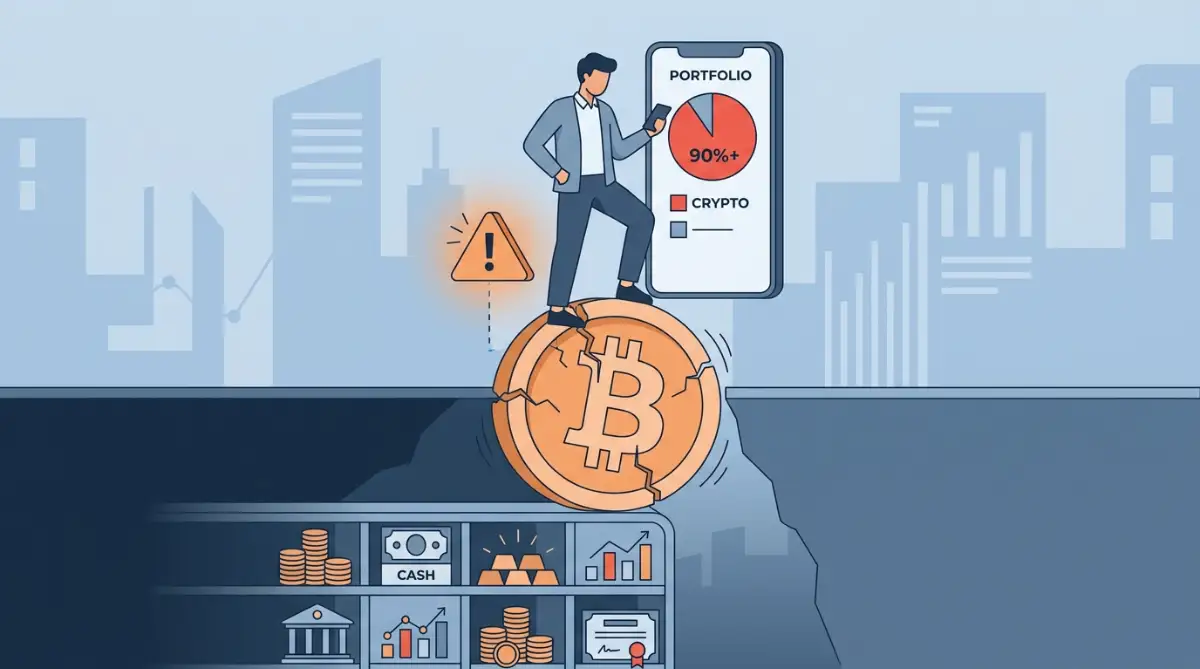
Putting all your money into a single investment increases emotional pressure.
Every market movement feels amplified.
Diversification does not eliminate risk, but it can help reduce concentration risk.
A diversified portfolio encourages investors to think about long-term financial planning instead of obsessing over the performance of one asset.
It also reduces the temptation to make impulsive decisions based on one market event.
Understand the Difference Between Investing and Speculation
Many beginners unintentionally confuse these two approaches.
Investing generally involves:
- Research
- Long-term planning
- Risk management
- Patience
- Fundamental analysis
Speculation often focuses on:
- Short-term price swings
- Market excitement
- Rumors
- Emotional reactions
- Quick profits
Neither approach guarantees success.
However, understanding which strategy you are following helps align your expectations with reality.
Common Psychological Traps Every Beginner Should Recognize
Awareness is one of the strongest defenses against emotional investing.
Here are several common mental biases that influence decision-making.
Confirmation Bias
People naturally seek information that supports their existing beliefs.
This can cause investors to ignore warning signs while paying attention only to positive opinions.
Looking at multiple viewpoints creates a more balanced perspective.
Herd Mentality
When everyone appears to be buying or selling, many people feel pressure to do the same.
Crowd behavior often amplifies market emotions.
Independent research remains far more valuable than simply following popular sentiment.
Anchoring Bias
Some investors become emotionally attached to a previous price.
For example, they may believe an asset "must" return to a specific value simply because it traded there before.
Past prices do not guarantee future outcomes.
Investment decisions should be based on current information rather than historical attachment.
Recency Bias
Recent events often seem more important than they actually are.
A few days of falling prices can make investors believe the decline will continue indefinitely.
Likewise, several days of rising prices can create unrealistic optimism.
Looking at broader market trends instead of only recent movements provides better context.
Practical Daily Habits for Emotional Discipline
Building emotional resilience requires consistency.
Consider developing habits such as:
- Reviewing investments on a scheduled basis instead of every hour.
- Reading educational material regularly.
- Keeping a journal of investment decisions.
- Recording why you bought each asset.
- Evaluating decisions based on your strategy rather than emotions.
These small habits become increasingly valuable over time.
When Doing Nothing Is the Best Decision
Many investors believe successful investing requires constant action.
In reality, unnecessary activity often creates unnecessary mistakes.
Sometimes the best response during market uncertainty is simply observing, learning, and allowing your investment strategy to play out.
Patience should never be confused with inactivity.
Rather, it represents disciplined decision-making based on thoughtful analysis.
Healthy Expectations Lead to Better Decisions
Every investment carries uncertainty.
There will always be periods of optimism and periods of concern.
Setting realistic expectations helps reduce disappointment.
Instead of expecting constant growth, prepare mentally for:
- Market corrections
- Sideways price movement
- Unexpected news
- Temporary uncertainty
Investors who accept these realities often remain calmer during challenging conditions.
Turning Market Experience Into Long-Term Wisdom
Every investor makes mistakes.
The important question is whether those mistakes become valuable lessons.
After each major investment decision, ask yourself:
- What did I learn?
- Was my decision based on research or emotion?
- Did I follow my investment plan?
- How can I improve next time?
Reflection transforms experience into practical knowledge.
Over time, this process strengthens confidence and decision-making skills.
A Strong Investment Mindset Matters More Than Perfect Predictions
Financial markets will always remain uncertain.
No article, analyst, or prediction can remove that uncertainty completely.
What investors can control includes:
- Their preparation
- Their education
- Their emotional discipline
- Their risk management
- Their long-term perspective
These factors often have a greater influence on long-term investing success than attempting to predict every short-term market movement.
Developing a calm, patient, and informed mindset allows investors to navigate volatility with greater confidence. While no strategy can guarantee positive outcomes, thoughtful planning and disciplined decision-making can significantly reduce emotional mistakes such as panic selling.
Rather than viewing market declines as automatic signals to exit, experienced investors often treat them as opportunities to review their original investment thesis, reassess available information, and determine whether anything fundamental has truly changed. This measured approach encourages rational thinking instead of emotional reactions.
As your knowledge grows, remember that successful investing is rarely defined by a single decision. It is built through hundreds of thoughtful choices made consistently over time. By focusing on education, realistic expectations, and disciplined habits, you can develop the confidence needed to make informed investment decisions regardless of changing market conditions.
Disclaimer
This article is intended for educational and informational purposes only and should not be considered financial, investment, legal, or tax advice. Cryptocurrency investments involve significant risk, and market prices can be highly volatile. Always conduct your own research, evaluate your financial situation, and consider consulting a qualified financial professional before making any investment decisions. Past market performance does not guarantee future results.