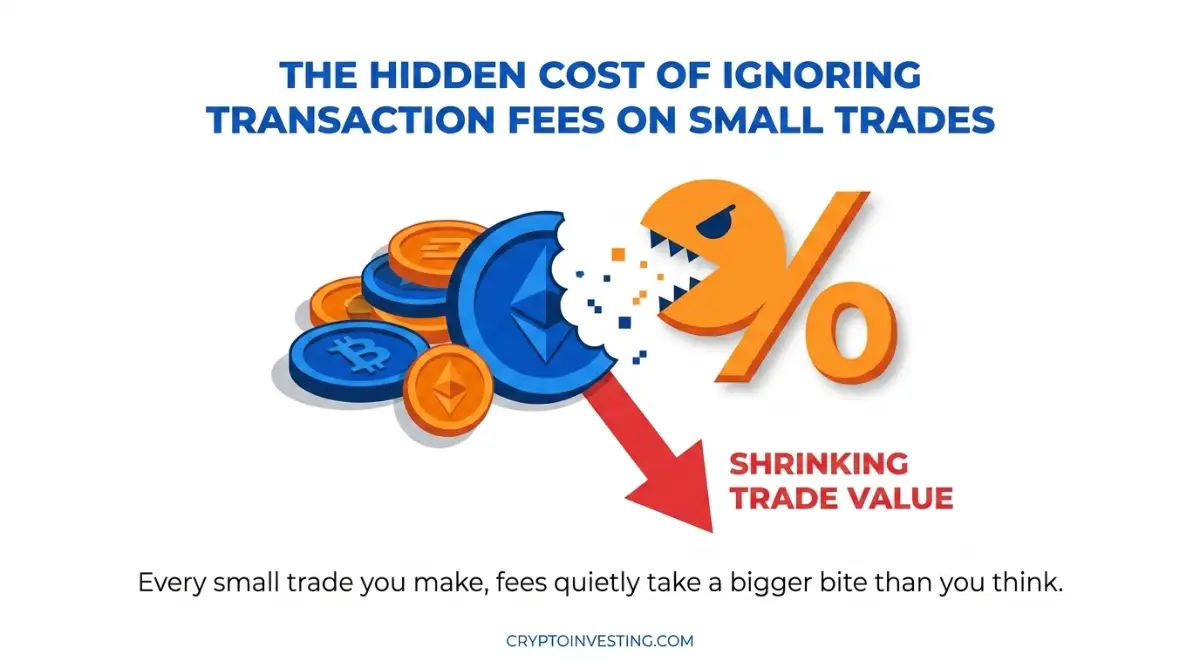
The Hidden Cost of Ignoring Transaction Fees on Small Trades
Cryptocurrency trading has made investing more accessible than ever before. With just a small amount of money, almost anyone can buy, sell, or swap digital assets within minutes. This ease of access has encouraged millions of people to try frequent trading, especially when the market is moving fast.
But there’s one thing that often gets way less attention than price charts, news, or indicators: transaction fees.
A lot of beginner traders assume small trades come with small costs. That sounds reasonable, but it often leads to a costly misunderstanding. Every transaction has a fee, and when you repeat those trades dozens or even hundreds of times, those costs can quietly eat into your profits.
The tricky part is that most traders don’t even notice the impact until they look back at their account after weeks or months. By then, hundreds of dollars—or more—may have been lost not because of bad trades, but because of accumulated fees.
Understanding transaction fees isn’t just about saving a bit of money. It’s about becoming a smarter investor who sees the full picture of what affects long-term results.
In this guide, you’ll learn why transaction fees matter, how they impact small trades, and some simple habits that can help you avoid unnecessary costs while improving your trading approach.
Why Transaction Fees Matter More Than Most People Think
Every financial system has its costs.
Banks charge service fees.
Payment processors take a cut.
Investment platforms charge commissions.
Crypto exchanges and blockchains are no different.
Whenever you make a crypto transaction, someone has to process, verify, and record it. Depending on the blockchain or exchange, that requires infrastructure, computing power, or network validators.
And that’s what transaction fees cover.
On their own, these fees might look small.
For example:
- $0.50
- $1
- $3
- 0.1%
- 0.25%
Most people don’t think much of these numbers because they seem tiny compared to the trade size.
But percentages add up fast when you’re trading repeatedly.
Small costs, repeated often, eventually turn into big expenses.
The Psychology Behind Ignoring Small Costs
Human behavior plays a big role here.
We naturally focus on gains we can see, while ignoring hidden costs.
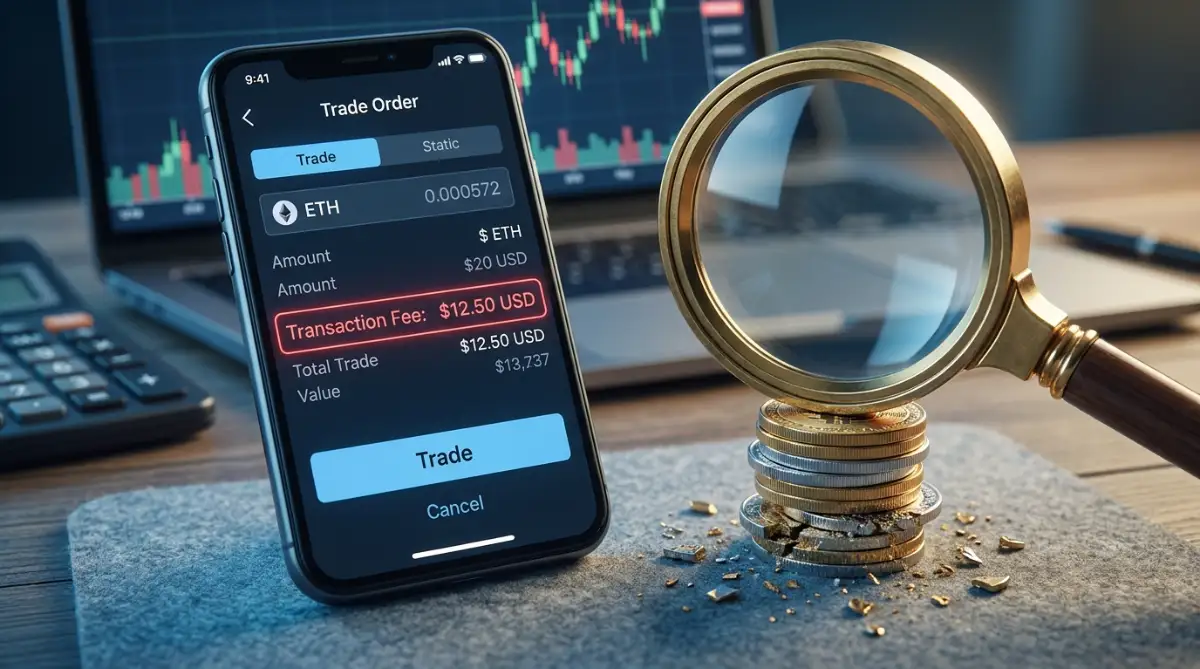
For example, someone buys a crypto asset for $50 and later sells it for $53.
At first glance, it looks like a $3 profit.
But after accounting for:
- Buying fee
- Selling fee
- Network fee
- Spread between buy and sell price
That profit can shrink a lot—or even disappear completely.
Many beginners celebrate wins without checking the full cost breakdown.
This creates a false sense of success.
Over time, these small miscalculations turn into expensive habits.
Understanding the Different Types of Crypto Transaction Fees
Not all fees are the same.
Knowing the difference helps you make better decisions.
Exchange Trading Fees
Most crypto exchanges charge a percentage when you buy or sell assets.
These fees can vary based on:
- Trading volume
- Account tier
- Order type
- Platform rules
Even small percentages matter when you trade often.
Blockchain Network Fees
Every blockchain needs validators or miners to process transactions.
These fees depend on:
- Network congestion
- Blockchain design
- Transaction complexity
- Demand at the time
When the network is busy, fees usually go up.
Withdrawal Fees
Sending crypto from an exchange to a personal wallet often comes with withdrawal fees.
These are separate from trading fees and depend on both the platform and the blockchain.
Currency Conversion Fees
Some platforms automatically convert one crypto into another.
These conversions can include hidden costs inside the exchange rate, making the transaction more expensive than it first appears.
Why Small Trades Are Especially Vulnerable
Big investors can usually spread fees across larger amounts.
Small traders don’t have that advantage.
For example, imagine two people paying the same $2 network fee.
Investor A moves:
$50
Investor B moves:
$5,000
Both pay the same fee, but the impact is very different.
For the smaller trade, that fee takes a much bigger chunk of the investment.
That’s why frequent small trades can end up being surprisingly inefficient.
The smaller the trade, the more noticeable the fee becomes.
How Frequent Trading Amplifies Hidden Costs
A lot of beginners like active trading because it feels productive.
Watching charts, entering trades, reacting quickly—it feels like you’re always doing something useful.
But activity doesn’t always mean profit.
Think about a trader who makes:
- 5 trades a day
- 25 trades a week
- 100+ trades a month
Even small fees add up quickly at that pace.
Instead of just asking:
"Did I make money on this trade?"
Experienced traders also ask:
"Did I actually make money after all the fees?"
That one question makes a huge difference in long-term results.
Small Profits Can Disappear Faster Than Expected
Let’s say a trader consistently makes 1% profit per trade.
Sounds good, right?
But if buying and selling fees together are close to that same percentage, most of the profit gets wiped out.
The trade might still be correct.
The strategy might still work.
But fees quietly take away most of the reward.
Many beginners miss this because they only look at price movement, not total cost.
Why Market Volatility Makes Fee Awareness Even More Important
Crypto markets move fast.
During volatile periods, traders tend to trade more often.
More trades = more fees.
On top of that, network congestion can also push fees higher at the same time.
So you end up with:
- More activity
- Higher costs
Without proper planning, even good market calls can lead to weaker net returns.
The Long-Term Effect on Investment Growth
Compounding works both ways.
Your profits grow over time.
But your costs also add up over time.
If fees keep eating into your balance, your starting point for future growth gets smaller.
Over the years, that difference can become huge.
Even small, repeated costs can reduce your overall portfolio more than you’d expect.
Good investors don’t just focus on making money—they also focus on not losing it unnecessarily.
Keeping fees under control helps protect long-term growth.
Common Mistakes That Increase Fee Expenses
A lot of traders accidentally increase their costs through simple habits.
Here are some common ones:
Trading Without a Clear Plan
Random trades usually mean more buying and selling than needed.
And every extra trade adds another fee.
Chasing Every Market Move
Trying to catch every small price change usually leads to overtrading.
More trades, more costs.
Ignoring Network Conditions
Some blockchains get expensive when they’re busy.
Timing matters more than people think.
Not Understanding Exchange Fees
Different platforms charge differently.
If you don’t check, you might be paying more than necessary.
Only Looking at Percentage Gains
Many traders calculate profit before fees.
That makes results look better than they really are.
Practical Ways to Cut Down Transaction Fee Losses
Getting a handle on transaction fees is just the starting point. The real benefit comes when you actually use a few simple strategies to keep costs down without messing up your investment plan.
You don’t need to get rid of fees completely. Just try to make sure every trade is actually worth it.
Trade With a Purpose
Before you hit “buy” or “sell,” take a second and ask yourself:
- Does this trade actually fit my strategy?
- Is the potential gain worth all the costs involved?
- Am I trading based on research—or just emotions?
These quick checks help you stay disciplined and avoid those impulsive trades that usually rack up unnecessary fees.
Look at the Full Cost of Trading
A lot of traders only think about entry and exit prices.
But you should also factor in:
- Exchange trading fees
- Network fees
- Withdrawal fees
- Conversion costs
- Bid-ask spread
When you look at everything together, you get a much clearer picture of your real performance.
Don’t Overtrade
One of the easiest ways to burn money on fees is simply trading too much.
A lot of people feel like they always need to be doing something in the market.
But honestly, good investing is often more about waiting than acting.
Fewer, better trades usually mean lower costs and better results over time.
Watch Network Conditions
Blockchain fees don’t stay the same all the time.
When networks get busy, fees can spike.
If your trade isn’t urgent, it might be worth waiting for a quieter period to save on costs.
Different blockchains behave differently, but keeping an eye on network activity can definitely help you save money in the long run.
How Transaction Fees Affect Different Trading Styles
Every trading style feels fees a bit differently.
Knowing this helps you pick a strategy that actually fits your goals.
Day Trading
Day traders make lots of trades in a short time.
That means more opportunities—but also way more fees.
Even small costs add up fast when you’re trading constantly.
Swing Trading
Swing traders usually hold positions for days or weeks.
Since they trade less often, fees don’t eat into their returns as much.
Long-Term Investing
Long-term investors tend to buy and hold for a long time.
Because they trade less, they usually pay fewer total fees overall.
That doesn’t guarantee better returns, but it does help reduce unnecessary costs.
Why You Should Review Your Trading History
Most people check their profits, but ignore what they’re actually spending.
Looking back at your trades can show you things you might miss otherwise.
Ask yourself:
- How much have I paid in total fees?
- Which trades cost me the most?
- Did my small trades even stay profitable after fees?
- Am I trading too often for no real reason?
This kind of review turns fees from “hidden costs” into useful information you can actually learn from.

Building Better Trading Habits Over Time
Good investors usually stick to habits instead of acting on impulse.
Here are a few that help:
Keep a Trading Journal
Write down things like:
- Entry price
- Exit price
- Fees paid
- Profit or loss
- Why you made the trade
Over time, you’ll start noticing patterns that can really improve your decisions.
Focus on Quality, Not Quantity
More trades doesn’t mean more profit.
In many cases, fewer well-planned trades work out better—and cost less too.
Keep Learning
Crypto changes fast.
The more you understand about fees, networks, and trading mechanics, the easier it is to avoid unnecessary costs.
Common Myths About Transaction Fees
There are a few misunderstandings that trip up beginners.
Myth: Small Fees Don’t Matter
Reality:
One fee might feel tiny, but over time they stack up and can seriously cut into your returns.
Myth: Only Beginners Need to Worry About Fees
Reality:
Even experienced traders care about fees—because saving money is part of making money.
Myth: All Blockchains Have Similar Fees
Reality:
Fees vary a lot depending on the network, demand, and congestion.
Myth: Profitable Trades Always Cover Fees
Reality:
A trade can look profitable at first, but fees can shrink—or even wipe out—the gain.
Signs Fees Might Be Hurting Your Portfolio
Watch out for these red flags:
- Your balance grows slower than expected
- Winning trades still feel disappointing overall
- Small profits disappear after fees
- You’re trading a lot but not really progressing
- Your costs keep rising without better results
If you notice these, it might be time to adjust your approach.
A Simple Pre-Trade Checklist
Before every trade, quickly ask:
- What’s the total cost to enter this trade?
- What will it cost to exit later?
- Are network fees high right now?
- Is this trade big enough to justify the fees?
- Does this fit my long-term plan?
It only takes a few seconds, but it can save you a lot over time.
Why Fee Management Is Part of Risk Management
Most people think risk management is just about price swings.
But trading costs are also a form of risk.
Every unnecessary fee reduces your capital.
Less capital means:
- Fewer future opportunities
- Lower compounding power
- Less flexibility in the market
So managing fees isn’t just about saving money—it’s about protecting your overall strategy.
Bringing It All Together
Transaction fees might seem small on their own, but over time they can quietly eat into your returns. This is especially true if you trade often or make a lot of small moves.
Building better habits, trading less impulsively, and paying attention to total costs can make a big difference over time. It won’t guarantee profits, but it helps make sure you’re not losing money unnecessarily.
At the end of the day, good crypto investing isn’t just about making gains—it’s also about not wasting money on avoidable costs.
Disclaimer
This article is for educational and informational purposes only. It is not financial, investment, legal, or tax advice. Cryptocurrency markets are highly risky, and you may lose money. Always do your own research and consider speaking with a qualified financial professional before making investment decisions.